Scam Advice (Mobile Money Abuse)
Mobile money abuse
Mobile money services let you hold and transfer funds through an account linked to your phone. Some also use agents for deposits and withdrawals. Scammers exploit that trust. They may pose as an agent, claim they sent you money by mistake or offer a bonus that requires you to pay first.

The setup
Impersonating a mobile money agent or provider.

The hook
Real agents never need your PIN.

The goal
Once they have your PIN code, funds move fast.
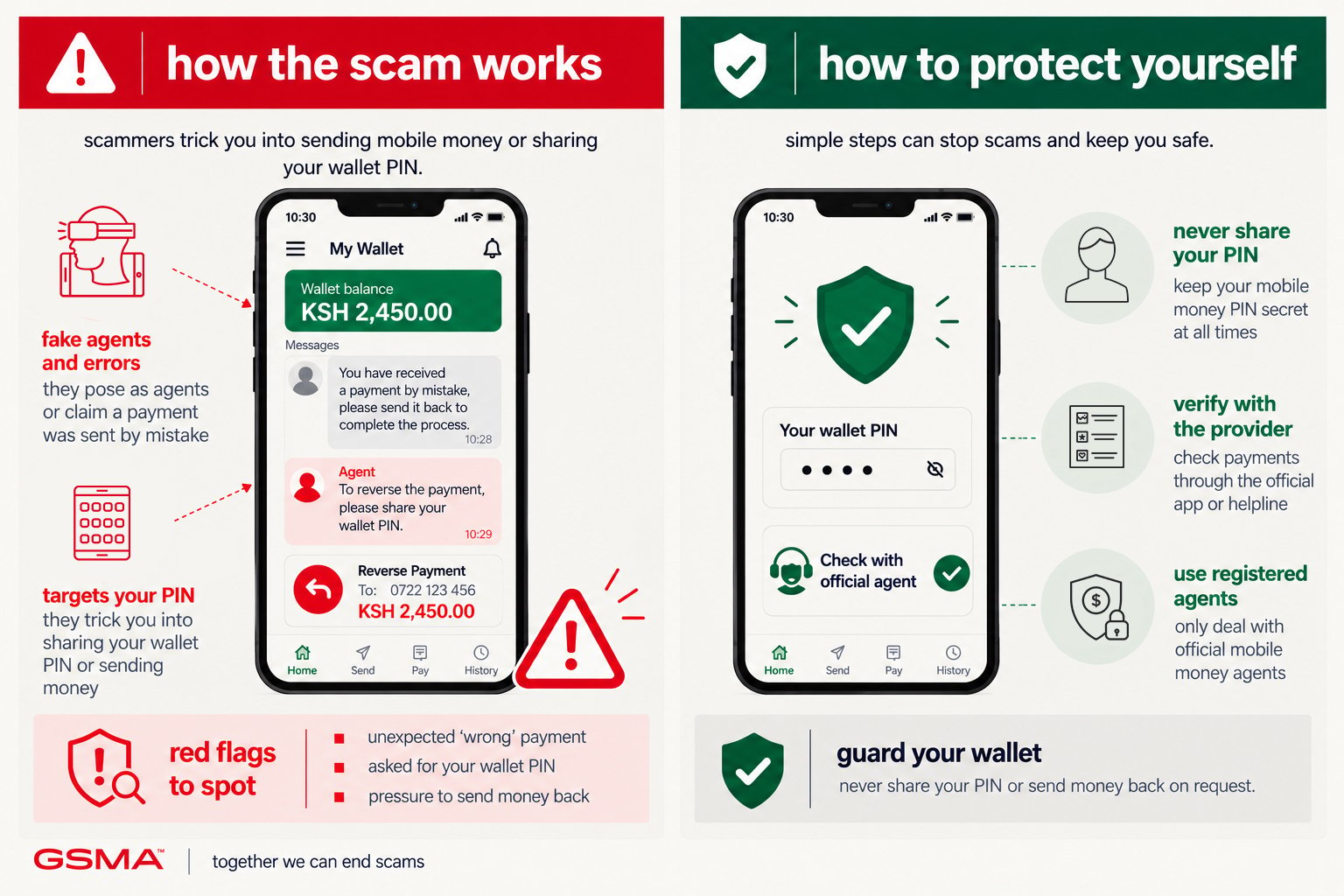
How mobile money abuse works
Scammers rely on urgency and trust. They create time pressure so you act before verifying, and they impersonate a sender you’d normally trust without a second thought.
- Anyone asking for your mobile money PIN or confirmation code, including someone claiming to be an agent
- A message saying money was sent to you “by mistake,” asking for a return transfer
- Unusually generous cashback, bonus, or promotion offers requiring an upfront transfer
How to protect yourself
- Never share your mobile money PIN or one-time code with anyone, including agents or ‘customer service’
- Verify any ‘sent by mistake’ claim directly with your provider before sending anything back
- Be cautious of promotions or bonuses that require you to send money first

National fraud reporting bodies


Mobile network operators
If you think you’ve been targeted by a scam, tell your mobile operator. Reports help operators protect you and other customers. Always contact them through their official website or app, never through links or numbers in a suspicious message. The operators below are examples only, not a complete list. Your operator will explain how to report the scam and what to do next.