Scam Advice (Wangiri (One-Ring) Fraud)
Wangiri (one-ring) fraud
Wangiri (one-ring) fraud starts with a call that stops after one or two rings. The caller wants you to ring back. If you do, you could connect to a number with high call charges. ‘Wangiri’ comes from Japanese and means ‘one ring and cut.’

The setup
A missed call from a number you don’t recognise

The hook
You’ll call back to find out

The goal
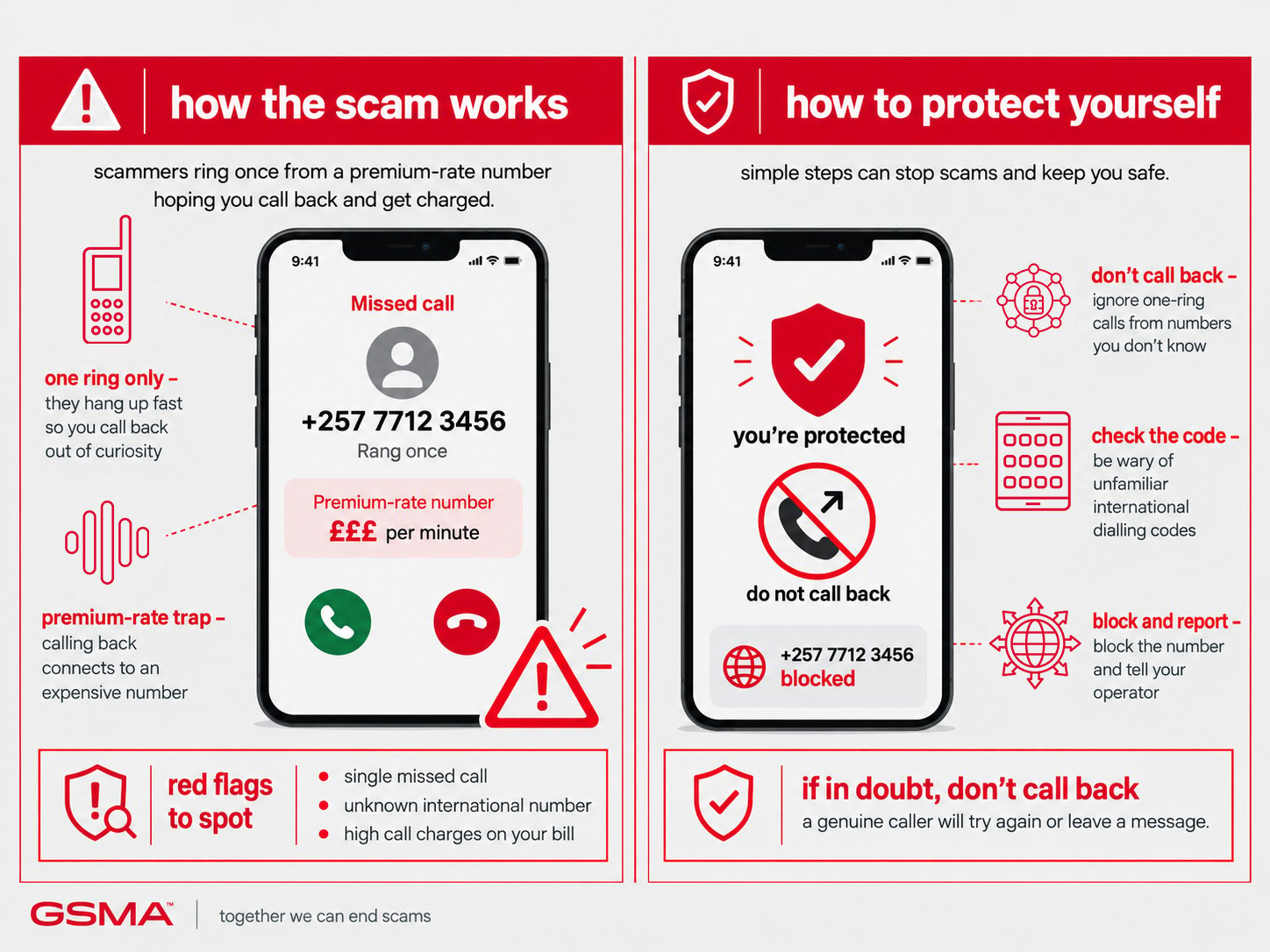
How the scam works
Scammers rely on urgency and trust. They create time pressure so you act before verifying, and they impersonate a sender you’d normally trust without a second thought.
- A missed call from an unfamiliar international number, especially unusual country codes
- The call lasted only a second or two
- You don’t recognise the area/country code at all
How to protect yourself against one-ring fraud
- Don’t call back numbers you don’t recognise, especially international ones that only rang once
- Look up unfamiliar country/area codes before calling back
- Ask your mobile operator whether they offer premium-rate call blocking

National fraud reporting bodies





Mobile network operators
If you think you’ve been targeted by a scam, tell your mobile operator. Reports help operators protect you and other customers. Always contact them through their official website or app, never through links or numbers in a suspicious message. The operators below are examples only, not a complete list. Your operator will explain how to report the scam and what to do next.