Breaking Barriers
The Usage Gap prevents individuals from being able to access critical digital services such as healthcare, education, ecommerce, financial services, and income-generating opportunities. It’s time for this to change.
How the barriers are affecting people’s lives
The GSMA’s State of Mobile Internet Connectivity Report identifies and outlines five key barriers preventing people with mobile broadband coverage from connecting to it and getting online:
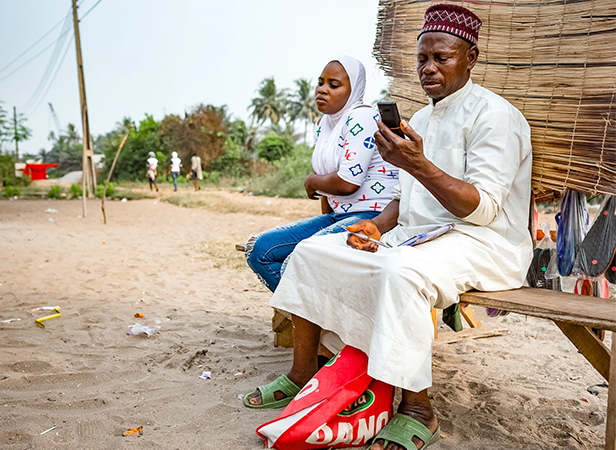
Affordability
Inability to afford internet-enabled handsets and other costs beyond ownership such as data plans and services fees
“I sold (my phone) because I wanted to support my family… [at least] we could survive for about three weeks after selling that phone.”
– A woman in Kenya explains how she and her family coped financially during the COVID-19 pandemic.
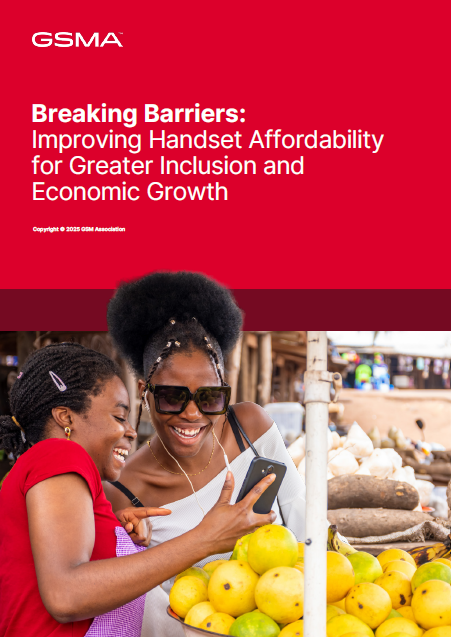
Read our policy paper on how addressing handset affordability can help expand digital inclusion in low- and middle-income countries (LMICs). This paper is designed to help policymakers, governments and telecom regulators turn strategy into action by illustrating how these recommendations are being implemented in diverse global contexts.
Lack of Digital Literacy and Skills
Lack of awareness and understanding of mobile internet, its benefits and uses, as well as lack of literacy, digital skills and confidence
“The internet is for intelligent, educated people. Those of us with half knowledge won’t use it.”
– A woman from urban India highlights the digital skills gap.
Read our policy paper on how addressing digital knowledge and skills can help expand digital inclusion in low- and middle-income countries (LMICs). This paper is designed to help policymakers, governments and telecom regulators turn strategy into action by illustrating how these recommendations are being implemented in diverse global contexts.
Limited Relevant Content and Services
Lack of relevant content, products and services that meet users’ preferences and needs, including those that are accessible, easy to use and in local languages
“If you don’t have proper English, it can be a barrier… everything is in English. It would be good if there’s something in Sinhala.”
– A Sri Lankan woman comments on the lack of relevant local content, which prevents her from utilising mobile connectivity.
Read our policy paper on how to bridge the digital divide with relevant content, products and services. This paper is designed to help policymakers, governments and telecom regulators turn strategy into action by illustrating how recommendations to address the relevance barriers are being implemented in diverse global contexts.
Concerns About Online Safety
Concerns about the negative aspects and risks of the internet including issues such as harassment, identify theft, harmful content and information security
“We’ve seen girls and boys get in trouble using the internet — girls can get raped or even killed.”
– A man from Bangladesh warns how security fears prevent people from getting online.
Read our policy paper on how to advance mobile internet adoption through stronger online safety and security. This paper is designed to help policymakers, governments and telecom regulators turn strategy into action by illustrating how these recommendations are being implemented in diverse global contexts.
Lack of Fundamental Enablers
Lack of access to networks and enablers, such as electricity, formal ID, devices, customer service touch points (e.g. agents), as well as restrictive social norms
“I previously had to walk three hours to another town to charge my phone, but now that there is a mobile charging booth in my village, I’m now able to use my phone and access the internet more often.”
– A Tegea village resident (250 km northwest of Nairobi, Kenya) explains how a lack of access to electricity meant she was only able to use mobile internet infrequently.
Read our policy paper on how to bridge the digital divide by improving fundamental enablers of mobile internet access. This paper is designed to help policymakers, governments and telecom regulators turn strategy into action by illustrating how recommendations to address the fundamental enablers barrier are being implemented in diverse global contexts.
Case studies
Find some examples of work mobile operators have done to close the usage gap and identify digital barriers in the lead-up to our Breaking Barriers awareness campaign.
MTN Data Smart Case Study
This report examines digital barriers and provides an overview of the MTN Data Smart campaign and looks at how it has increased mobile internet use among MTN customers in two key markets: Benin and Cameroon. It highlights how MTN successfully incorporated the lessons from the 2019 pilot to reach over 18 million people and empower their customers’ lives through a campaign that continues to expand.
Multiplying the impact of mobile internet skills training
To tackle the lack of digital skills, the Connected Society programme launched the Mobile Internet Skills Training Toolkit (MISTT). The toolkit provides resources to teach mobile users the most critical internet skills.
In 2019, MTN Uganda piloted a mobile-related digital skills training programme, using MISTT resources to equip their customers with digital skills and increase their active data user base and revenue. This case study explores whether and how a customer’s newly acquired knowledge and skills are shared with others in their social network – what we call the digital skills multiplier effect.
Connected Women – Mobile Internet Brings Down the Digital Barriers
Watch the case study video on how women in low and middle income countries have used mobile internet and apps in areas such as farming, home education, retail and catering to improve their livelihoods and lives
M-KOPA: Applying the pay-as-you-go model to smartphones in Africa
This case study highlights how M-KOPA, a connected asset financing company, is making smartphones more affordable for underserved customers in Kenya, Nigeria and Ghana. It outlines the key success factors that enabled M-KOPA to reach a million customers since launching its smartphone offering in 2020.
MTN Uganda: Mpola Mpola device financing scheme supports MTN Uganda’s digital inclusion strategy
This case study explores the challenges and successes of the Mpola Mpola Kabode offering, from implementation to impact. It examines MTN Uganda’s strategies for raising awareness, customer qualification and selection, onboarding and risk mitigation. It also highlights the critical role of digital skills training in device financing initiatives.
Hear from policymakers driving impact
Minister Malatsi – South Africa
Minister Malatsi explains how South Africa has been tackling the digital divide and addressing the usage gap through policies focused on the affordability of devices and data plans.
Executive Director CRC Colombia – Claudia Bustamante
Hear from Claudia Bustamante on how Colombia is tackling the barriers to mobile internet access and directly addressing the usage gap.
President, Anatel Brazil – Carlos Baigorri
Carlos Baigorri explains how Brazil is addressing the issue of internet-enabled handsets affordability and the digital skills education that is required in order for underserved communities to access the benefits of the internet.
Executive Director, Indotel Dominican Republic – Julissa Cruz
Hear from Julissa Cruz on The Dominican Republic’s approach in the last five years to address the digital divide and provide the population access to life enhancing services.
Minister Malatsi – South Africa
Minister Malatsi explains how South Africa has been tackling the digital divide and addressing the usage gap through policies focused on the affordability of devices and data plans.
Hear from those impacted
Monaliza’s Story
Meet Monzaliza, a young woman from rural Philippines who, through mobile digital skills training, runs a successful online beads and accessories business inspired by her indigenous community.
Ferdinand’s Story
Through mobile digital skills training, Ferdinand, a farmer from rural Philippines, transformed his farm business and built a more prosperous life for his family.
Efti’s Story
Meet Efti, a deaf student from rural Bangladesh who is using mobile internet to transform his life and inspire his community.
Edodi’s Story
Meet Edodi, a farmer from rural Uganda who is using mobile internet to transform his livelihood and create a brighter future for his family.
Ejigayehu’s Story
Meet Ejigayehu, a talented designer and small business owner from Ethiopia who is revolutionising her work with the help of mobile internet.
Sadia’s Story
Meet Sadia, a 35-year-old seamstress and henna artist from Pakistan who is redefining what’s possible for women in her community.
Founding partners
The GSMA works with partners to address the usage gap, including through its Connected Society and Connected Women programmes. These programmes are currently funded by the UK Foreign, Commonwealth & Development Office (FCDO) and the Swedish International Development Cooperation Agency (SIDA) and are supported by the GSMA and its members.