


As 5G reaches maturity in some regions, the focus is shifting from deployment to maximising its value and preparing for what’s next. At the Policy Leaders Forum during MWC Shanghai, policymakers, regulators and industry leaders explored the spectrum policies that will determine both the long-term success of 5G and the foundations of 6G.
Lessons from the 5G era



Today, 5G supports more than 3 billion connections worldwide and carries around half of all mobile data traffic, marking an important milestone in the technology’s evolution. At a roundtable, participants reflected on what has made some markets particularly successful and identified three elements for effective spectrum policy: capacity, clarity and cost.
Providing sufficient spectrum capacity remains fundamental to meeting growing demand. Participants pointed to the importance of making low- and mid-band spectrum available and continuing spectrum refarming to maximise the value of existing resources. China’s approach — prioritising availability of mid-band spectrum alongside low bands — was highlighted as an example of long-term spectrum planning supporting large-scale 5G deployment.
Regulatory certainty was identified as another key success factor. Predictable licence renewals and transparent spectrum roadmaps provide operators with the confidence to make long-term infrastructure investments. With more than 1,000 spectrum licences due to expire globally in the coming years, upcoming renewals represent an opportunity for governments to modernise licensing frameworks and adopt investment-friendly pricing approaches.
The discussion also reinforced that spectrum pricing matters. Affordable licence fees allow more capital to be directed towards expanding and improving networks, ultimately delivering better outcomes for consumers, businesses and national digital economies.
Participants also explored how AI is beginning to reshape network demand. As AI applications become increasingly data-intensive, future mobile networks will require significantly greater capacity and efficiency. At the same time, examples from markets such as Kenya demonstrated how effective spectrum policy continues to support digital innovation, with expanding 5G coverage complementing expanding mobile financial services.
Building the spectrum foundations for 6G

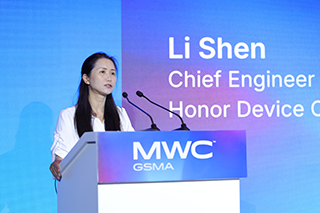
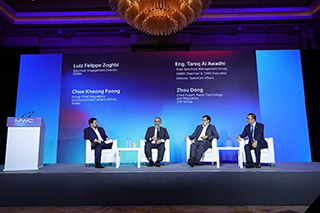
The conversation then moved to identify the spectrum decisions needed to support the next generation of mobile connectivity.
Forecasts presented during the session showed that demand for mobile data will continue to accelerate as AI, extended reality, digital twins and other advanced applications develop. For Greater China, future networks are expected to require 2.5–3.3 GHz of mid-band spectrum by 2035–2040, while global average requirements are estimated at 2–2.5 GHz.
A recurring theme was the strategic importance of the upper 6 GHz band. As one of the last large blocks of high-quality mid-band spectrum, it offers the bandwidth needed to support future 6G services and growing capacity demands. Participants noted the increasing number of countries identifying upper 6 GHz for IMT, recognising its role in enabling global economies of scale and accelerating ecosystem development.
The discussion also highlighted the importance of internationally harmonised spectrum decisions ahead of WRC-27. Aligning spectrum allocations across markets will help lower deployment costs, encourage investment and support innovation across the global mobile ecosystem. As preparations for 6G continue, the lessons learned from 5G remain highly relevant. Ensuring sufficient spectrum, providing regulatory certainty and adopting investment-friendly policies will maximise the value of today’s networks and create the foundations for the next generation of connectivity.