


The world has changed in the eight years since 5G was first launched simultaneously in three Gulf countries. Mobile solutions have been increasingly sought as a way of bringing people together, helping business efficiency, and supporting economic growth during a challenging global financial climate.
Capacity, productivity, safety and sovereignty were all discussed widely at MWC Barcelona 2026. As high-tech robots crossed the shop floor, first responder solutions were showcased by mobile operators and, drones hung, suspended from ceilings, it was made clear that governments could rely on mobile to support their economies and keep their citizens and industry secure.
Spectrum plans that facilitate these issues and form the basis of the networks of the 2030s were considered at the GSMA Ministerial Programme (MP), the government enclosure within MWC. Whichever technology mobile operators use to support their country’s connectivity requirements, capacity needs are growing in both urban and rural areas. Spectrum roadmaps for the robust, secure networks of the 2030s were highlighted by countries all over the world.
Spectrum for inclusion
In low and middle-income countries, adults in rural areas are 25% less likely to use mobile internet than their urban counterparts. Starker still is the fact that even when they have access, rural adults are 30% less likely to engage in activities that help raise productivity by making life easier – online banking, digital education services, calls and messaging. This figure remains at 20% in high-income countries.
Government and industry coordination can help improve the quality and coverage of rural networks. As download speeds are determined by the amount of available spectrum, increasing low-band spectrum capacity in rural areas that rely on its strong propagation will improve network quality. Having more low-band spectrum also improves the investment case for operators – on average, a 50 MHz increase in low-band spectrum is linked to an 11 percentage-point increase in coverage because the capacity makes it easier to provide service quality.
At MP, governments discussed assigning more spectrum in low bands, such as 600 MHz, through investment-focused assignment mechanisms. If spectrum is too expensive – either through high reserve prices, restricted supply auctions or high annual fees – it will stop operators from making the investments that rural areas badly need.
Connecting future applications
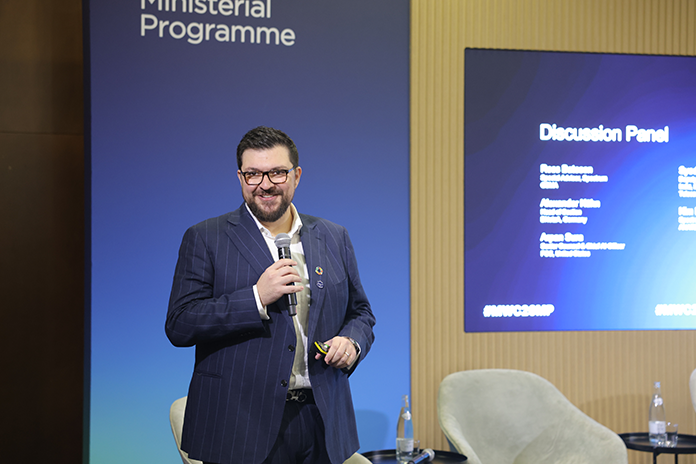
A group of equipment vendors used the MP opportunity to reaffirm their readiness to support the 6 GHz ecosystem. The global vendor group – with companies stretching from Qualcomm in San Diego, USA, to Huawei in Shenzhen, China – emphasised the ability of 6 GHz to cater for the 200-400 MHz channels that will be required in the future.
6 GHz spectrum may power 6G launches in some countries, but will not be sufficient on its own to meet growing demand in the world’s dense urban areas in the 2030s. Governments also discussed their future needs beyond this and the 7 GHz range, which will be harmonised at WRC-27, has strong support from a large group of market-leading countries. The extent of the 7 GHz range, which begins at 7.125 GHz, was the subject of discussion during MP, with differing opinions on whether the upper limit will be 7.25 GHz, around 7.4-7.55 GHz, or 7.75 GHz and beyond. Other bands likely to come into play to relieve capacity constraints are the 4.5 GHz and 3.8-4.2 GHz bands. Maximising spectrum in the upper 3.5 GHz range has been a recent focus in the US, and governments in Europe are increasingly viewing this as a high-power band for wide-area networks.
Spectrum plans take years to come to fruition, and harmonisation is essential to extending access to digital services as widely as possible. At MWC Barcelona, governments underlined that developing connectivity in their markets remains a powerful driver of social and economic development – and a bright source of optimism.