


This blog provides the latest updates from the GSMA’s International Relations team as we engage with a wide range of governments, UN Agencies, NGOs and international organisations, to amplify the mobile industry’s core messaging at key international events from across the globe.
Shaping the Future of Connectivity at the ITU Plenipotentiary Conference 2026
(08/10/2026)
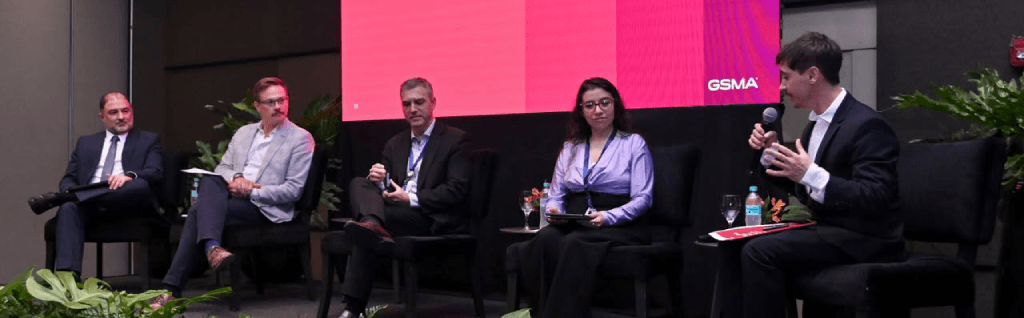
Preparations are gathering pace for the ITU Plenipotentiary Conference 2026 (PP-26), the highest UN decision-making body on ICT policy matters, which will take place in Doha, Qatar, from 9–27 November 2026. The decisions made during PP-26 will shape the ITU’s priorities across spectrum, standards and digital development.
A range of issues will feature at PP-26, including satellite connectivity, AI governance, the digital divide, and spectrum policy issues that will underpin future connectivity.
PP-26 will be a pivotal milestone in the longstanding partnership between the ITU and the GSMA, as it will be held alongside MWC26 Doha on 8–10 November. Co-locating the two events creates a unique opportunity for policymakers and industry leaders to advance strategic dialogues on the future of connectivity policy and investment in one city.
Ahead of the conference, regional groups are working to develop common positions and proposals. These preparatory discussions help build consensus on the issues that will be negotiated in Doha and provide an opportunity for stakeholders, including the mobile industry, to contribute evidence and practical perspectives.
The GSMA has been actively engaged throughout the preparatory process, particularly on discussions related to digital inclusion. Through participation in regional preparatory meetings, the GSMA has contributed a proposal on addressing the usage gap and the barriers that prevent people from using the internet. Encouragingly, several regional groups have adopted supportive positions that recognise the importance of addressing the usage gap, alongside efforts to close the coverage gap.
To support dialogue with policymakers and regional stakeholders, the GSMA International Relations team recently organised two workshops during the regional preparatory meetings. The first took place alongside an Inter-American Telecommunication Commission (CITEL) meeting in Paraguay, while the second was held with stakeholders from the African Telecommunications Union (ATU) meeting in Nigeria. These workshops provided opportunities to discuss key PP-26 issues and give policymakers an understanding of the mobile digital economy, the usage gap, and what is required to expand and sustain mobile connectivity from technological, commercial and regulatory perspectives.
As preparations enter their final phase, there is growing recognition that achieving meaningful connectivity will require action not only to expand networks, but also to ensure that people have the digital skills, affordable devices and relevant content needed to participate fully in the digital economy. PP-26 provides an important platform to advance policies that support mobile industry investment and innovation.
Global Dialogue on AI Governance
(17/07/2026)

Last week in Geneva, a GSMA delegation led by Director General Vivek Badrinath joined governments, UN agencies and industry leaders at the inaugural Global Dialogue on AI Governance – a new UN forum created to bring international discussions on AI under one roof. Two priorities were front and centre for the mobile industry: using AI to make the digital environment safer, and making sure its benefits reach everyone.
The first is urgent. AI is making cybercrime cheaper, faster and more convincing, helping drive digital scams that now cost the global economy an estimated $1 trillion a year. The same technology, though, is also strengthening our defences. At a UN Development Programme session, the GSMA’s Head of External Affairs, Alix Jageneau, shared examples of operators already using AI to fight fraud: Airtel India’s AI-powered anti-spam solution, which blocks 1.17 million spam calls a day, and the GSMA Foundry’s work with Virginia Tech on AI that detects SIM farms. Both form part of the GSMA’s United Against Scams programme.
The second priority is making AI work for everyone. As AI becomes part of daily life, its benefits should not be limited by language, geography or socio-economic circumstance. Yet today’s leading models are trained largely on English-language data, leaving billions of people underserved.
Political will to close that gap is building. On 8 July, the GSMA’s Director General joined more than 40 founding members from government, industry and the UN system for the newly formed AI for Good Global Commission for its inaugural meeting, co-chaired by Rwandan President Paul Kagame and Salesforce Chair and CEO Marc Benioff. The Commission’s aim is to identify practical ways to expand access to AI and share its benefits more equitably, ensuring developing countries help shape the global agenda on AI.
Indeed, practical work matters just as much as political will. To this end, the GSMA and its partners have launched an initiative to build AI language models “in Africa, by Africa and for Africa”. Its first milestone, an open Swahili reasoning model, shows how locally developed AI can widen access, strengthen digital participation and better reflect the communities it serves. Speaking at a session of ITU’s Partner2Connect Digital Coalition, the GSMA’s Chief Regulatory Officer, John Giusti, set out the ambition: bringing partners together to build systems grounded in African languages, cultures and knowledge, and accelerating adoption in underserved communities.
Inclusion ran as a thread through the whole week – a sign that the policy debate is maturing, shifting from a narrow focus on managing risks to a broader conversation about building trust, widening access and delivering practical benefits to all communities.
For the GSMA, that means keeping the focus on implementation: supporting policy frameworks that reduce real-world harms, while helping more people benefit from AI in practice. As the international conversation develops, the mobile industry will keep bringing that practical focus to the table, working with governments and partners to turn the promise of AI into benefits that reach everyone.
Foundations of the Digital Economy: The Road to the ITU Plenipotentiary Conference 2026
(29/05/2026)
The ITU Plenipotentiary Conference, the highest UN treaty-level event on ICT policy, takes place later this year in Doha. Gathering senior policymakers from all ITU Member States, it will elect the Union’s leadership and set the direction for the next four years. What is decided in November will also lay the foundations for the 2027 World Radiocommunication Conference, shaping the digital economy and its regulatory environment for years to come.
For more than 4.7 billion people, mobile connectivity is the primary, and often only, gateway to the internet, enabling access to digital services, innovation, and economic opportunity. As AI, IoT, and advanced data systems drive the next phase of the digital economy, high-quality, resilient, and intelligent connectivity will become even more critical to enabling these technologies to function and scale. Mobile networks are not only the foundation of today’s digital economy, but also the essential infrastructure underpinning its future.
Ahead of this conference, the GSMA is asking Member States to focus on three foundational aspects to the digital economy:
- 1. Usage Gap – Addressing the demand-side barriers, especially device affordability, that keep billions of people offline despite available coverage;
- 2. Network Investment – Enabling an investment environment that allows networks to expand and modernise;
- 3. Spectrum – Managing spectrum effectively, allowing operators to meet users’ demand for more data and reach people in rural areas.
To advance these priorities, the GSMA is engaging with regional preparatory meetings and running capacity building workshops to give policymakers a grounded understanding of the mobile digital economy, showing what connectivity at scale actually requires and what it costs operators to build and sustain it.
The GSMA shared these messages at the Global Symposium for Regulators held in Ankara two weeks ago with a delegation headed by GSMA’s Chief Strategy Officer, Hakan Dursun. As we continue on the road to Doha, our Plenipotentiary campaign will continue to engage governments and policymakers around the world to ensure that operators’ voices are heard.
The GSMA Highlights the Critical Role of Digitalisation as a Bridge for Inclusion at the W20 South Africa Summit
(14/11/2025)
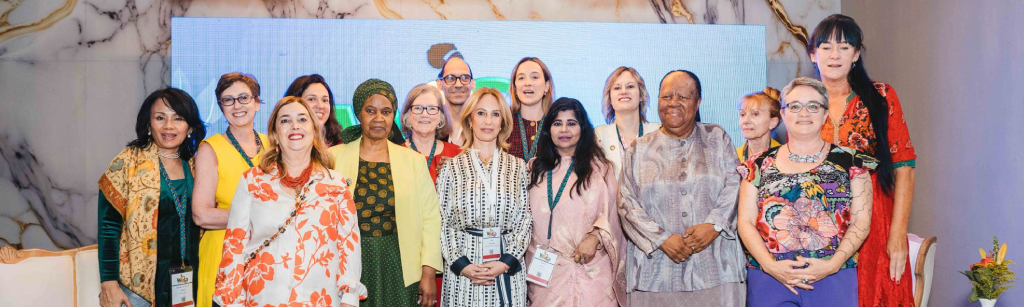
Earlier in October, member state delegations from across G20 countries convened for the annual Women 20 (W20) Summit hosted in Johannesburg, South Africa. South Africa holds the G20 Presidency for the first time this year, marking a historic milestone—not only for the country but for the entire African continent. This year also celebrates the tenth anniversary of W20: the G20’s official engagement group dedicated to advancing gender equality and women’s economic empowerment. Under the theme “Ubuntu – Women in Solidarity towards Sustainable Socio-Economic Development,” the W20 South Africa Presidency has been shaping a bold agenda for inclusive growth, equity, and sustainability.
Tamara Dancheva, Senior International Relations Manager at the GSMA, took part in the W20 Summit as Co-Head of the EU Delegation and Co-Chair of the W20 South Africa Taskteam on Bridging the Digital Divide, STEM and Education.
Speaking on a panel titled Invisible No More: Women’s Leadership in the Economies We Can’t Overlook alongside representatives from the Ocean20 Engagement Group, the Swedish University of Agricultural Sciences, the University of Rwanda and the Western Indian Ocean Marine Science Association, Tamara spoke about the power of digitalisation to transform women’s lives and shared actions governments and the private sector can take to close the mobile gender gap: “Digitalization holds enormous potential to transform women’s lives-yet for millions of women working in informal and invisible economies, that promise remains out of reach. For women working across invisible economies, whether cultivating small plots of land, managing fisheries, or leading micro-enterprises in circular and blue economies, digital tools can be truly transformative. Yet GSMA data shows that the mobile internet gender gap in low- and middle-income countries is still 14%, meaning 235 million fewer women are using mobile internet than men. Digitalisation can connect women farmers to market prices, link women fishers to traceability systems, and power digital financial tools for women-led climate solutions. But only if policies are deliberately inclusive and go beyond infrastructure, investment thereby focusing on meaningful use. This means tackling key barriers to digital inclusion such as lack of affordability of devices and data through targeted subsidies or innovative financing including for low-cost smartphones.”
The W20 Summit was attended by the South African Minister for Human Settlements H.E. Thembi Simelane (among other dignitaries) who received the W20 Communique: the final policy outcome of the W20 deliberations which this year called on G20 leaders to advance financing for equality and develop a Global AI and Gender Equality Index among other key policy outcomes. The W20 policy outputs also cite GSMA data on the economic benefits from closing the usage gap across G20 member states as well as the mobile gender gap across low- and middle-income countries. Additionally, the call for action section of the W20 Communique highlights the importance of public-private partnerships in addressing key barriers to Internet adoption and stresses on the urgency of tackling device affordability and lack of digital skills and literacy.
To mark the 10-year anniversary of W20, the South African Presidency published a special report highlighting the influence of the G20 engagement group on the global gender policy landscape. The report indicates that over the past 10 years the W20 has submitted 220 recommendations to G20 leaders. Recent analysis shows that 74 of these, over one-third, have been adopted into G20 Leaders’ Declarations, with 84% of G20 countries implementing at least one gender-related reform between 2014 and 2024. Key successes include recognition of the care economy, digital and financial inclusion advocacy, and parenthood policy reforms.
A major milestone of the W20 South Africa Presidency this year is also the introduction of the Johannesburg Goals: to reduce the female labor force participation gap, the gender wage gap, and the unpaid care gap by 35% by 2035. These ambitious targets reflect the urgency and determination of the W20 to move from rhetoric to measurable impact.
The W20 South Africa Presidency has also published a policy brief on Closing the Gender Gap in Digital, Education, STEM and AI which reflects GSMA research and data on the digital gender divide.
Reflections from UNGA: Digital Cooperation at the Heart of Global Progress
(06/11/2025)

The annual United Nations General Assembly (UNGA) is always a unique moment — a week when global leaders, policymakers, private sector representatives, and civil society converge in New York to shape the future of international cooperation.
This year, one trend stood out clearly: digital transformation has become a central theme across the global agenda. From official meetings to side events, digital inclusion, connectivity, and technology governance featured prominently in discussions — reflecting how vital these topics have become for governments, international organisations, and the private sector alike.
Read the full blog from Alix Jagueneau, Head of External Affairs, GSMA here.
European Union Delegation to W20
(02/10/2025)
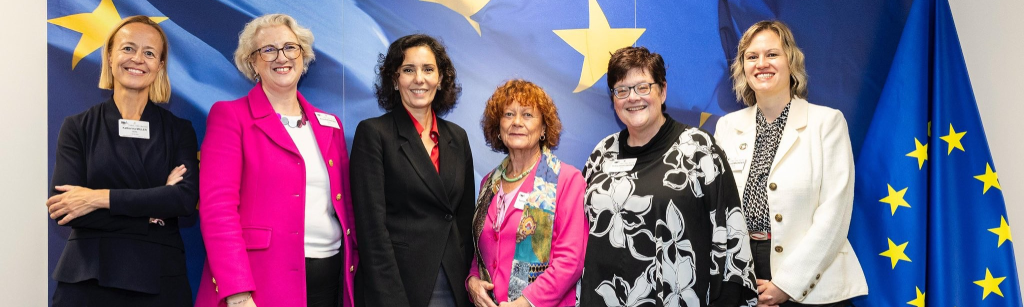
The GSMA, represented by Tamara Dancheva, Senior International Relations Manager and Co-Head of the European Union Delegation to W20, met with the European Commissioner for Equality, Preparedness and Disaster Management H.E. Hadja Lahbib at the European Commission earlier this week.
During the meeting, Tamara shared what the EU delegation has been prioritising in terms of policy recommendations to G20 Leaders via the W20 Communiqué. Key success were highlighted as part of her current mandate as Co-Chair of the W20 South Africa Task team on Digital Inclusion, Education and STEM and past mandates as Co-Chair of the Digital Inclusion Working Groups under the W20 Indonesia, W20 India and W20 Brazil Presidencies.
As such specific language was highlighted in the digital inclusion thematic area which had been adopted such as:
- 1. halving the digital gender gap by 2030
- 2. recognising and responding to technology-facilitated gender violence (cyber harassment, online abuse) as distinct challenges needing policy, legal, and protective measures
- 3. increasing women’s participation in STEM / digital fields
- 4. ensuring digital public services are accessible, inclusive, gender-responsive, and reduce inequality
- 5. developing and deploying digital technologies (e.g. AI) with ethical safeguards, to avoid reinforcing biases, and to ensure technology benefits women & girls
- 6. encouraging annual public reporting on investments, outcomes, and gender-disaggregated data
- 7. dedicating funding to national statistical offices and “gender-sensitive and sex-disaggregated data” collection
- 8. creating a standardized G20 “Gender Outcome Dashboard” to support evidence-based policymaking
- 9. integrating digital & financial education into women entrepreneurship programs
- 10. using public procurement, e-commerce, e-procurement with gender lens
Addressing the EU delegation, Commissioner Lahbib discussed at length how the Roadmap for Women’s Rights, which is currently under preparation, is paving the way for the next EU vision to advance gender equality and reiterated her commitment saying: “Gender equality and women’s empowerment are at the heart of the EU global action. We remain committed to driving ambitious outcomes at the G20 Ministerial on Women’s Empowerment happening in South Africa at the end of October”.
The W20 is the G20’s official independent engagement group focused on promoting gender equity and women’s economic empowerment. Its primary mission is to influence high-level commitment to women’s empowerment and gender equality agenda in the G20, putting gender equality and women’s empowerment at the centre of the global discussion.
Previous W20 Communiques can be accessed by clicking here.
APT-Asia Pacific Telecommunity WTDC 2025 Preparatory Meeting in Pattaya, Thailand
(07/08/2025)

The GSMA was delighted to host a panel discussion on Recognising and Addressing Demand Side Barriers to Mobile Internet Adoption on the sidelines of the APT-Asia Pacific Telecommunity World Telecommunication Development Conference (WTDC25) Preparatory meeting in Pattaya, Thailand earlier in July.
While we’ve made tremendous progress — with 96% of the global population now covered by mobile broadband networks — a significant digital divide still persists. Our data shows that the “usage gap” (people with coverage who aren’t online) is now nine times larger than the “coverage gap” (people without access to networks).
The discussions included insights from the government of Malaysia, NTT DOCOMO and ZTE Corporation and highlighted the importance of addressing demand-side barriers to mobile internet adoption — such as affordability (particularly handset affordability) and a lack of literacy and digital skills — which are still keeping 30% of the world’s population offline despite having access to mobile broadband coverage.
The session provided Asian policymakers with crucial insights, best practices, and concrete recommendations on how to close the digital divide in preparation for the WTDC Meeting in November in Baku, Azerbaijan.
Closing the Digital Divide: The Road to WTDC 2025
(24/06/2025)

The world is more connected than ever before, with 96% of the world’s population now living within the footprint of a mobile broadband network. However, this infrastructure achievement masks a more complex challenge: 39% of the global population remains unconnected to mobile internet despite living in areas with existing mobile broadband coverage. This disparity between coverage and usage – the “usage gap” – represents one of the key challenges for policymakers seeking to accelerate digital inclusion.
Later this year, these policymakers will come together in Baku for the ITU’s World Telecommunication Development Conference (WTDC), where they will set the mandate for the next four years of the International Telecommunication Union’s work on digital development.
The GSMA International Relations team has been engaging with governments and private sector stakeholders as they prepare for the conference, sharing the mobile industry’s insights and research-backed recommendations for tackling the barriers which prevent people from using and benefiting from mobile internet.
As part of this outreach, we recently hosted a breakfast workshop targeting policymakers from across the African continent at the African Telecommunication Union’s preparatory meeting in Nairobi (Kenya). The discussions highlighted the importance of addressing the barriers to mobile internet adoption, such as handset affordability and a lack of literacy and digital skills, and showcased examples of how governments and mobile network operators from across Africa are leading the way in addressing these challenges. A special presentation was also allocated to the GSMA Digital Africa Index: a tool developed by the GSMA to amplify the progress the region is making in digitalising African economies while highlighting areas of improvement to accelerate the speed of digitalisation in the region.
Workshop discussants included representatives from Safaricom, Qualcomm, Ericsson, the Democratic Republic of the Congo and Huawei with audience members from across 30 different national African administrations.
In the months to come, the GSMA International Relations team will continue to meet with governments from around the world to share our insights and recommendations on closing the usage gap and achieving universal meaningful connectivity, with these advocacy efforts complemented by a global marketing campaign.
At WTDC-25, ITU Member States have a unique chance to unite the connectivity ecosystem behind efforts to address the usage gap and close the digital divide. By agreeing to intensity global efforts to close the usage gap, we can ensure that the next four years deliver meaningful progress for the billions still waiting to join the digital economy.
GSMA at Women20 South Africa Inception Meeting
(24/06/2025)
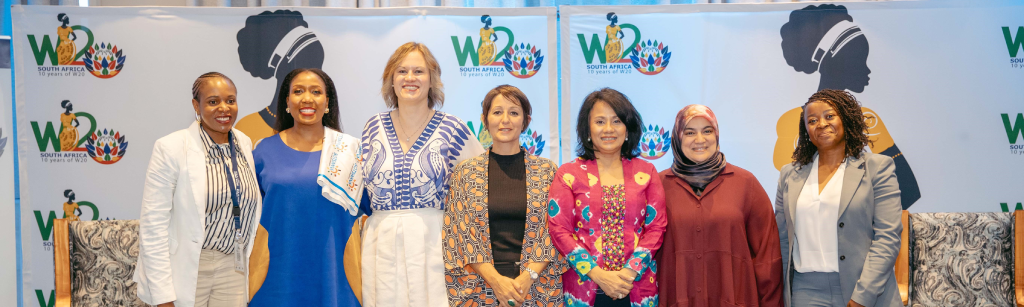
The GSMA, represented by Tamara Dancheva, GSMA Senior International Relations Manager, took part in the Women20 South Africa Inception Meeting, held in Cape Town, South Africa last month. The meeting was organised by the HSRC (Human Sciences Research Council).
Tamara, as Co-Head of the EU Delegation W20 and Co-Chair of the W20 South Africa Taskforce on Education, STEM and Bridging the Digital Divide, addressed one of the panel discussions at the meeting which focused on the untapped potential of rural women for climate resilience, food security and digital transformation.
As part of her intervention, she highlighted the mobile gender gap across low and middle-income countries (LMICs) and recommended critical actions G20 governments can undertake so they can tackle key barriers to mobile Internet adoption such as handset affordability and a lack of digital skills and literacy —ensuring that no woman or girl is left behind in the digital age.
The meeting also saw interventions by the Honourable (MP) Sindisiwe Chikunga, Minister of Women, Youth and Persons with Disabilities in the G20 South Africa Presidency and the South African Permanent Representative to the UN in New York Dr Mathu Joyini among other dignitaries.
The outcomes from the discussion will help inform the W20 Communique which is the main policy outcome, and it includes key recommendations for G20 Leaders and will also be included into a special W20 policy brief.
Women20 is the official G20 engagement group on women’s and girl’s empowerment and it was first established under the G20 Turkey Presidency back in 2015.