


Thursday 7 August, 2025
English
According to a study conducted by GSMAi on energy efficiency, the RAN (Radio Access Network) accounts for approximately 87% of the total energy consumption of mobile networks. Consequently, the primary objective of sustainability strategies for both telecommunications operators and network vendors should be to enhance the RAN’s energy efficiency.
In 2018, ZTE initiated the initial extensive implementations of its AI-based energy management system. Shutdown mechanisms within the RAN are the primary focus of AI-driven energy efficiency solutions in the application field. By analysing previous trends, local events, and other variables, AI-powered shutdown and sleep mechanisms can predict data traffic. Subsequently, they can establish appropriate thresholds and activation and sleep periods. In order to conserve energy, the programme has the capability to deactivate power amplifiers, transceivers, and other substantial radio components.
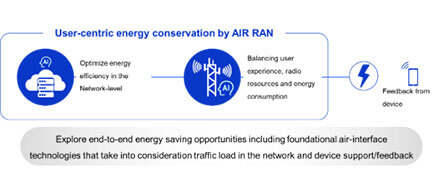
However, the accelerated development of mobile internet has resulted in a variety of business models, including e-commerce, social media, online gaming, and video streaming. The base station is essential for the network’s stability and reliability, as well as for the provision of a high-quality experience for all service categories. Therefore, it is required to possess an additional degree of service-awareness. AI-RAN solutions improve application-level energy-saving capabilities by incorporating computational and storage resources into base station AI models, with an emphasis on the user experience. This entails the aggregation of service data, the surveillance of application patterns, and the prompt adaptation to changes in these patterns to guarantee exceptional perception rates for critical services.
ZTE’s user-centric based energy conservation by AIR RAN is now used by operators such as China Mobile, Thailand True, and Indonesia’s Smartfren. In Phuket, Thailand, for an example, the solution is deployed across 652 sites with 5,575 shared network Remote Radio Units (RRUs), which meets the both rising connectivity demands and carbon-reduction goals of True Corporation and Total Access Communication Public Company Limited (commonly known as DTAC). The results showed the energy-saving strategy’s effective duration increased by over 30%, cutting daily network power consumption by 2.25 million kWh per year, enough to power a community of 3,000 people, all without affecting network performance.
Future mobile networks will face greater challenges due to growing demand for new services, such as holographic communication, intelligent interaction, and digital twins. By integrating AI capacity and RAN, networks will substantially improve efficiency while lowering overall energy consumption. This is going to propel the global digital society towards a low-carbon, sustainable future, offering strong support for achieving “mobile net-zero “.
Chinese
根据GSMAi最新研究显示,在移动网络能耗结构中,无线接入网(RAN)占比高达87%。这一数据凸显了无线接入网能效提升对于电信运营商和设备商实现可持续发展目标的战略意义。
早在2018年,中兴通讯就率先部署了基于AI的节能解决方案PowerPilot。该方案通过分析网络历史用户数据流量模式、本地事件等多维数据,构建精准的网络负荷预测模型,进而对射频设备的组件(如功率放大器、收发器等)实施基于智能阈值的动态开关控制。这种精细化管控机制在实际部署中取得了显著的节能成效。
然而随着5G规模化应用渐入佳境,解决无线接入网能耗问题,不只节能一方面,还要兼顾业务发展和用户体验。电商、流媒体等新兴业务对无线接入网提出了更高的要求:既要保障网络连接的稳定性,业务体验的高质量,又需兼顾能效优化。为此,AIR-RAN创新性地将算力与存储资源下沉至无线基站侧,构建起以用户体验为中心的智能节能体系。该方案通过实时汇聚业务数据、监测App级业务特征,能够动态调整资源分配策略,在确保关键业务体验最优的同时实现应用级能效提升。
目前,以用户为中心的AIR-RAN能效优化方案已成功应用于中国移动、泰国True、印尼金光(Smartfren)等运营商网络。以泰国普吉岛项目为例,此方案覆盖全岛共计652个站点,这些站点由运营商True和DTAC共建共享总计5,575台射频设备(RRU:Remote Radio Unit),在满足两家运营商网络流量业务增长需求的同时,实现了年节电225万千瓦时的环保效益——节约的电量够3,000人社区全年使用。值得注意的是,所有节能优化均在不影响网络性能的前提下完成,且节能策略有效运行时长提升超30%。
面对即将到来的全息通信、数字孪生等新兴业务浪潮,移动网络将面临更严峻的能效挑战。业界实践表明,通过深度整合AI算力与无线网络RAN架构,不仅能显著提升无线资源利用效率,更可系统性降低网络能耗,为全球”移动网络零碳”目标的实现提供关键技术支撑。这种智能化演进路径,正在重塑通信行业可持续发展的未来图景。
