Freetown, like many rapidly urbanising cities in Africa, faces a critical waste management challenge. With a fast-growing population, generating approximately 550 tonnes of solid waste daily, the city manages to collect only about 30% of waste , 25% is transported to dump sites while the remainder (more than 300 tons per day) is buried, burned, or dumped in waterways or drains.

Freetown’s waste collection rate is below the sub-Saharan African average of 44% and behind cities like Accra (83%), Nairobi (65%), and Kampala (60%). This is due, in part, to Freetown’s particularly challenging topography, including steep slopes, narrow roads, and dispersed settlements. This, combined with rapid urbanisation and inadequate waste management infrastructure, weakens formal collection systems and increases reliance on alternative disposal methods such as burying, burning or dumping waste in waterways and drains. The solid waste management sector accounts for 29% of Freetown’s greenhouse gas emissions, and exacerbates climate risks like the frequent flooding by congesting drainage systems. Freetown’s coastal informal settlements have experienced extensive and intensifying coastal flooding in recent years. The primary cause of flooding is a combination of tropical rains during the annual rainy season, blocked drainage in urban areas, and the proximity of overflowing dumpsites such as Kissy and Kingtom to watercourses. For people living in coastal informal settlements, this process of converging hazards accentuates disaster risks and undermines the populations’ climate resilience .
To address this issue, the Freetown City Council (FCC) has prioritised waste management in its Transform Freetown Initiative and Climate Action Strategy 2022-2030. The Transform Freetown Initiative focuses on immediate improvements such as modernising waste management infrastructure and improving service delivery. Through the Climate Action Strategy, the FCC aims to “free Freetown from waste” by leveraging advanced technologies such as real-time monitoring and data analytics to optimise waste collection and processing, aiming to foster a circular economy where waste is minimised, repurposed, and its environmental impact reduced. Freetown has a track record of leveraging data and innovation to tackle key urban challenges with the city deploying digital tools to improve the accuracy and fairness of property assessments and taxation.
Public-Private Partnerships as a solution
To implement these initiatives, the FCC identified public-private partnerships (PPPs) as a central strategy, and subsequently, divided the city into eight blocks with sixteen waste collection zones to streamline service delivery. In March this year, Freetown Waste Transformer’s (FWT) DortiBox app was adopted as the official digital infrastructure for coordinating solid waste management operations across all eight blocks in Freetown.
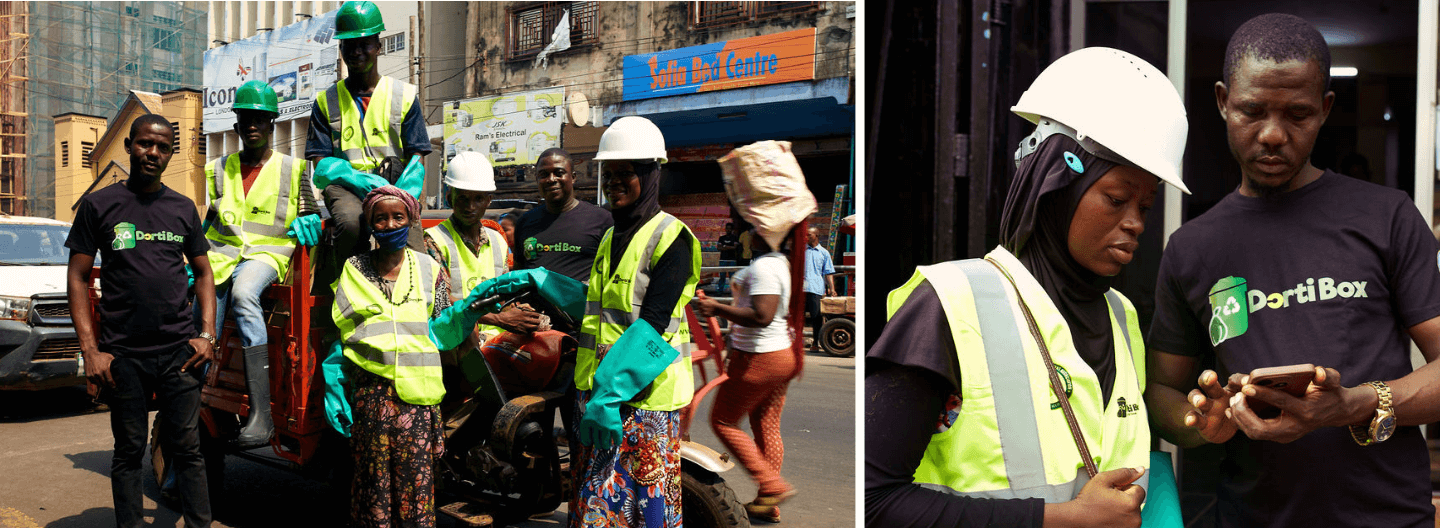
FWT are an integrated waste management company that has been pioneering the digitalisation of waste services in Freetown, and DortiBox is a proprietary digital platform developed with support from the GSMA Innovation Fund. The platform automates operations, enabling residents to register, schedule pickups, make mobile money payments, and provide feedback on service delivery. As a result, Freetown’s waste management services, from resident engagement to payment processing, are transitioning to electronic processing through the FWT’s DortiBox platform. This transition systemises current operations and establishes a foundation for a more data-driven and responsive waste management system in Freetown.
In October 2024 the FCC formalised its PPP approach by awarding concession contracts to private waste management companies for each of the city’s eight blocks. FWT secured the contract for Block 6, granting them responsibility for waste collection services for over 15,000 registered customers. Under this five-year contract, commencing in Q2 2025, FWT will be the exclusive provider of waste collection and disposal services for households, businesses, and institutions within Block 6. Residents and businesses in this area are required by law to use FWT as their approved and exclusive waste collection service provider for their weekly waste collection.

“The new partnership between FWT and FCC sets a powerful precedent for how technology-driven solutions can improve service delivery in rapidly growing urban areas. By leveraging innovative solutions like DortiBox and adopting a structured public-private partnerships model, the Freetown City Council has taken critical steps to address long-standing waste challenges. The success of this initiative will serve as a valuable blueprint for future urban waste management reforms, showcasing the power of collaboration between city authorities, private companies, and the integration of technology-driven solutions.“
– Yvonne Aki Sawyerr, Mayor of Freetown

“This initiative is fundamentally a win-win for all stakeholders; the City of Freetown and its residents will benefit from a cleaner environment, positively impacting livelihoods and pave the way for a more sustainable future.”
– Aminata Dumbuya, CEO and Founder FWT
What’s next for FWT?
With the concession agreement secured, FWT is currently fundraising so as to efficiently provide waste collection services to Freetown’s Central Business District, which includes at least 15,000 households. The company’s business model is structured around a three-pillar strategy: maximising the value of the waste collection concession, automating waste collection through its DortiBox digital platform, and scaling its waste-to-energy solution by offering onsite waste conversion through anaerobic digesters. With support from the GSMA, FWT has initiated discussions with potential funders, making progress towards securing initial capital and is actively exploring additional funding streams.
The Digital Utilities programme work on supporting digital solutions in the circular economy
The GSMA recently published ‘Making Circularity Work: How digital innovation enables circular economy approaches in waste management’. This report takes stock of how and where digital innovation supports circular economy models in waste management. It presents insights from waste management organisations funded under the recently completed GSMA Innovation Fund for Digital Urban Services, as well as insights from other start-ups from across the ecosystem.
The report highlights some key positive trends supporting circularity:
- There is growing momentum behind national and global policy change governing waste. In many cases, these changes are market-making for those working towards circular economy approaches.
- Demand for secondary materials in manufacturing is also rising, particularly those from e-waste in response to the limited global supply of critical inputs.
- That the waste sector is such a significant source of emissions presents the opportunity for mitigation, and for access to climate finance.
- Start-ups working in the waste sector are increasingly being viewed favourably by investors, with series raises in the tens of millions being increasingly common.
Details of the work under the GSMA Innovation Fund can be found in the grant-specific learning blogs below:
- Digitising waste collection: Freetown Waste Transformers’ DortiBox app in Sierra Leone
- Building a national circular supply chain platform – ReCircle’s ClimaOne platform in India
- Health insurance through plastics recycling – Soso Care’s model in Nigeria
- Incentivising recycling through a virtual currency – Regenize in South Africa
This initiative is currently funded by UK International Development from the UK Government and is supported by the GSMA and its members.