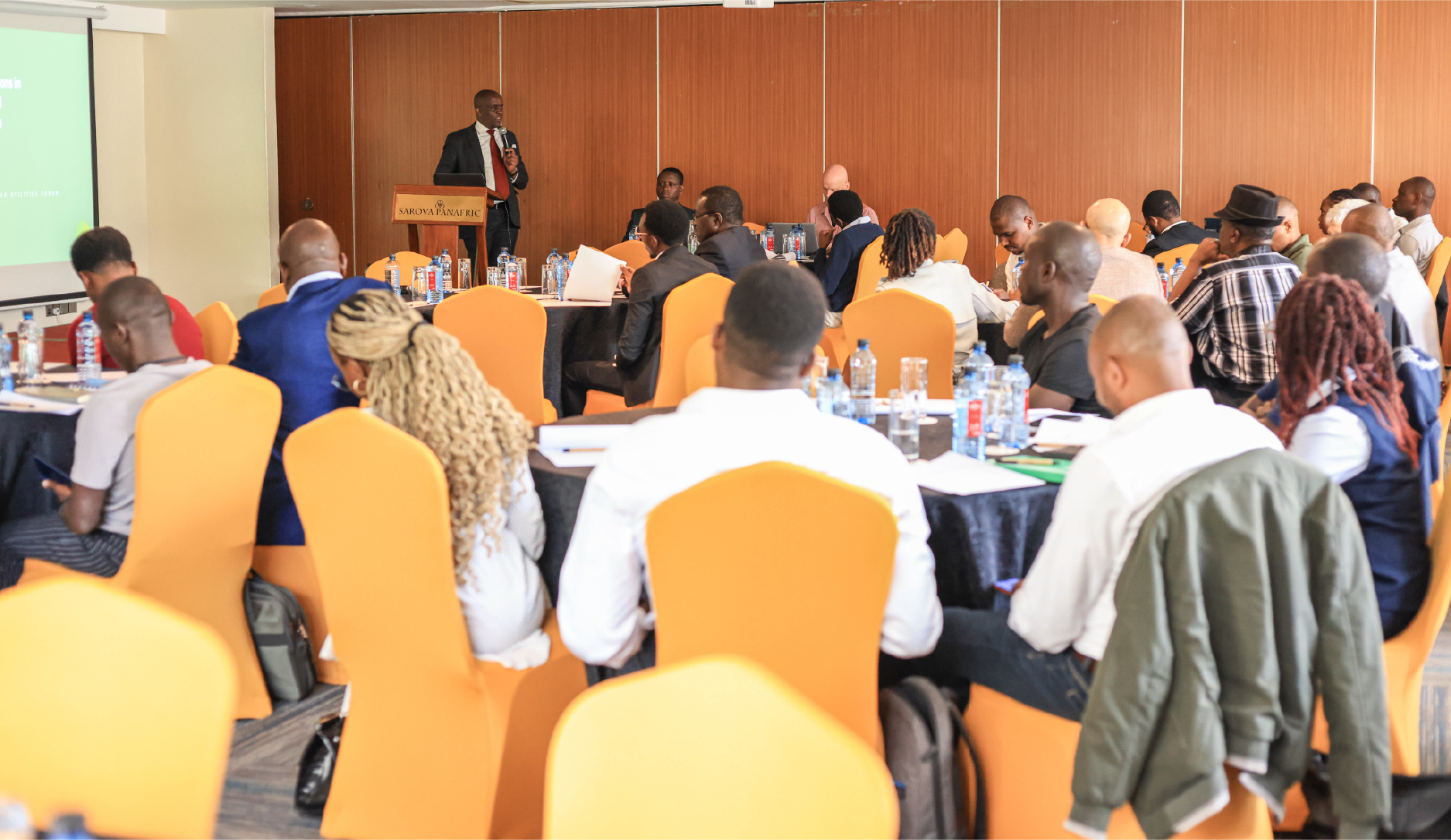
In December 2024, the GSMA Digital Utilities programme, in partnership with the Kenya Alliance of Resident Associations (KARA), hosted a forum on accelerating the uptake of digital solutions in waste management in Kenya. The forum brought together over 40 participants in waste management and its adjacent sectors, including key start-ups working in the space, municipal decision-makers, mobile operators, and representatives from resident associations across Kenya. This blog summarises some of the key takeaways from the discussions.
The mounting challenge
Presently, the growth in waste is outstripping population by a factor of two globally, and a factor of three for the fastest growing waste stream: e-waste. Despite the focus and attention on waste, the proportion of materials in the global economy cycled back into use fell between 2018 and 2023, from 9.1% to 7.3%. Global recycling rates also remain alarmingly low: fewer than 10% of the world’s plastics are currently recycled and global e-waste recycling rates stand at 22%. Across low-and middle-income countries only half of municipal waste is collected in the first instance. Up to 85% of waste workers operate in the informal sector, working with few, if any, safeguards and are subject to unpredictable working patterns and remuneration. In many markets they form the backbone of the waste collection and management system.
Kenya’s per capita waste generation is low – 11 Kg per person per year vs the global average of 29 Kg – and 80-90% of this waste is organics. Despite this, there are still causes for concern. Waste collection in rural areas is all but absent, meaning problematic materials like plastics and e-waste often leak into the environment. In urban centres collection rates are comparatively high (e.g. 72% in Mombasa and 60% in Nairobi), however a lack of viable treatment options means that a total of 92% of waste in Kenya is mismanaged (i.e. not recycled or safely disposed of). A critical issue is the mixing of organics and dry waste; meaning it becomes much more difficult to recover value. A very visible example of this is Nairobi’s Dandora, one of the world’s largest open dumps sprawling across 30 acres and receiving more than 2 million kilogrammes of waste per day. The waste pickers working there face a series of hazards, including toxic smoke from plastic and e-waste burning, exposure to hazardous chemicals and waste, and sharps.
The role of digital in Kenya
While the last few decades have seen circularity principles move to centre stage in global and national policymaking, current global recycling and reuse rates are a testament to the fact that we are only at the very beginning of making meaningful progress. Digital solutions offer an important tool in operationalising these principles. A recent GSMA report highlights these, chief among them in the Kenyan context are the opportunities for: tools for citizen engagement, behaviour change, and incentivising segregation at source; offerings that return value or offer new services for waste pickers; data for tracking waste and ensuring Extended Producer Responsibility compliance; and AI-assisted mechanical sorting.
Some examples of the start-ups and companies working on this in Kenya include:
- Mr Green Africa, a Nairobi-based technology-driven plastics company that focuses on the processing end of the value chain, producing hot washed plastic pellets at their facilities. Mr. Green Africa engages informal waste pickers and pays them a fixed and above market price per kilogram for waste delivered to their facility. They also have an app-based loyalty programme, and provide several services to waste pickers, such as life and business skills, health assistance, access to microcredit, and protective clothing.
- Vintz Platics and the Zaidi App with Taka Ni Ajira. The Zaidi app digitally manages the collection and aggregation of waste. Vintz is a recycling processor that recycles plastic for onward sale as an input to manufacturers; in Mombasa alone, they process 150 tonnes a month. Vintz is exploring voluntary plastic credits and needed a solution for reporting volumes and social impact, with mobile money transactions to waste pickers the most viable and reliable way to do this.
- Takataka Ni Mali is a Kenyan start-up providing platforms that support innovation, green jobs and entrepreneurship in waste management. Their core offer is built on a mobile application connecting waste collectors, households and businesses. In 2023, they also launched ‘Ecoloop’, a platform that allows businesses and other waste producers to track and report on how the waste they generate is managed across the value chain. Takataka Ni Mali has partnered with several organisations in Kenya to deploy the solution, including KARA.
- Sanergy – a 2021 finalist in the Earthshot prize – designs, manufactures and sells low- cost, high-quality sanitation facilities called Fresh Life Toilets in Nairobi’s informal settlements. FLTs are owned and operated by Fresh Life Operators, residents of informal settlements who run them as a business or value-added service. They collect faecal waste through container-based toilets, collect this, and then process it into compost – saving substantial amounts of carbon and generating carbon credits. The GSMA previously supported Sanergy to test how mobile-enabled sensors could optimise the waste collection process.
Highlights from the forum
The day opened with presentations from the GSMA and KARA framing the issues. The GSMA’s experience centres around our engagement with mobile operators on circularity, innovation funding across low- and middle-income countries, and our research on the topic; these are detailed at the end of this blog.
Henry Ochieng – KARA’s CEO – highlighted the crucial role of resident associations as: 1) as the ‘consumers’ of digital innovation, benefiting from the digital solutions targeted at waste management through the services they receive, and 2) importantly, as the resident associations are so cohesively organised, they are strong potential partners for developing and piloting digital innovations. A key example given was KARA’s work with Niko Green on developing and testing customer engagement platforms. In terms of the challenge facing the waste management sector in Kenya, behaviour change and segregation of waste at source were highlighted as critical areas of focus. Particularly as changes in household behaviour can improve the work of waste pickers, as well as increasing the potential for recycling.
The remainder of the day was structured around four key themes, which are summarised below:
- Supporting the development of an inclusive waste management sector – discussion in this theme centred both on how services can be extended to informal settlements, as well as how conditions can be improved for informal workers in the sector. Much of the discussion centred on encouraging behaviour change regarding segregation, with engagement of local leaders and grassroot organisations seen as critical starting points. Stronger and more tailored regulation were both also highlighted as needed. Specifically, stronger regulation in the secondary materials market and fixed prices for plastics were seen as important for breaking the monopoly some organisations have in aggregating plastics from waste pickers. The tailored regulation is needed in the case of informal settlements, which fall outside of municipal provision.
- The opportunities to improve ERP implementation in Kenya – in 2022, Kenya passed into law the Sustainable Waste Management Act, which outlines the role of Producer Responsibility Organisation in waste management. PROs receive funds from the charges levied on producers and importers and have a mandate to improve recycling and reuse rates. The successes of PROs to date were seen as establishing baseline data on the sector and flows of waste, and introducing schemes that push the price paid up to waste pickers. Concerns centred on the patchy implementation, that enforcement is not strong enough, and that the legislation is not enough to shift some of the fundamental dynamics in the sector.
- Strengthening public-private partnerships – the critical gap to be filled by PPPs was seen as investment in waste management infrastructure. Kenya’s legislative environment provides a clear framework for engagement, though this was not seen as enough on its own to support partnership development. Sector incentives – e.g. tax breaks or subsidies – were seen as an important potential lever. Finding the right partners and partnership models was raised as a second major challenge. Particularly that building these relationships can be very time-consuming for companies, and there is low awareness among government stakeholders about the potential. Successful examples of revenue share models implemented in Nairobi were offered as an example of where there have been successes, along with models for infrastructure development in Malindi.
- The role for mobile operators – MNOs were seen as key partner in customer education. Particularly in relation to e-waste and their ability to run successful buy-back and refurbishment programmes (for example Safaricom’s partnership with the WEEE centre in Nairobi). Significantly, MNOs were also highlighted as the critical partners for any large scale IoT projects in the sector seeking to digitalise the monitoring and tracking of waste through the value chain.
The GSMA Digital Urban Utilities Forum was a key convening that highlighted the critical role of digital solutions and innovative partnerships in advancing the waste management sector in Kenya. Our programme has always sought to host such forums across cities in Africa and Asia, working alongside local partners to bring together relevant stakeholders working in urban service provision. Besides Nairobi, we have also held workshops in Freetown, Lagos, Delhi, Islamabad, Kigali and Kathmandu, and we always look forward to further opportunities to join forces with partners to engage with cities. Key takeaways from these forums can be found through this link.
We would like to thank all the attendees for their time and contribution and hope the forum spurred the conversation on the critical role of digital innovation and partnerships in tackling Nairobi’s waste management challenges.
The Digital Utilities programme’s work on supporting digital solutions in the circular economy
The GSMA recently published ‘Making Circularity Work: How digital innovation enables circular economy approaches in waste management’. This report takes stock of how and where digital innovation supports circular economy models in waste management. It presents insights from waste management organisations funded under the recently completed GSMA Innovation Fund for Digital Urban Services, as well as insights from other start-ups from across the ecosystem.
The report highlights some key positive trends supporting circularity: 1) There is growing momentum behind national and global policy change governing waste. In many cases, these changes are market-making for those working towards circular economy approaches; 2) Demand for secondary materials in manufacturing is also rising, particularly those from e-waste in response to the limited global supply of critical inputs; 3) That the waste sector is such a significant source of emissions presents the opportunity for mitigation, and for access to climate finance; and lastly 4) start-ups working in the waste sector are increasingly being viewed favourably by investors, with series raises in the tens of millions being increasingly common.
Details of the work under the GSMA Innovation Fund can be found in the grant-specific learning blogs below:
- Digitising waste collection: Freetown Waste Transformers’ DortiBox app in Sierra Leone
- Building a national circular supply chain platform – ReCircle’s ClimaOne platform in India
- Health insurance through plastics recycling – Soso Care’s model in Nigeria
- Incentivising recycling through a virtual currency – Regenize in South Africa
Industry guidance on the circular economy
In 2022, GSMA published two strategy papers on the circular economy for network equipment and mobile devices. These papers set out guidance and best practice for mobile operators in managing two of their critical e-waste streams, The strategy paper on network equipment focused on parts or products along which data flows through the telecommunication infrastructure such as routers, antennas and data centre equipment. The mobile devices’ strategy paper considered personal devices such as phones and tablets as well as customer equipment like WiFi hubs and set-top boxes.
The Digital Utilities programme is funded by the UK Foreign, Commonwealth & Development Office (FCDO), and supported by the GSMA and its members.