



In the previous blog we looked at typical approaches countries are taking to electrification and the roles digitisation plays within these, based on an analysis of the 29 NECs published to date. In this blog we will dive deeper into the themes of digitisation, and particularly what implications they have for underlying infrastructure and additional initiative to ensure their implementation is feasible.
Overall, five digitisation themes are prioritised within NECs, focusing on areas where digitisation can deliver near-term gains in planning, grid optimisation and access expansion:

The previous blog identified four implications of these digitisation themes:
- 1. The emphasis on grid optimisation and smart metering implies a need to strengthen the mobile and IoT ecosystem, including co-investment where needed, to support smart grid functionality.
- 2. Digitising utilities remains a major challenge in its own right: these are often large legacy organisations, and both internal capacity-building and outsourcing to private partners come with trade-offs.
- 3. More integrated and hybrid energy systems, alongside rising use of decentralised renewables for production, as advocated for in most NECs, increase the need for system-level coordination, including active load management with mechanisms such as virtual wheeling and energy trading.
- 4. Expanding the productive use of energy depends on progress across the wider system—from digital planning and network optimisation to tailored customer management—but maximising impact will require a more explicit productive-use lens.
This blog will dive deeper into 1) the need to strengthen the mobile and IoT ecosystem, and 3) the increased need for system-level coordination based on more integrated and hybrid energy systems. Approaches to expanding the productive use of energy (4) have been covered extensively in a recent GSMA report.
Strengthening the Mobile- and IoT- Ecosystem
The emphasis on grid optimisation and smart metering implies a need to strengthen the mobile- and IoT- ecosystem, including co-investment where needed, to support smart grid functionality.
The IoT network gap is a critical constraint for smart metering. Smart meters depend on reliable, low-power and long-life connectivity, but conventional mobile data networks are not always well suited to this type of traffic. While 2G and 3G can provide a cost-effective route for early deployments, they also carry significant risks: many networks are expected to be phased out within the typical 10–15 year lifespan of a smart meter. LTE and 5G, can be too costly, power-intensive or insufficiently available for metering applications.
Dedicated IoT networks can provide smart-metering functionality more cost-effectively than standard mobile broadband networks. NB-IoT, for example, is well suited to smart metering and load-balancing applications, while technologies such as NR+, sigfox, 5G RedCap, and power-line communication (PLC) can also support smart metering use cases. These technologies are designed for devices that send small amounts of data intermittently and must remain operational over many years.
Across much of Africa, however, this enabling IoT infrastructure remains limited. NB-IoT deployment is still fragmented, with examples in markets such as South Africa, Kenya and Nigeria. This uneven rollout means that many utilities cannot yet rely on ubiquitous, standards-based IoT connectivity when planning smart metering or wider grid digitalisation programmes such as those currently being implemented in Nigeria.
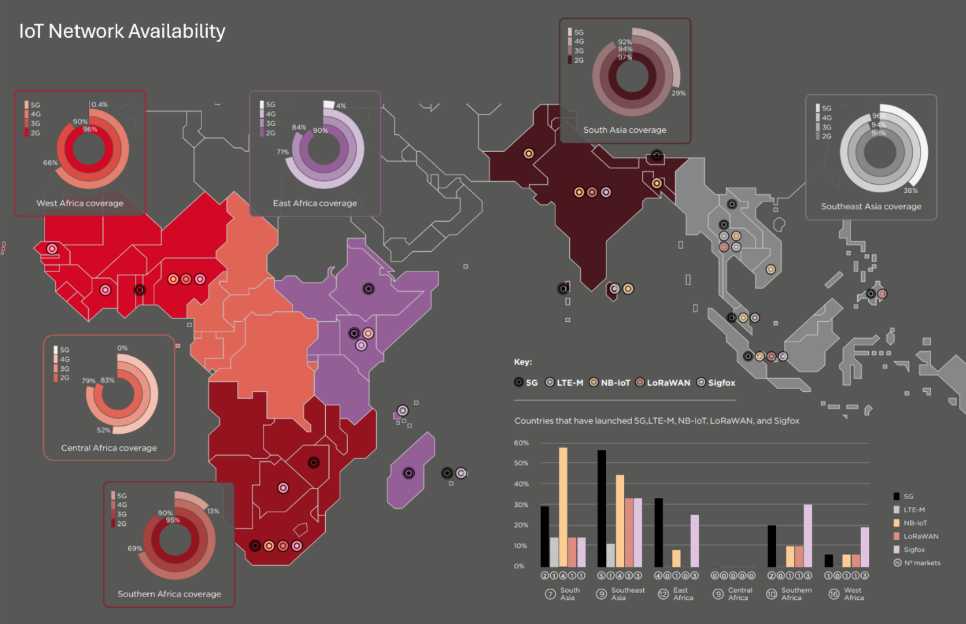
The implications for smart grids are significant. Where dedicated IoT networks are not yet available, utilities face difficult trade-offs. They may deploy 2G-enabled meters despite the risk that these networks are retired before the end of the meter’s useful life, or they may turn to workarounds such as power-line communication, ad hoc mesh networks and proprietary radio links. Each option can help move early smart metering projects forward, but each also risks creating fragmented, unreliable or hard-to-scale connectivity architectures.
This matters because the core use cases underpinning power sector transformation all depend on reliable communication with field devices. Advanced metering, outage management, demand response and distributed energy resource integration require timely, trusted data from the edge of the network. Without an effective connectivity layer, smart grid investments risk remaining partial: meters may collect data intermittently, outage alerts may arrive too late, and utilities may struggle to coordinate flexible demand or decentralised generation. In the longer term, more advanced digital use cases such as AI-enabled grid optimisation and predictive maintenance become harder to realise.
Strengthening the IoT ecosystem is therefore not just a technical enabler for smart meters; it is a prerequisite for the wider digital transformation of the grid.
To bridge these gaps, African governments and partners must treat digital infrastructure as a foundational part of energy development:
- First, energy and telecom planning need to be integrated. Smart metering and grid automation targets will only translate into impact if they are matched by spectrum policy and telecom rules that support IoT network rollout and power sector use. Without this coordination, grid digitalisation investments may be constrained by connectivity bottlenecks.
- Second, IoT network rollout needs targeted incentives. NB-IoT, LTE-M and other low-power networks often require upfront investment in markets where demand is still emerging. Public incentives or viability-gap funding can help extend coverage where smart grids offer high social value, while also helping operators capture a future growth market in smart energy services.
- Third, energy–telecom co-investment can align incentives. Utilities need reliable connectivity for smart grid operations, while mobile operators benefit from a larger IoT customer base. Joint investment in LPWAN networks or upgrades to existing base stations, supported where useful by concessional finance or guarantees, can ensure telecom infrastructure advances alongside grid modernisation.
- Finally, interim solutions should be designed for future migration. Countries should not wait for perfect networks before progressing with smart grids: 2G, LoRaWAN and power-line communication can support early deployments in the right contexts. However, standards and procurement should prioritise compatibility and longevity so devices can migrate to NB-IoT, LTE-M or other long-term networks as they become available.
Co-ordination in more integrated and hybrid energy systems
More integrated and hybrid energy systems, alongside rising use of decentralised renewables for production, increase the need for coordination, including active load management and mechanisms such as virtual wheeling and energy trading.
Distributed renewables are reshaping how power systems need to be managed. Solar, wind and hybrid systems with renewable storage or diesel backup are expanding rapidly across sub-Saharan Africa, bringing more clean power closer to communities and businesses. But as variable generation becomes a larger share of supply, utilities need better visibility, forecasting and balancing tools to coordinate decentralised assets and maintain reliability.
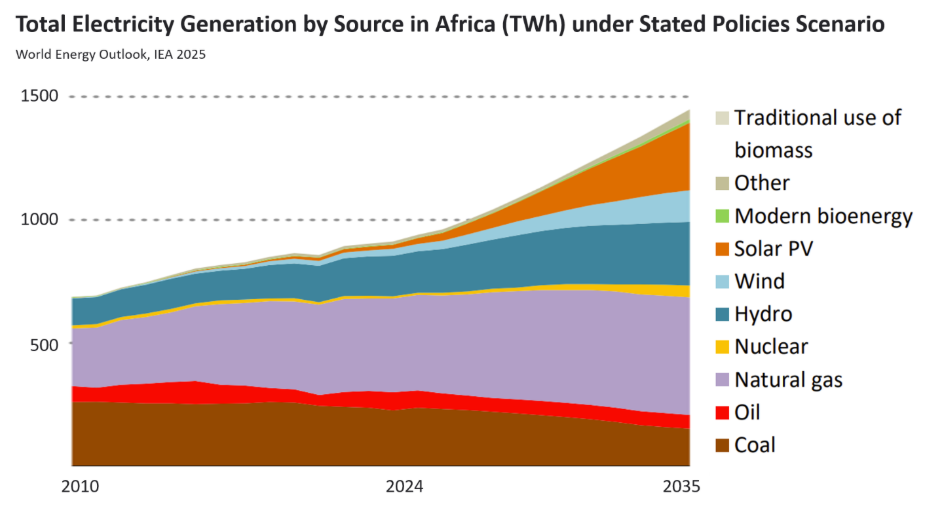
Mission 300 countries are increasingly taking a portfolio approach to electrification. National grid expansion is being combined with mini-grids, solar home systems and standalone solar, not as temporary fixes but as permanent complements to the grid. This will create more integrated networks over time, particularly where off-grid systems are designed to connect to the main grid as it expands, or where consumers are able to feed surplus electricity back into the grid.
Independent power producers are becoming more important to closing generation gaps. Many projects still depend on power purchase agreements with national utilities, backed by sovereign or multilateral guarantees, but these mechanisms can become a financing bottleneck where public balance sheets are constrained. More open markets that allow IPPs to sell directly to corporate buyers, consumers or energy traders can help mobilise private investment while adding new coordination needs for regulators and system operators.
Cross-border interconnectors and power pools are making electricity systems more regional. Projects such as the Ethiopia–Kenya HVDC line, alongside expanding trade through SAPP and WAPP, allow countries to share surplus generation and balance renewable supply across borders. These links can improve resilience and affordability, but they also require stronger digital systems, market rules and institutional coordination to manage power flows in real time.
Together, these trends are creating a more diverse and decentralised energy system.
Variable renewables and dispersed generation make supply–demand balancing more complex. Grids designed for one-way power flows must now manage intermittency, multi-directional flows and more distributed assets. Without stronger coordination and real-time visibility, utilities face greater risks of voltage instability, curtailment and missed reliability gains from solar, storage and other flexible resources.
They also bring more actors into systems historically run by a single utility. IPPs, mini-grid operators, prosumers and energy traders all require clearer roles, data-sharing arrangements and market rules. Without these frameworks, weak infrastructure and regulatory uncertainty can slow private power trading, limit distributed generation and make decentralised grids harder to manage.
Several mechanisms and solutions can be used to address these challenges.
- Active load management can help balance variable supply. Demand response, smart load control and time-of-use tariffs allow utilities to shape consumption rather than simply increase generation. Eskom’s 2023 load-limiting pilot, for example, used smart meters to cap household demand during peaks, reducing pressure on the grid without resorting to broader outages. As renewable generation grows, these tools will become increasingly important for shifting demand, improving reliability and lowering system costs.
- Virtual wheeling can unlock renewable supply beyond where it is generated. By allowing an independent producer to inject power at one point and credit it to a customer elsewhere through the grid and billing system, virtual wheeling separates electricity procurement from physical proximity. South Africa is already testing this model, including through Vodacom’s use of remote renewable IPPs to offset its national consumption. Such platforms can help corporates and communities access cleaner power while improving grid utilisation and strengthening the investment case for renewables.
- Energy trading and digital grids can coordinate more complex systems. Domestic markets, peer-to-grid platforms and regional power pools allow surplus electricity to flow to where it is needed most. The West African Power Pool’s day-ahead market and the Southern African Power Pool’s regional trading platform show how digital market mechanisms can balance supply across borders. Over time, these tools can reward flexible generation and storage, smooth renewable variability and attract private investment in reliable, affordable power.
Ultimately, smart meters and smarter energy systems depend on the same underlying foundations. Reliable connectivity, interoperable devices, real-time data and clear market rules are needed both to make smart metering work at scale and to manage a more decentralised, renewable and multi-actor power system. Without these foundations, countries risk deploying digital tools in fragments: meters that cannot communicate reliably, flexible demand that cannot be coordinated, and renewable assets that cannot be fully integrated into the grid. Strengthening the mobile and IoT ecosystem, while building the coordination mechanisms needed for active load management, virtual wheeling and energy trading, should therefore be seen as a single digital infrastructure agenda for Mission 300.
In the next blog in this series we will be looking more closely at how these two challenges are playing out in practice.