
February 2025 saw the GSMA AgriTech programme host their third Field Focus Session just outside Dakar, Senegal. The event provided the latest opportunity to bring together the GSMA AgriTech Accelerator (the “Accelerator”) cohort to share knowledge and experiences, build capacity and meet with local agritechs to see how they are approaching the development of digital agricultural solutions for smallholder farmers.
In this blog I’ll share some of the insights and learnings from the key themes discussed during this immersive field focus session; UX design, agent models and investment and partnerships.
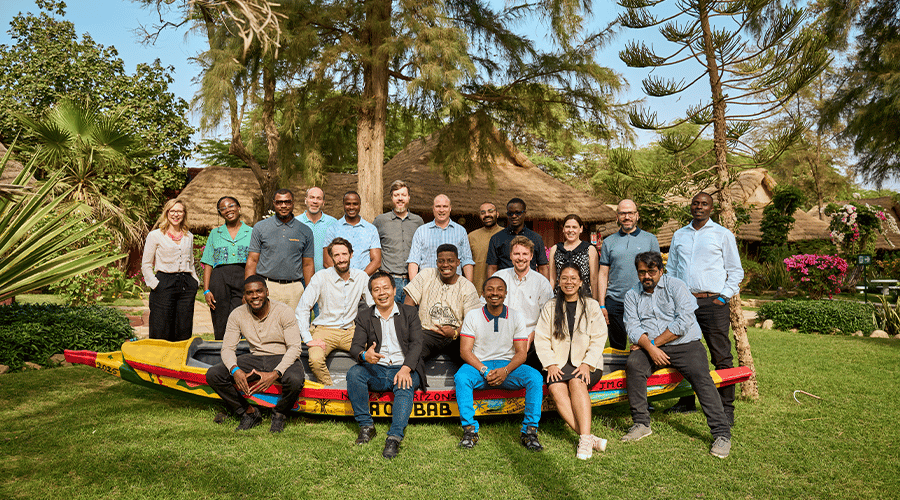
Credit: Mouhamdou M. Camara (MMC)
User experience improvements
With support from GSMA and consultants at Bopinc, all of the cohort members have implemented some form of UX/user-interface (UI) improvement to their digital agriculture solutions since the beginning of the Accelerator in June 2023. However, some have made more radical improvements than others. Common challenges that were initially faced include:
- Lengthy customer onboarding processes
- Overwhelming choice of features or actions for low digital literacy users
- Lack of clear incentive, instant “reward” or outcome from entering data; (often when data was entered it was not clear to the user that it had been submitted successfully or why it had been entered. This is important in a situation where connectivity might be patchy and also when convincing users to enter in the first place is such a challenge!
Each cohort member has addressed some or all of these issues to varying degrees, but it has not been without investing significant time, effort and resources. What this has really emphasised is the need for UX/human-centred design (HCD) research to be a core practice at the very early stage of product development. Doing so helps avoid using valuable resources designing or building something that doesn’t fulfil the priority need of the user. It also prevents excessive complexity that could delay the release of a minimum viable product (MVP) for real world testing and bloat the solution with tools and modules that only very tech savvy users will ever explore.
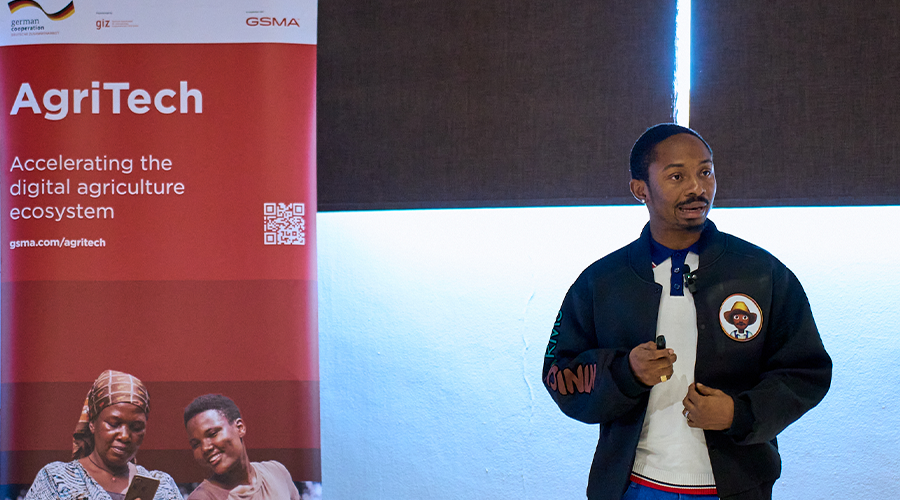
Credit: Mouhamdou M. Camara (MMC)
Agent models
The effective use of field agents to reach and engage farmers in peri-urban and rural areas has been an ongoing challenge for agritechs. Although they can help mitigate the lack of trust and confidence among farmers and value chain actors, the cost of customer acquisition with this approach is often prohibitively high. Agents need training and oftentimes mobile devices, and incur transport expenses and of course, commissions or salaries.
Cohort members tackle this challenge from different angles. One approach is to make the agent “multi-functional”, rather than asking the agent to fulfil one role (e.g. sales or farmer onboarding at the beginning of the season). This involves making sure they are building farmer relationships by providing training and access to additional services – either supplied directly by the company or through established partnerships and linkages. This reduces the overall number of agents agritechs and their partner organisations need to recruit, enables the agent to earn more commissions and maintains a consistency of relationship between the agent and farmers, helping build trust.
Other organisations are leveraging falling costs of data and improved connectivity to provide remote access to training or information through a voice server and/or app. This becomes even more important when pursuing a third-party distribution model where you effectively outsource the agent recruitment and management costs.
Close management of agents is also crucial. Several cohort members have invested significant resources into enhancing their agent management dashboards and apps to provide better metrics and produce more informed management decisions. The UX research and product iteration process of the accelerator support to one cohort member has largely focussed on this element to optimise operational efficiency, enhance customer service and reduce the business’s operational costs.
Raising investments
Despite the cohort representing and developing a wide range digital agriculture solutions, a topic all can align on is the need for funds to further develop and scale their services. Investment readiness has been a core theme of the Accelerator, and we are generating new insights as the conversations mature.
Cohort members highlighted that investors’ analysis of company location or focus market, revenue cycles and company structure, , may not have evolved in the same way that agritechs have had to evolve their own approaches in the markets they serve. Many investors are focused on Sub-Saharan Africa, particularly in established hubs like Kenya and Nigeria. As a result, markets in North Africa and Southeast Asia often receive less attention and fewer opportunities.
A cohort member from a lower-priority investment market shared how they adapted their approach by partnering with organisations based in more investor-favored markets to increase their chances of securing funding. Obviously, finding the right partner can be difficult but if fundamental pillars, are in place, the opportunities greatly increase. These pillars include:
- Clearly defined win-win: All partners need to bring something the other does not, but combined, offer a stronger all-round proposition
- Risk mitigation: The partners need to clearly define their respective roles to avoid competition for users
- Market diversification: The partnership should offer opportunities to access markets or value chains that might not have been available as a single entity.
Looking ahead
Almost 18 months on from the first Field Focus Session, this event showcased the vast improvements the cohort had made to their services and the different approaches being deployed to raise awareness, onboard new customer and provide seamless user experiences. It is also exciting to see some of the cohort successfully raising investment.
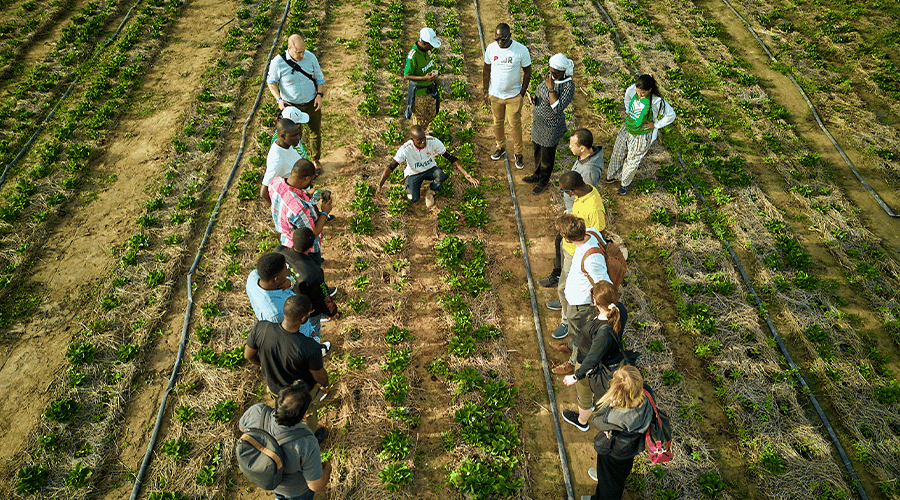
Credit: Mouhamdou M. Camara (MMC)
It was really rewarding to see how the relationships between the founders have grown through the implementation of the Accelerator, with this event being by far the most collaborative and engaged Field Focus Session we have hosted with the cohort. We know asking key decision makers from startups to dedicate an entire week to join these 4-5 day sessions is a significant commitment. However, it is precisely the presence of these decision makers that makes the experience worthwhile for the rest of the cohort, as it provides an opportunity to learn from the decisions being made bytheir agritech peersin solving similar problems.
As we enter the final phase of this Accelerator, the focus will switch to the medium and longer terms growth plans and how the cohort will integrate the new skills, experience and knowledge from the Accelerator into their day-to-day practices.
For more in-depth insights into the cohort’s journey, look out for our Learnings report which will be published later this year.
The GSMA AgriTech Accelerator is funded by the German Federal Ministry for Economic Cooperation and Development (BMZ) and supported by the GSMA and its members.