


On 22 October, World Energy Day, let’s take a brief look at what is attractive in improving energy access in developing markets for environmentalists, investors and the development sector.
World Energy Day was established by the World Energy Forum with the goal to stimulate awareness of energy issues and the political will and passion to support universal energy access. It is marked by a conference today at the UN and undoubtedly at some point there will be mention of the latest report issued in September by the International Panel on Climate Change (IPCC), a scientific intergovernmental body set up in 1988 by the UN.
This report states that humans are the “dominant cause” of “unequivocal evidence” of climate change. As would be expected the report sparked debate with sceptics warning against alarmist use of poor science to promote disastrous policies. Mechanisms for change will be proposed by the IPCC next April, and are anticipated to include financial markets, following the Chairman’s declaration that they offer the only hope by putting a price on carbon.
Focusing attention to developing world markets, technologies that reduce emissions can also contribute to improvements in health, environment and livelihoods. But how can the financial markets help grow an off-grid renewable energy market that can improve social, economic and health standards? The replacement of fuel-based lighting by solar, offers these benefits plus an attractive return to investors.
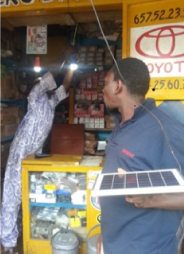 UNEP earlier this year estimated that fuel-based lighting contributes 74 million tonnes of carbon emissions annually – this is equivalent to removing 18 million mid-size cars off the road. The market is valued at US$ 32.5 billion per year, with kerosene costs making up for over three-quarters. The remainder is candles and flashlight batteries. (IFC in 2012 estimated a market value of US$ 18 billion for lighting and charging small appliances). The high running costs of fuel-based lighting systems, plus the penalty on poor users paying more for basic services, creates an attractive payback-period for alternative energy investment: UNEP’s en.lighten project calculated only 7 months for solar-powered LED systems in Kenya, not including government subsidies, to light 7.8 million households and save each US$ 105 per year.
Such improved lighting is a basic energy service but also offers opportunities for productive services. Mobile-enabled lighting services and products improve their affordability, quality and accessibility, by using industry infrastructure, communication channels and mobile payment technologies.
This sector is nascent and its growth is driven by start-ups and entrepreneurs. Occasionally they sit within mobile operators that have the ability to innovate and incubate ideas, but largely they sit in small offices bolstered by other tech start-ups or are out testing in off-grid communities. They see the potential in a large consumer base with low competition and are encouraged by the social impacts of their services.
Investors need to support business model development and proof of concept at this stage. Development finance in the form of well-targeted grants and concessional debt has a role and is critical to momentum, but a balance is needed. Companies must also attract commercial finance in order to grow and maximise the potential to scale. This might include carbon pre-financing to create additional revenue once sufficient proof of concept and scalability is created.
Reaching scale in underserved communities means thousands of local entrepreneurs with hundreds of companies. Quoting Jigar Shah in our 2013 Annual Report, local and increased competition means a healthy industry and the right structure of concessional and commercial investments is needed to ignite growth.
Keep watching news from the Mobile Enabled Community Services Programme, on our Innovation Grant Fund and the opportunities that this exciting entrepreneur-led sector offers to investors and the mobile industry.