


This post was written by Helene Smertnik, Market Intelligence Analyst for GSMA Mobile Enabled Community Services.
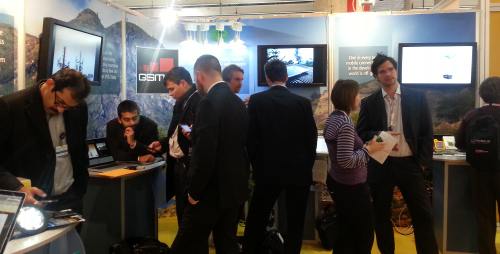
As the Community Power from Mobile latest annual report on “Service over Technology: Defining the Role for Mobile Energy Access” has just been published, we took advantage of the Mobile World Congress in Barcelona last week to ask vendors showcasing their products and services on our stand their thoughts: Service or Technology, which one will lead to a successful business model? All interviewees agreed that while good technology is necessary for a solution to develop and scale, it is not enough.
Technology is at the core of service providers’ work but…
… it does not guarantee the delivery of an efficient service. Therefore taking into account both technology and service will bring out the potential for new business opportunities to arise, as suggested by Dr Robert Hope, Senior Research Fellow at Oxford University’s Water Science, Policy and Management programme.
Utility solution providers also tempered the importance of technology as often it is simple and un-sophisticated. Be it a solar powered charger, a remote data collection platform, a biomass gasification plant or a renewable energy micro power plant, the main focus remains the service provided to the end user.
“Technology is not a big deal, the supply chain and the service to the community is what matters.” Felix Ertl, Co-founder of Pamoja CleanTech
“We are only making a simple battery but it enables the rural communities to start small businesses and earn an income off of it. And that is what we are interested in.” Brian Warshawsky, Chief Operating Officer, Fenix International
Other key lessons
If technology is a necessary but not sufficient condition for successful service delivery, other key elements also need to be considered, as our latest annual report suggests.
- Context is crucial and each market will suit its own business model. “A service will pick up if it answers real needs. It will then need to be integrated into the value chain, through an adequate business model and a good distribution network.” Daniel Annerose, CEO and Founder of Manobi
- Mobile Network Operators (MNOs) can be challenging to work with as, while interested in energy solutions that support their off-grid customers, they are hesitant to trial new concepts. “We need references for MNOs to follow”, explained Felix Ertl.
- Raising funds for product and service providers, not only in their initial development phase (the “valley of death”) but also as they grow (the “missing middle”) continues to be an issue, as confirmed by most vendors interviewed.
- New utility solutions are being researched through machine-to-machine (M2M) connectivity, increasing sustainability and resilience of decentralised utility services.
It is very interesting to observe how solution providers are constantly looking into the future, expanding their scope of services as, once the technology is developed, the service is the one main component to change.
“We want to leverage the technology and bring high efficient solar back-up solutions to various devices to be part of the hybrid renewables.” Jouko Häyrynen , Suntrica Ltd.
“We will continue broadening our portfolio to address the power needs and the desires of off-grid communities, working with other entrepreneurs to provide mechanisms for economic development.” Brian Warshawsky.
Sparking the conversation…
Defining the role of technology, and more specifically mobile technology, in energy and water access is a complex task. Many variables need to be taken into account and the solution provider will always go back to the question: what are the needs of the community for the service to be adapted and used.
We would love to hear your views on the debate of service over technology and the importance of user-centric product and service development, so please leave your comments and spark the conversation.