



Following the launch of the State of the Industry Report on Mobile Money 2025, the GSMA Mobile Money programme has been publishing a series of blogs on innovation for inclusion since June 2025. These articles highlight how innovative thinking and design are improving financial access to a broad range of products and services. This is the third blog in the series.
Among the different payment channels available for merchant payments, USSD remains dominant for mobile money users. At least 81% of mobile money services surveyed by the GSMA in 2024 reported offering USSD for merchant transactions, followed by app-based payments (80%) and QR code-based payments (73%). NFC payments, typically a core value proposition for digital financial services in many high-income markets, were offered by fewer than 13% of mobile money providers in 2024. Among these, a very small percentage of merchant payments rely on NFC.
| Box 1: What are NFC payments? Near field communications (NFC) payments typically occur when an enabled credit or debit card, or mobile wallet communicates with a payment terminal. The communication involves encrypted payment information being transferred from the customer to the retailer (or vice versa for refunds). For an NFC transaction to take place, the two NFC-enabled devices need to be very close to each other to transmit payment information. |
According to the State of the Industry Report on Mobile Money 2025, mobile money users paid over $100 billion to merchants in 2024, representing a 21% year-on-year increase. This growth was largely driven by rising mobile money use in Sub-Saharan Africa, where adoption among small businesses and consumers has stimulated digital commerce. However, in many instances, mobile money-based merchant payments in the region are still largely made via USSD. Most NFC payments are associated with smartphones, which presents a challenge in markets where USSD-based mobile money payments to merchants are rife.

One possible solution is to consider NFC-enabled offline wearables or cards that are linked to mobile money accounts. This could eliminate the need for users to have smartphones from the onset, an important prerequisite for non-USSD transactions. Offline NFC tokens could allow merchants to process payments in areas where connectivity is limited. For rural and remote areas, this presents an opportunity for greater mobile money use and, over time, improved access to financial services – especially among remote and marginalised groups.
How offline NFC works with mobile money: the case of VeryPay
VeryPay, a fintech, works directly with mobile money providers to enable offline NFC payments – without requiring a mobile phone present when making a transaction. Its main channel is a watch-style bracelet that includes an NFC chip, which is linked to a user’s mobile money account. By using the bracelet, users can use their mobile money accounts where merchants accept NFC payments. This offers a fast and more convenient option than USSD.
The approach is based on linking e-money wallets to tokens, which can allow joint use. For instance, a single mobile money account can be shared among other family or community members through separate bracelets. This may offer a possible financial inclusion entry point for a wider group. For users, beyond worrying about the need to transfer money, it offers the ability to monitor expenditure, such as in a family.
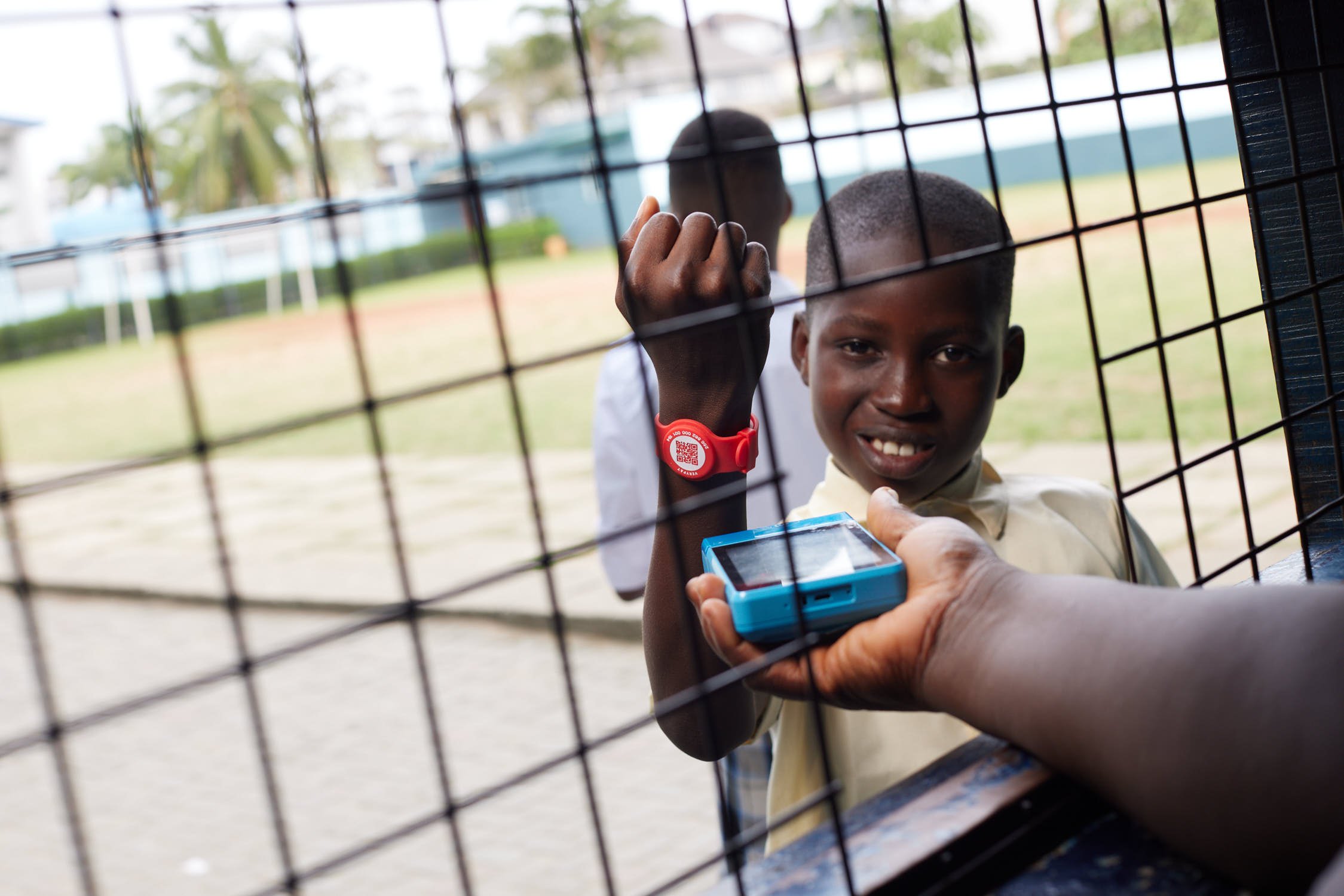
VeryPay’s bracelets and cards do not need live internet connectivity to function, nor is this a requirement for the merchant. However, merchants or other payment receivers would still be required to have internet access at some point every day. They would need to connect their mobile point-of-sale machine or NFC-enabled smartphone to the internet once a day to allow account reconciliation.
How VeryPay’s NFC solution is enabling mobile money payments
Currently, VeryPay’s tokens can be used in several ways, though its cashless schools initiative and social aid payments are the most prominent use cases. The cashless schools initiative allows students with VeryPay NFC bracelets or cards to make transactions at their schools. Parents can top up their mobile money accounts and remotely monitor spending. Separately, VeryPay also works with governments and NGOs to distribute social transfers to targeted communities in a secure way. Its closed-loop ecosystem and token-based access minimise leakage and misuse.
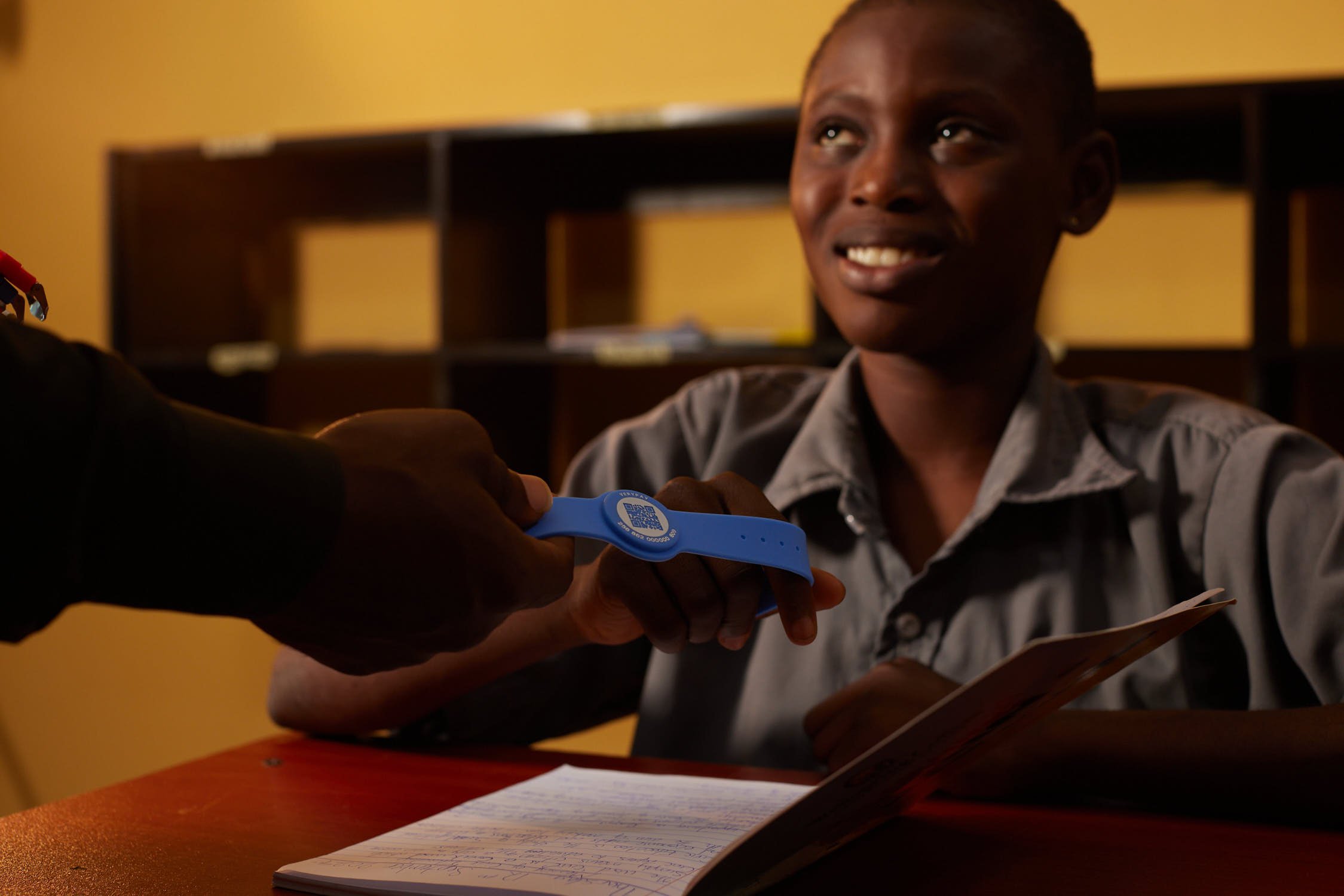
To make the solution work, VeryPay relies on bespoke partnerships with mobile money providers. It has partnered with Airtel and MTN MoMo in Uganda, Orange Money in Senegal, and Zamtel Money in Zambia (Figure 1). VeryPay also plans to partner with Orange Money in Côte d’Ivoire to roll out cashless schools payments. While its cashless schools initiative and social cash transfers are its primary use cases, it plans to roll this out for retail payments to micro, small and medium enterprises and enable fast person-to-person transfers via NFC and QR codes.
Figure 1: VeryPay’s progress to date
| Country | Launch date | Use case type | Individuals reached | Individuals to target |
| Côte d’Ivoire | Q4 2025 | Cashless schools | – | 5,000 by the end of 2026 |
| Senegal | Q3 2025 | Cashless schools | 2000 students | 10,000 students by August 2026 |
| Uganda | Q4 2024 | Cashless schools | 6000 students | 15,000 by August 2026 |
| Zambia | Sept 2025 | Social cash transfers | 30,000 beneficiaries by end Jan 2026 | 750,000 by the end of 2027 |
Source: VeryPay
Using NFC tokens could enable broader use of mobile money – especially for providers who still see high transaction volumes via USSD. Beyond payments, NFC tokens can serve additional functions. Combining them with ID cards could allow personal information and biometric data to be securely stored and transmitted with encryption by the user. In addition, data captured from NFC tokens could be analysed by artificial intelligence to deliver insights on user behaviour and spending patterns. In turn, this would allow mobile money providers to personalise their services for specific users and improve access to additional financial services.
To learn more about mobile money’s growth, read the GSMA’s State of the Industry Report on Mobile Money 2025 here.