


What are we really building?

Infrastructure Was Never the Endgame
Digital public infrastructure (DPI) has become a core priority in digital development. At its simplest, DPI refers to shared digital systems that allow people, businesses and institutions to interact securely at scale. These usually include digital identity systems that help people prove who they are, fast payment systems that allow money to move instantly and reliably, and data exchange systems that enable information to flow safely between authorised parties. Together, these systems act as the foundations of digital economies.
India’s experience is often cited here: Aadhaar, UPI, DigiLocker and Account Aggregator show how identity, payments and data-sharing layers can support services across finance, agriculture and much more.
The stakes are therefore high. When DPI works well, it can reduce friction, expand inclusion and make digital economies more trusted. When it is poorly designed or weakly governed, however, it can deepen exclusion, concentrate power and expose people to new risks around privacy, security and accountability. Within this approach, the core promise is to move countries beyond isolated digital transformation initiatives towards reusable foundations that can connect and scale across sectors.
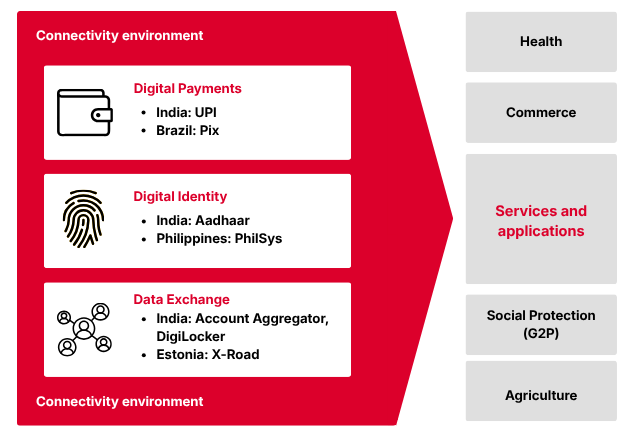
However, DPI was never meant to be an end in itself. Its real value lies in what those foundations make possible: safer, more inclusive and more useful digital ecosystems for people, businesses and institutions. Success should therefore be understood as an ecosystem outcome, not only an infrastructure milestone. Rails only matter if they take people somewhere worth going.
The Most Important Infrastructure Eventually Becomes Invisible
History offers a useful lesson: the technologies that transform economies most deeply are often the ones we eventually stop noticing.
We do not think about internet protocols every time we send an email. We rarely pause to consider the mobile networks that make a simple phone call possible. Few understand national payment switches that move money instantly between banks, fintechs and merchants. Even mobile roaming, made possible by common standards, trusted governance and commercial agreements, has become something we simply expect to work.

These technologies succeeded not because people admired the infrastructure itself, but because they quietly enabled new ways for people and businesses to interact. Over time, they became part of the operating fabric of digital economies: unseen, essential and constantly enabling what comes next. But the more infrastructure is taken for granted, the easier it becomes to overlook the governance needed to keep it trusted, accountable and safe. DPI should be judged by this standard: not by how visible the infrastructure is, but by whether it earns enough trust to become part of everyday life.
That is why DPI needs more than technical reliability. Issuing millions of digital identities, launching an instant payment system or building a national data exchange can create early momentum. The real test is whether institutions, incentives and partnerships can sustain trust over time.
Technology only matters when people trust it enough to use it. DPI should be built to leave a legacy, not become a legacy system: durable enough to support public value, but adaptable enough to evolve.
The “Public Infrastructure, Private Innovation” cliché
Much of today’s discussion on DPI still follows a simple formula: governments build the public rails, and the private sector innovates by building services on top. It is a useful starting point, but it makes ecosystem building sound more linear than it really is.
Connectivity shows why this framing only tells part of the story. It underpins every layer of the DPI stack, yet in most countries it is built, operated and continuously upgraded primarily by the mobile industry, not by government alone. DPI therefore depends on public and private capabilities from the outset, not only after the rails have been built.
This matters because ‘the private sector’ is not a single actor but an ecosystem of its own. It includes entrepreneurs, start-ups, SMEs, technology providers, financial institutions, operators and larger firms, each with different strengths, constraints and incentives. Some bring local problem-solving and last-mile innovation; others bring infrastructure, capital, scale, security, distribution or trusted digital capabilities that already operate at national level. This diversity also means ‘private sector participation’ cannot be treated as a single contribution: different actors participate in different ways, absorb different costs and need different reasons to keep contributing.
Innovation should therefore not be treated as something that simply appears once infrastructure is in place. It depends on whether those different forms of participation are viable and formalised. Across all of them, innovation requires investment, integration, financial risk management and a credible path to value. In DPI, ecosystems grow when participation is not only technically possible, but economically worthwhile.
That is why DPI conversations must take economics more seriously alongside technology, governance and ecosystem design. Interoperability may be technically essential, but its success also depends on who bears the cost of integration, maintenance and participation over time. Without that economic dimension, public-private partnerships risk remaining a slogan. Clear rules, accessible interfaces, fair access and credible incentives are what allow different actors to contribute meaningfully. If any of those conditions are missing, costs do not vanish; they resurface elsewhere in the value chain, weakening the inclusion and accessibility DPI is meant to deliver.
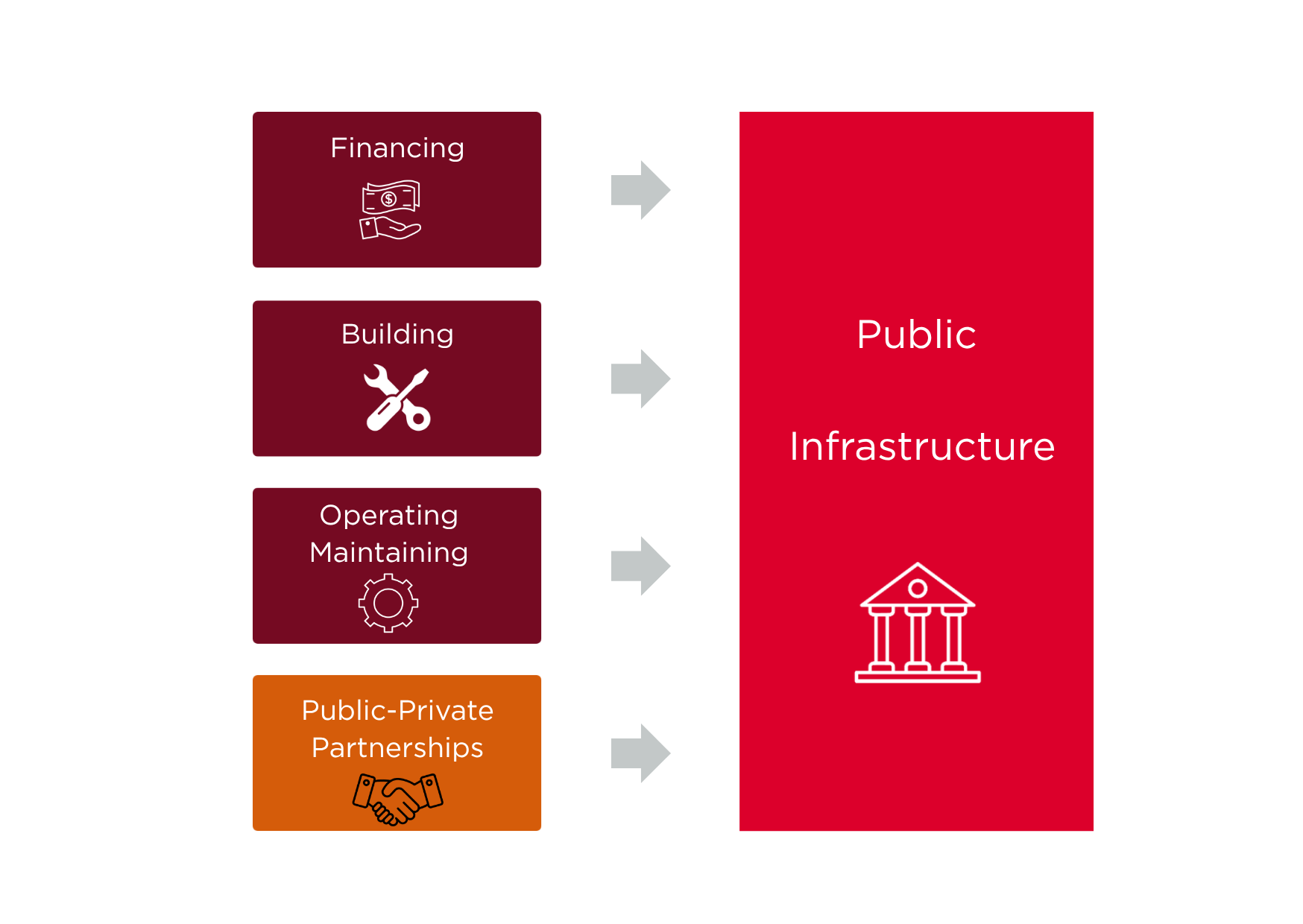
The goal is not for governments to own every aspect of DPI, or for private actors to absorb costs without a fair path to value. It is to create trusted ecosystems where public value is delivered through complementary capabilities, shared governance and sustainable incentives. Because ecosystems are not procured. They are cultivated.
The Mobile Industry as an Ecosystem in Practice
The mobile industry makes this ecosystem logic tangible. Operators are often viewed primarily as connectivity providers, and connectivity remains essential: without reliable, affordable and resilient networks, DPI cannot reach people at scale. Yet the mobile industry’s experience also offers another important lesson.
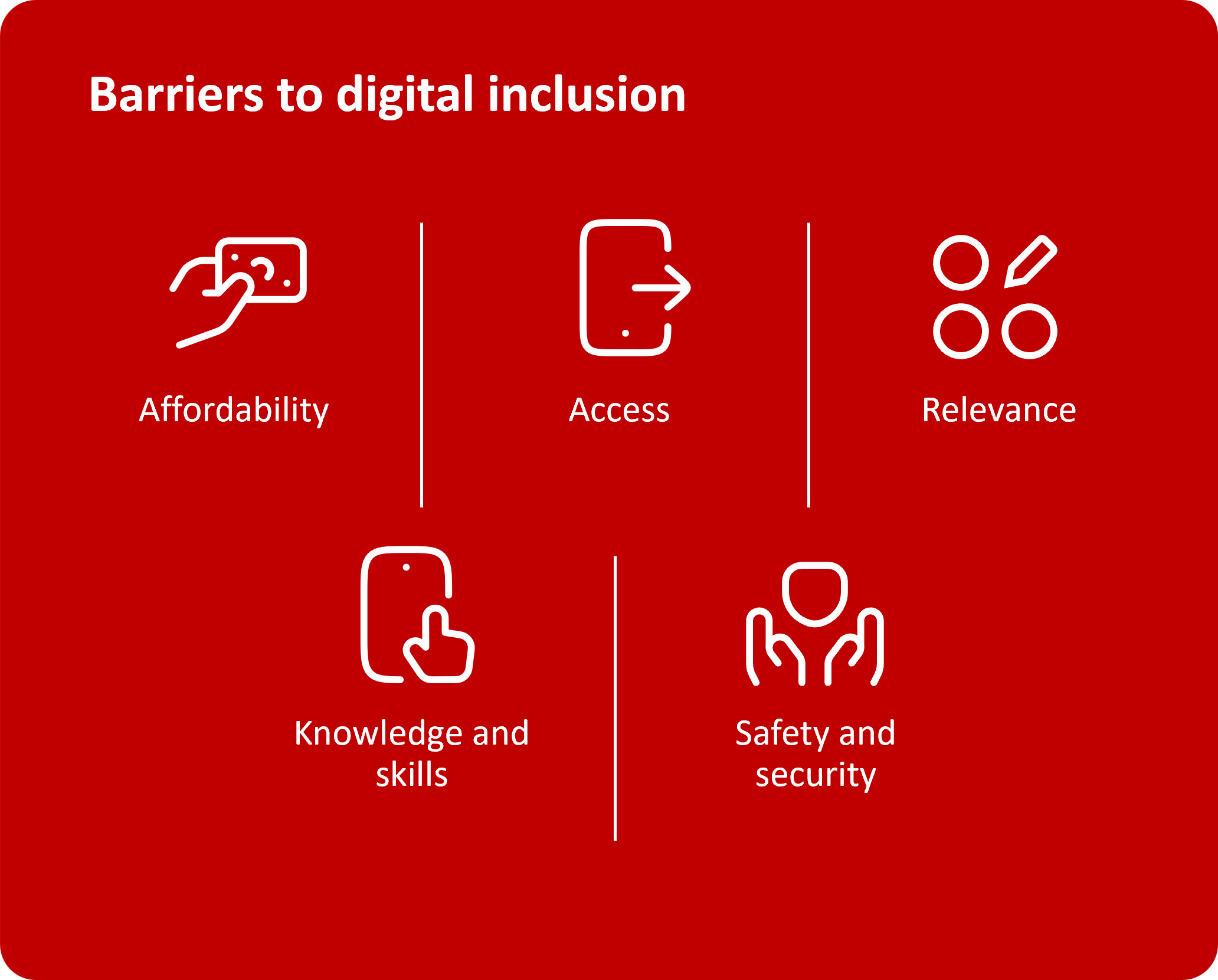
For years, the GSMA has highlighted the distinction between the coverage gap and the usage gap. Expanding network coverage is essential, but infrastructure alone does not guarantee adoption. Even where mobile broadband is available, barriers such as handset affordability, digital skills, trust, relevance and online safety continue to prevent millions of people from using digital services. DPI faces a similar challenge. Success should not be measured by how quickly the first users join, but by whether the last and hardest-to-reach users can participate with confidence. Real inclusion means making exclusion harder.
For years, the GSMA has highlighted the distinction between the coverage gap and the usage gap. Expanding network coverage is essential, but infrastructure alone does not guarantee adoption.
Even where mobile broadband is available, barriers such as handset affordability, digital skills, trust, relevance and online safety continue to prevent millions of people from using digital services.
DPI faces a similar challenge. Success should not be measured by how quickly the first users join, but by whether the last and hardest-to-reach users can participate with confidence. Real inclusion means making exclusion harder.
This is also why today’s mobile ecosystem contributes far more than network coverage. In many countries, operators already provide trusted digital capabilities including authentication, identity verification, fraud prevention, digital payments, secure communications and nationwide distribution networks. These capabilities support millions of trusted digital interactions every day and represent an important bridge between digital infrastructure and meaningful adoption. Rather than sitting outside the DPI conversation, they should be recognised as complementary building blocks that help transform infrastructure into trusted digital services.
This is where initiatives such as GSMA Open Gateway become relevant. It is not another DPI component, but it can complement DPI by exposing trusted mobile network capabilities through interoperable, standards-based APIs. The point is broader: DPI succeeds when ecosystems are designed around real capabilities, real incentives and real trust from the start.

A New Way of Thinking
Considering DPI as an ecosystem changes its terms of success. The question is no longer only whether identity, payments or data exchange systems can be launched, but whether they become shared foundations that others trust, use and build on. DPI’s real innovation lies in this shift: from standalone and siloed systems to reusable capabilities, from deployment to enablement, and from the excitement of launch to the harder work of sustaining value over time.
Governments remain central, but their role is not only to build. It is to create the conditions in which the ecosystem can flourish: trusted governance, interoperable standards, effective safeguards and incentives for long-term participation. Businesses, innovators, civil society and academia then help determine whether DPI becomes useful, trusted and sustainable in practice.
This is the mindset shift DPI now requires: moving from what infrastructure can do to what kind of ecosystem it can sustain. Infrastructure may provide the rails, but ecosystems create the journey. Legacy begins when people, businesses and institutions can keep moving forward together.
Part I argued that DPI must be understood less as infrastructure to launch and more as an ecosystem to sustain. Part II takes that mindset shift into the age of AI, where trust can no longer remain an aspiration. As artificial intelligence becomes embedded in the systems people rely on, trust must become an operating principle: built into governance, openness, accountability and the fabric of the ecosystem itself.