


Tuesday 11 August, 2026
By Jamie Trinh, Business Development Manager, GSMA.
What a football match taught me about programmable networks.
Inside a football stadium in Hamburg, more than 45,000 fans were on their phones at half-time. It’s about as challenging an environment as you can get for a mobile network. As ordinary best-effort connections in the stands began to drop, the TV crew’s radios, running on a Quality on Demand (QoD) connection, stayed online throughout.
I followed it all from RTL’s Remote Production Centre in Cologne, and it showed me that programmable networks are ready for live broadcast.
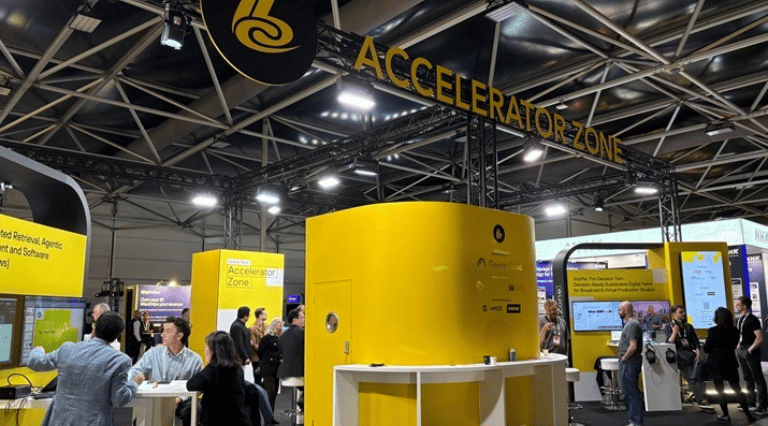
All of this was part of this year’s IBC Accelerator Programme, where I worked on the Network Control: Your Connection, Your Choice project. It brought together broadcasters, mobile operators and technology partners together around one question: can open network APIs, specifically Quality on Demand, give broadcasters greater control over network performance when it matters most? And rather than testing in a controlled lab environment, we wanted to evaluate the capabilities during a live event with tens of thousands of people present, creating exactly the kind of demanding network conditions broadcasters regularly face.
Inside the RTL Remote Production Centre (RPC)
In September, I travelled to Cologne to join our partners at German broadcaster RTL. Around 400km away in Hamburg, the match we were covering that evening was about to kick off: a DFB-Pokal clash between fifth-tier side HEBC and German football giants Borussia Dortmund.
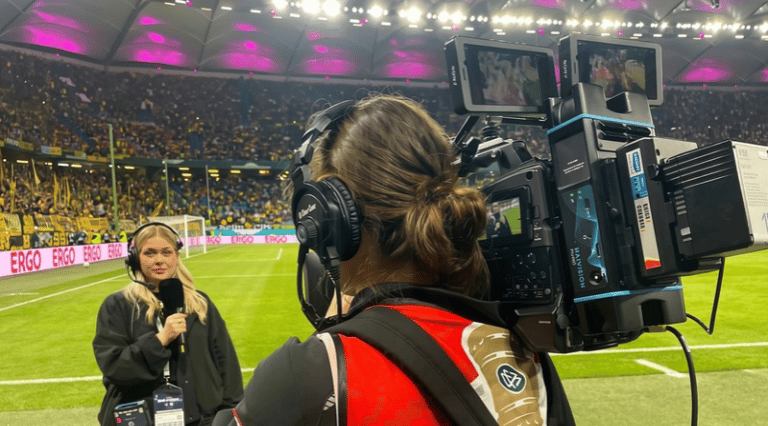
From the RPC, we used a platform built by SliceFinity to schedule Quality on Demand (QoD) through Vonage. QoD is a CAMARA Project network API that allows you to dynamically request guaranteed network resources in real time. Vodafone and Telefonica ran different QoD profiles on their live public networks, each for a real production task.
The results were clear:
- Intercom radio (Vodafone): The crew’s radios stayed connected through the first five minutes of half-time, the peak congestion period, while our control SIMs using best-effort services lost connection.
- Commentary (Telefónica): We compared the audio feeds used for commentary and found that the QoD feed performed 18 times better than the best-effort feed in terms of packet loss.
Not every use case test went to plan, and that was valuable too. Each challenge gave operators and platforms something specific to investigate and learn from.
The highlight for me was hearing how pleased RTL were with the intercom service. I hope it can be fine-tuned and made production-ready, especially as, without QoD, they would never have considered using the public mobile network for intercom. That’s what real enterprise demand looks like.
Taking it to the IBC Show
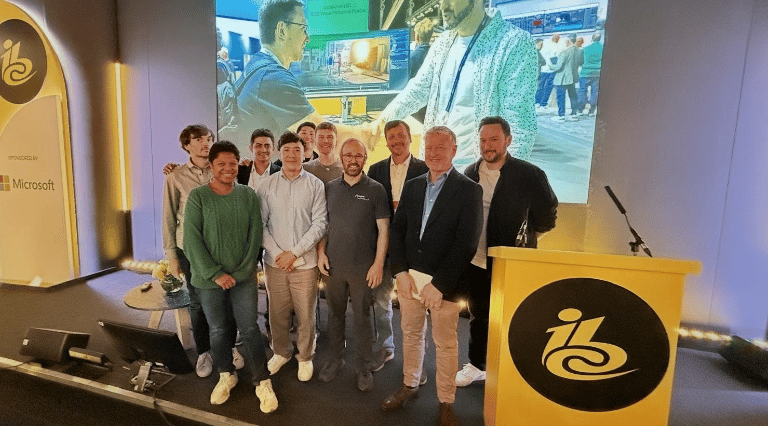
A week later, we presented our findings at IBC in Amsterdam, one of the media, entertainment and broadcast industry’s key events. We also ran a live video demo of QoD with Neutral Wireless over a private network. The strong interest from broadcasters, operators and ecosystem vendors who stopped by our booth was encouraging. Many conversations quickly moved from “What is QoD?” to “When can we use it?”
What I’m taking away
From the beginning, we focused on video use cases for QoD. But broadcasters showed us how many other critical workflows depend on reliable connectivity, including intercom, commentary, mobile journalism and return video feeds. The biggest win wasn’t a single result. It was bringing broadcasters and operators together to discuss real challenges directly, and accelerating access to Network APIs that can help solve them.
There’s more to do: expanding operator availability, developing more QoD profiles and progressing other CAMARA APIs for communications quality, including Connectivity Insights and QoS Booking. We’ll take this work forward towards MWC Barcelona 2027.
If you have an event where reliable connectivity matters, bring it to us.
Thank you to all the participants and champions of our IBC Accelerator project this year, but especially to RTL who very kindly allowed us to work on one of their broadcasts and invited us to their RPC in Cologne.
To find out more about the work GSMA Fusion is doing, visit our website.
