


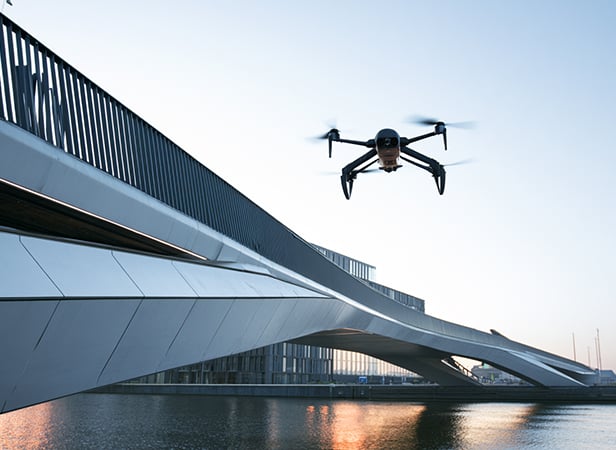
ISAC as a sensing layer for drone detection
In this expert interview, Ericsson explain how ISAC drone detection is made possible with existing 5G infrastructure
Contributors

Karl Stolt, Business Development Director ISAC, Ericsson

Kapil Mittal, Global Head Digital Airspace, Ericsson
What is integrated sensing and communication (ISAC)?

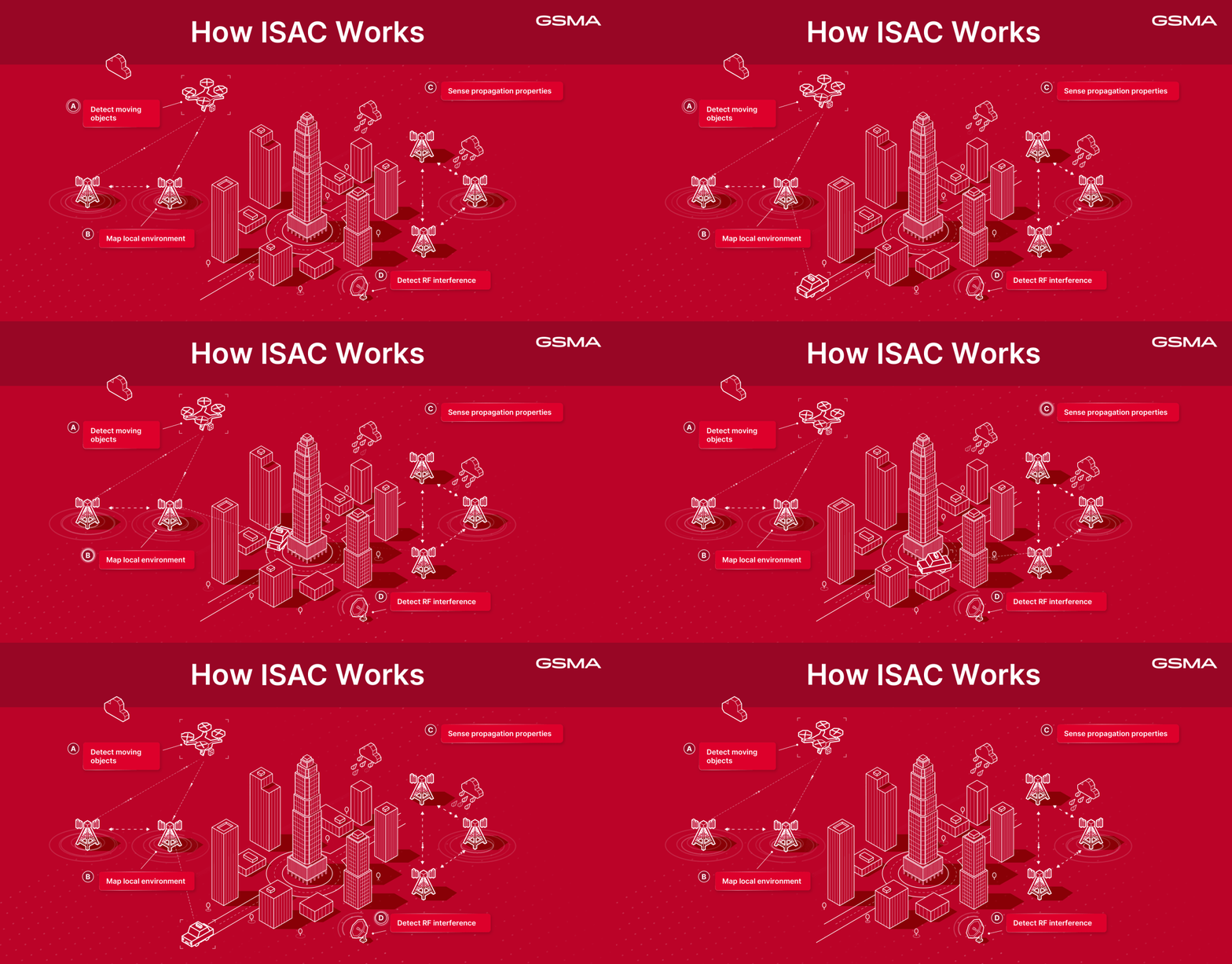
ISAC is a transformative innovation 5G and 6G that adds sensing functionality to communication networks. This allows networks to connect devices while also sensing their surroundings. In practice, ISAC uses mobile network infrastructure and spectrum to detect, locate and track unconnected or ‘passive’ objects.
Radios and antennas measure reflections from transmitted signals around them. This turns mobile networks into large-scale sensing platforms. Networks can then make the resulting data actionable through APIs (application programming interfaces) and platforms.
The immediate need for ISAC drone detection already exists in public safety and defence. Although the industry has long viewed ISAC as a flagship 6G capability, demand is emerging ahead of 6G. ISAC can detect moving objects in the sky, on land and on water.”
“The word ‘integrated’ in integrated sensing and communication represents a continuum of technological convergence, with different levels adapted to different deployment models, use cases, and customer preferences rather than a single optimal level, see Figure 1.”
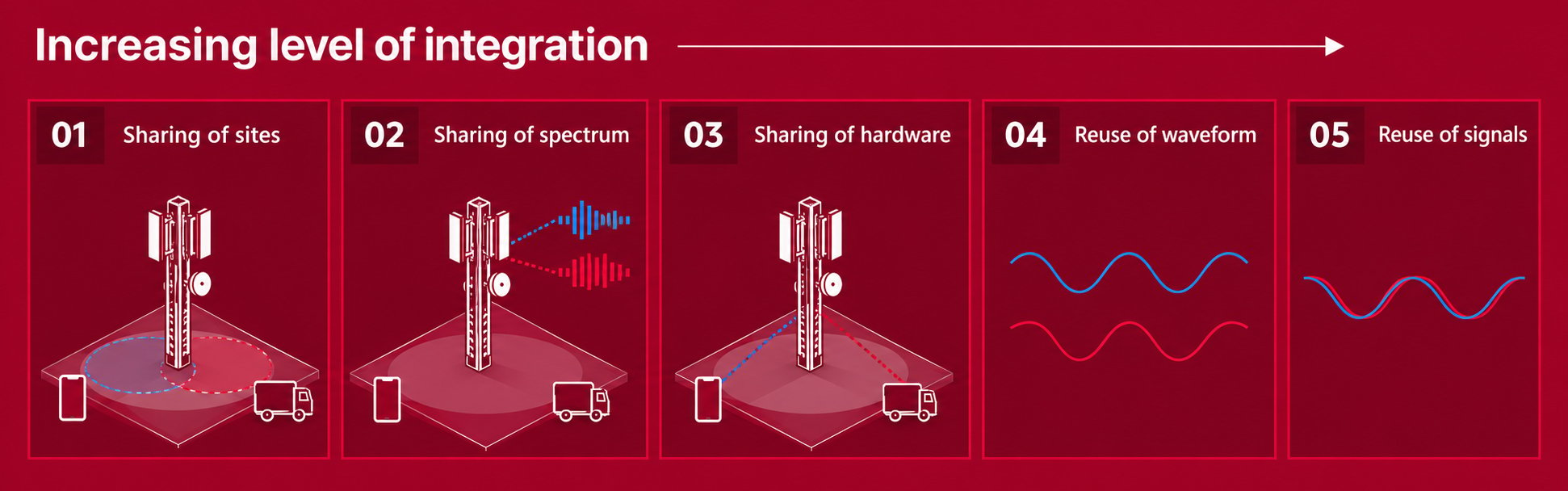
Figure 1: different integration levels in an ISAC system
Different levels of ISAC integration
ISAC can combine sensing and communication at different levels. The right level depends on the deployment, use case and customer needs. Therefore, there is no single optimum approach.

Site sharing

Spectrum sharing

Hardware sharing
“The deepest integration level reuses communication signals when their direction, bandwidth, and timing suit sensing requirements. While this reduces overhead and energy, networks use it selectively as an optimisation. In practice, dedicated sensing signals suit most use cases and guarantee the right characteristics without compromising communication performance.”
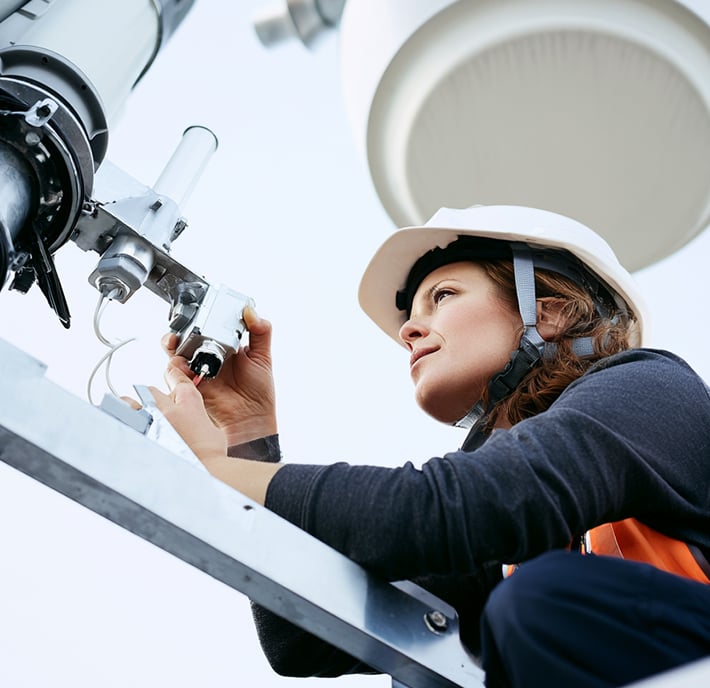
“The ETSI Industry Specification Group for ISAC explicitly describes how integrating sensing into communications networks allows those networks to collect rich physical-world data without installing traditional radars on every site.
The systems complement each other. While radar still serves specific applications, ISAC excels at broad, low-altitude coverage at an optimised cost, building on the mobile network’s footprint.”
Can networks only sense connected devices?
“Traditional cell-based localisation techniques with timing advance, angle of arrival, and similar, require a connected device. They cannot inherently detect objects that do not communicate.
ISAC changes the game. Radio signal reflections let ISAC-enabled networks sense passive targets, such as drones, even if they never connect or transmit.
Ericsson has conducted proof of concepts (PoCs) demonstrating that 5G technology (specifically massive MIMO radios) can already perform sensing tasks. With software and hardware optimisation, the full potential of ISAC can be realised.”
Will ISAC replace RF analysers?
“RF analysers and spectrum measurement tools provide high-precision measurements, from interference hunting to regulatory compliance. They detect connected drones but cannot detect silent ones. ISAC complements them, providing wide-area sensing of unconnected objects across large coverage areas.
ISAC tracks objects across any coverage area, from local deployments to city-wide or nation-wide, without a separate sensor layer.”
How can ISAC be used to detect drones?
“Ericsson regards drone detection as a key ISAC use case, particularly for protecting critical infrastructure and no-fly zones.
ISAC matters because adversaries and criminals increasingly use inexpensive drones to exploit low-altitude visibility gaps. It adds a wide-area sensing layer above cameras and fixed sensors. As a result, governments, operators and venue owners can better understand low-altitude airspace and ground activity. They can do this without building separate sensor networks everywhere. ISAC can also support more cost-effective counter-UAS (unmanned aircraft system) security across large areas.
Ericsson has shown how ISAC drone detection can track and localise multiple drones outdoors using existing communication infrastructure.”
Will sensing degrade communication performance?
“The ISAC co-design paradigm aims for mutual benefit, not just coexistence. Networks dynamically optimise beamforming, interference management, and cell shaping by sensing how signals propagate and detecting obstacles in real time.
Rather than consuming resources inefficiently, ISAC strengthens the performance of the communication network itself. This feedback loop enhances reliability and efficiency, two key metrics as networks evolve towards 6G performance targets.”

Special thanks
References
• Ericsson ISAC system: www.ericsson.com/en/isac/isac-system
• Ericsson Integrated Sensing and Communication (ISAC) explained: https://www.ericsson.com/en/6g/isac
• Ericsson demonstrates ISAC drone detection at US HQ: https://www.ericsson.com/es/press-releases/6/2026/ericsson-isac-texas-poc
• Ericsson drone detection with ISAC: https://www.ericsson.com/en/industries/defense/drone-detection-isac
• Ericsson on Sensing in 6G: https://www.ericsson.com/en/reports-and-papers/ericsson-technology-review/articles/sensing-in-6g-use-cases-and-architecture
• ETSI explanation of ISAC: https://www.etsi.org/technologies/integrated-sensing-and-communications ETSI
• ETSI ISAC ISG and pre-standard work: https://techblog.comsoc.org/2023/11/21/etsi-integrated-sensing-and-communications-isg-targets-6g/ techblog.comsoc.org
• Beeyond on “Telco Network as Sensor”: https://beeyond.fr/highleveldes/13615357/
• Academic ISAC outdoor multi-target detection: https://arxiv.org/abs/2305.13924
the US press release, the CTO article on sensing (PDF can be downloaded) and the ISAC blog
• Ericsson ISAC system: www.ericsson.com/en/isac/isac-system