



Integrated sensing and communication (ISAC) expert interviews
As ISAC develops into a foundational 6G technology, the GSMA is bringing together perspectives from across the industry. Our expert interviews examine the key developments, opportunities and challenges shaping its future.
Integrated Sensing and Communication (ISAC) uses existing cellular signals to sense the surrounding environment and enable to ‘see’ what is around, from static to moving objects. Those signals already reach 5.8 billion unique subscribers worldwide. That same coverage footprint becomes a sensing layer for vehicles, drones, pedestrians, and the infrastructure around them. It uses the same hardware and works on today’s networks.
The GSMA’s Smart Mobility programme works to providing clarity on the current development and deployment of ISAC in 5G networksand a look into the future 6G work. It brings together operators, vendors and standards bodies to ensure the technology reaches commercial deployment safely. Together, they examine what works today, what remains unsolved, and what comes next but with in mind also the potential business opportunity.

“We are at the beginning of deployment of ISAC 5G sensing capabilities on live networks, but a huge step towards realising smart mobility. With this new technology, operators and their partners have an opportunity to transform the way we experience travel.
Barbara Pareglio, Senior Technical Director, GSMA
mobile operators that launched 5G, covering 171 countries – those networks constitute the potential initial footprint for ISAC 5G sensing can activate as a detection layer across transport environments.
GSMA Intelligence
5G connections worldwide today – the infrastructure base ISAC 5G sensing runs on, projected to surpass 55% of all mobile connections by 2030.
GSMA Intelligence
projected global ISAC market value by 2035, growing from $11.39 billion in 2026.
Integrated Sensing and Communication (ISAC) Market Size, Business Research Insight
ISAC 5G in practice
Our ISAC features expert conversations from the companies taking ISAC from standards work into real live examples. Each interview examines the standardisation, practical reality of ISAC deployment and drawing on live network demonstrations and real operator environments. The conversations cover what existing infrastructure can already do, where the integration challenges arise, and how the business case takes shape.

Tiami Networks: Trials, commercial considerations and deployments
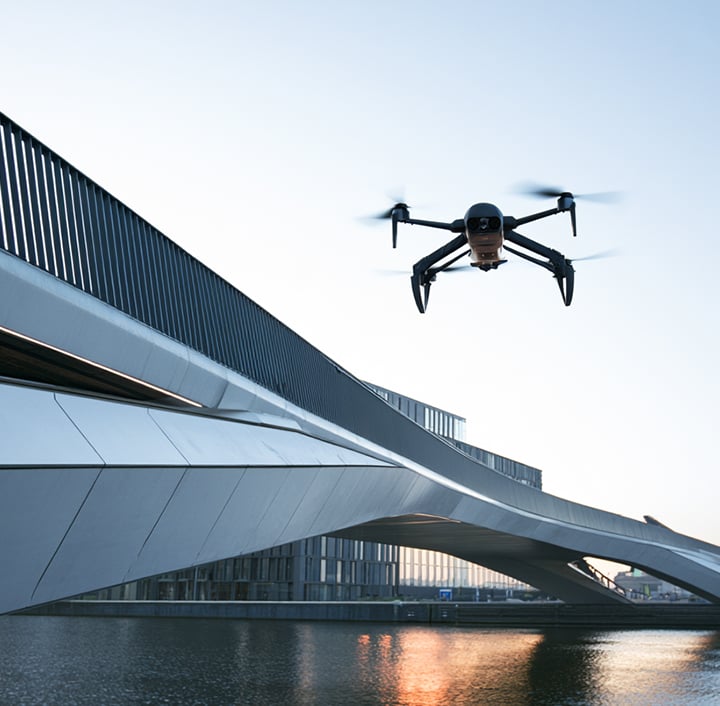
Ericsson: ISAC as a passive sensing layer for drone detection
Why ISAC 5G sensing opens a world of new possibilities
Drone detection and airspace monitoring are of high interest by governments right now, hence most of the demonstration are centred to this use case. Networks detect UAVs without requiring them to carry a transponder or maintain a connection. Operators in Asia Pacific ranked ISAC as their top beyond-5G use case in GSMA Intelligence’s 2026 operator survey. Security tracking and perimeter monitoring are the primary commercial drivers today.
Connected vehicles are the next frontier. The 5G Automotive Association published a dedicated ISAC for C-V2X technical report in May 2025, covering use cases from collision avoidance to autonomous navigation. Network-assisted perception means the network detects hazards beyond what onboard sensors reach, then sends that data to the vehicle in real time
Pedestrian and vulnerable road user detection is also an active area. At urban intersections, ISAC can categorise vehicle types, pedestrian movements, and cyclist positions directly from the network. That information feeds into traffic signal timing, hazard warnings, and autonomous vehicle guidance systems.

3GPP Release 19 includes initial ISAC sensing studies, with requirements introduced in Releases 20 and further releases will continue that standardisation. Commercial C-V2X ISAC targets the early 2030s, maturing alongside 6G. Release 19 defines general sensing capabilities and scenarios in TS 22.137:

Object detection and tracking
Detecting and tracking objects such as UAVs, birds and vehicles.

Environmental monitoring
Sensing the surrounding environment and detecting changes or objects in an area.

Motion monitoring
Identifying and monitoring human movement and activity.

Public safety
Supporting safety-related sensing scenarios, including detecting objects and monitoring potentially hazardous situations.

Gesture recognition
Enabling sensing-based interaction with human movement.
The Release 20 scenarios (TR 22.870) distinguish operational requirements that a general Release 19. They may require different sensing ranges, accuracy, latency, refresh rates and detection probabilities. Such release 20 use cases are as follows:

Road safety and intelligent transport
- Safety assistance for vulnerable pedestrians
- Road digitalisation
- Enhanced XR navigation

Low-altitude aviation and UAVs
- Low-altitude UAV supervision and intrusion detection
- UAV takeoff and landing
- Safe and economic UAV transport
- UAV detection, classification and counting
Environment and infrastructure
- High-topology mapping
- Environment object reconstruction
- Infrastructure collapse monitoring
- Structural health monitoring

Maritime sensing
- Ship detection and tracking

Industrial and human interaction
- Collaborative robots
- Hand, head, body and limb gesture recognition
As those standards develop, a new commercial model takes shape: sensing as a service. Operators who already control infrastructure across transport environments can expose sensing data through APIs. That creates new revenue streams in logistics, autonomous mobility, and urban management, without building new infrastructure.
About this series
GSMA’s Smart Mobility team runs this series to surface perspectives from companies building ISAC 5G sensing capabilities on live networks. The interviews show where the technology stands, what is already working, and what still needs solving before wider adoption.
For more information on ISAC, or to collaborate with us or submit a case study, please subscribe to our newsletter.