



ISAC deployment: trials, commercial considerations and deployment
In this expert interview, Tiami Networks discuss ISAC deployment, and what it takes to move integrated sensing from the lab into live networks – and who pays for it
Contributor:

Dr. Amitav Mukherjee, CEO and Founder of Tiami Networks
What is possible with 4G and 5G networks, and what is the future vision?

ISAC is often positioned as a defining capability of 6G. In practice, many of its core principles are already achievable today using existing 4G and 5G infrastructure. Today, operators implement ISAC by using ambient cellular signals for sensing, enabling drone detection, situational awareness, and infrastructure monitoring, all without new spectrum or dedicated sensing hardware.
These approaches show that meaningful sensing capabilities deploy immediately, particularly where augmenting existing systems provides clear operational value. The longer-term 6G vision expands on this foundation. It includes tighter integration of sensing into the network stack, standardised interfaces, and improved accuracy through coordinated multi-node sensing.
Tiami Network’s ambition is to expand support for autonomous systems and large-scale deployments. ISAC is not a future concept waiting for 6G. It is already emerging today. 6G will enhance and standardise these capabilities, but the path to adoption starts with solutions that operate within current networks and provide value now.”
What are the barriers and solutions to large-scale ISAC deployment?

Network integration
“The biggest barrier is not technical feasibility – it is integration into existing network infrastructure and operational models. Many ISAC demonstrations rely on standalone sensing systems or controlled environments, which do not translate easily into live networks. For ISAC deployment to grow, it has to work within the constraints operators already have: existing spectrum, existing base stations, and existing workflows.
That is where we see progress today. Approaches that leverage ambient 4G and 5G signals and integrate directly into the RAN significantly lower the barrier to deployment.”

Aligning stakeholders
“The second challenge is aligning stakeholders. ISAC sits at the intersection of telecom, defence, and enterprise applications, and each has different requirements and buying cycles.
We are starting to see traction where there is a clear, immediate need, such as drone detection or security, where buyers understand the value.
Ultimately, the transition to wider adoption will come from solutions that minimise new infrastructure requirements and provide clear, measurable outcomes from day one.”
What are the critical differences between network-integrated and standalone sensing systems?
“Standalone sensing systems operate as overlays – they are deployed alongside the network and require dedicated sensing hardware (for example, purpose-built RF sensing units or other non-networked sensing equipment), as well as additional integration effort and, in some cases, additional spectrum. While they can demonstrate capability, they are inherently difficult to scale across large geographic areas.
Network-integrated sensing, on the other hand, embeds sensing directly into the communication infrastructure. By leveraging existing base stations and signals, the network itself becomes the sensor. This fundamentally changes the scalability equation.
When sensing is native to the network, coverage grows with the network footprint, not with the number of sensors deployed. It also enables cooperative sensing, where multiple nodes contribute to a shared understanding of the environment, improving accuracy and resilience. This distinction is critical. ISAC will not grow as a collection of standalone systems – it will grow when sensing becomes a function of the network itself.”
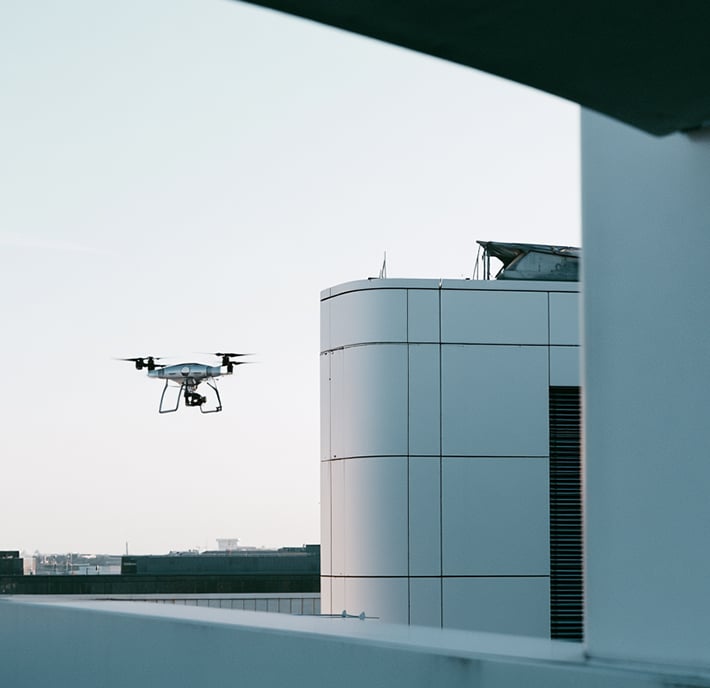
“Commercial applications include traffic and occupancy insights, where sensing can enhance existing systems without requiring entirely new deployments. More exploratory use cases tend to be those that depend on large-scale coordination, new standards, or entirely new business models. These include highly autonomous systems or fully integrated smart city platforms, where the ecosystem is still evolving. The key differentiator is whether the use case can provide value within today’s infrastructure and decision-making frameworks. If it can, it is viable now. If it requires a future ecosystem to exist, it remains exploratory.”
The operator approach: what are the first revenue-generating services and who pays for them?
“Operators should think about ISAC as an extension of existing network capabilities rather than a completely new business. The most immediate opportunities come from services where sensing adds incremental value to infrastructure that is already deployed.
Enterprise and government customers will likely drive the first revenue-generating use cases, particularly in security, defence, and critical infrastructure. These customers already have budgets allocated to solve these problems and are willing to pay for improved capability.
Over time, operators can package sensing as a service, much as they offer connectivity today. This enables new applications across transportation, logistics, and smart cities.
The key to ROI is minimising additional capital expenditure while unlocking new revenue streams. Solutions that use existing networks and provide actionable insights, rather than just raw data, will define the early business case for ISAC deployment.”