



Thursday 18 January, 2024
Impact & statistics
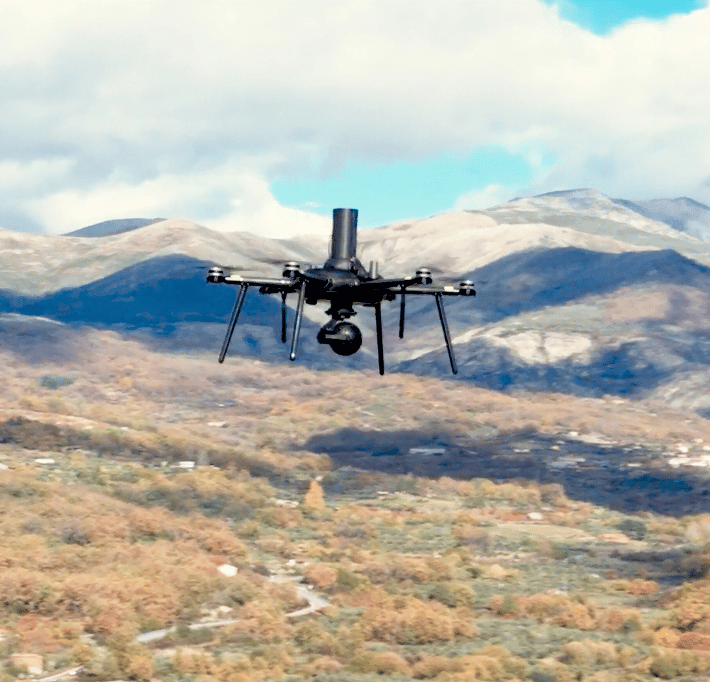
- Faster response: The solution significantly reduces response times by enabling instant drone deployment without requiring on-site personnel.
- Safer and lower cost: Centralised piloting and automation lower operational costs while minimising human exposure to hazardous environments.
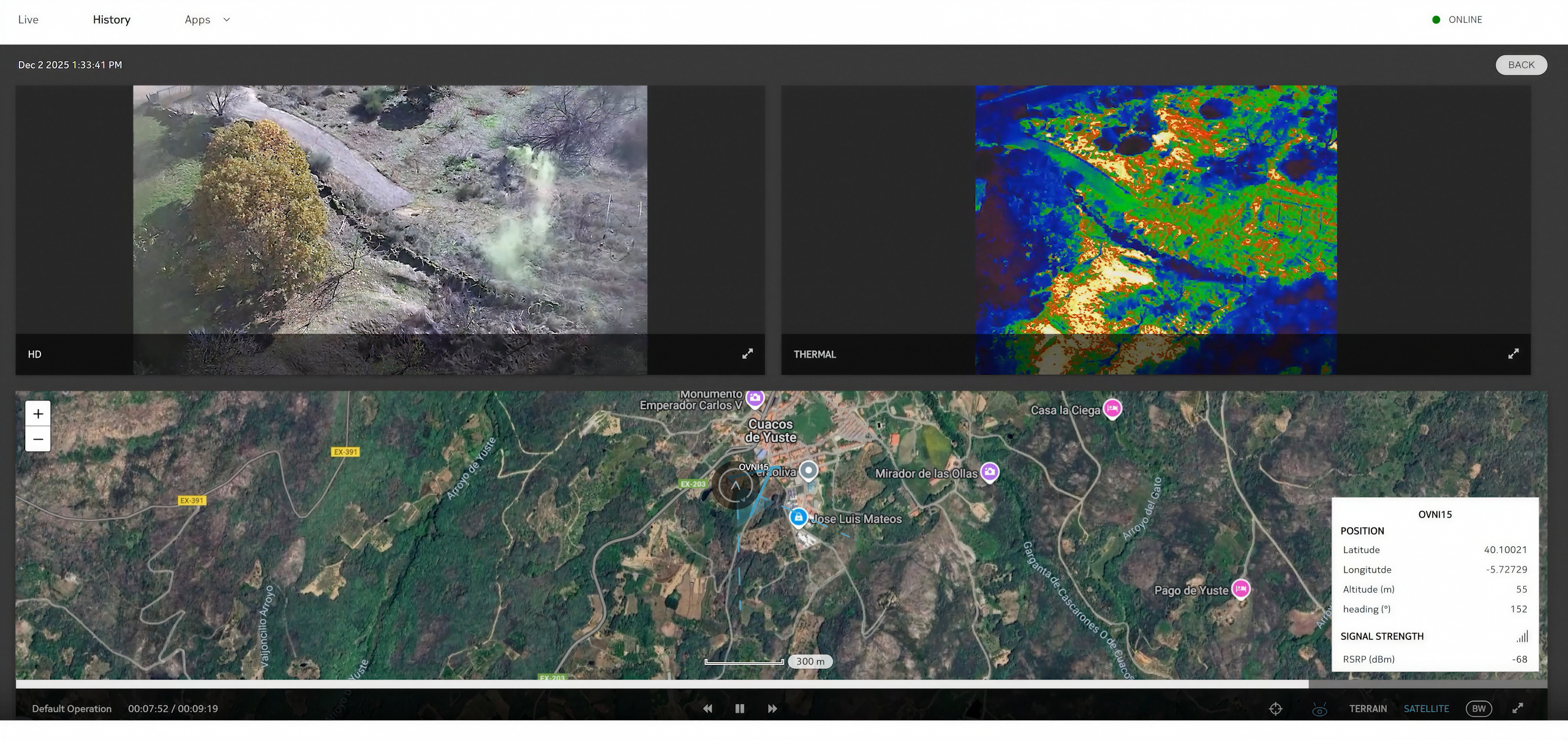
- Better decisions: Real-time data transmission enhances decision-making, particularly in emergency scenarios such as wildfire detection.
- Greater efficiency: The service supports continuous monitoring capabilities and scalable multi-site operations, increasing efficiency across industries.
- A clearer view: Early deployments demonstrate improved situational awareness and faster intervention cycles, especially in critical infrastructure monitoring and environmental protection use cases.

Challenge
Industries such as energy, infrastructure and public safety require frequent inspections and rapid-response capabilities in geographically dispersed or hard-to-reach areas. Traditional drone operations rely on on-site pilots, creating delays, increasing operational costs and limiting scale. Real-time data transmission and safe beyond visual line-of-sight (BVLOS) operations also remain constrained by technology, regulatory and coordination challenges, preventing drones from reaching their full potential as automated, always-available operational tools.

Solution
Telefónica introduced a remotely piloted drone service operated from its Telefónica Drone Center, leveraging 5G connectivity, edge computing and AI-powered analytics. The solution integrates drone-in-a-box systems, real-time video streaming and network slicing for reliable communications. It combines hardware (connected drones, sensors), software (control and analytics platforms) and APIs (Open Gateway) to enable end-to-end services. Implementation required close collaboration between Telefónica, drone manufacturers and public authorities, ensuring scalable, secure and automated drone operations.
“Drone technologies are transforming multiple industries, but to be economically sustainable they must be scaled.”
Introduction
Background: In line with its aim to be the best gateway to digital technologies for citizens, businesses and institutions, Telefónica is the first telecoms operator in Spain to offer a fully integrated, end-to-end remote drone service. In collaboration with drone manufacturers, software platform providers and public authorities, Telefónica is providing a gateway for the public to access digital technologies.
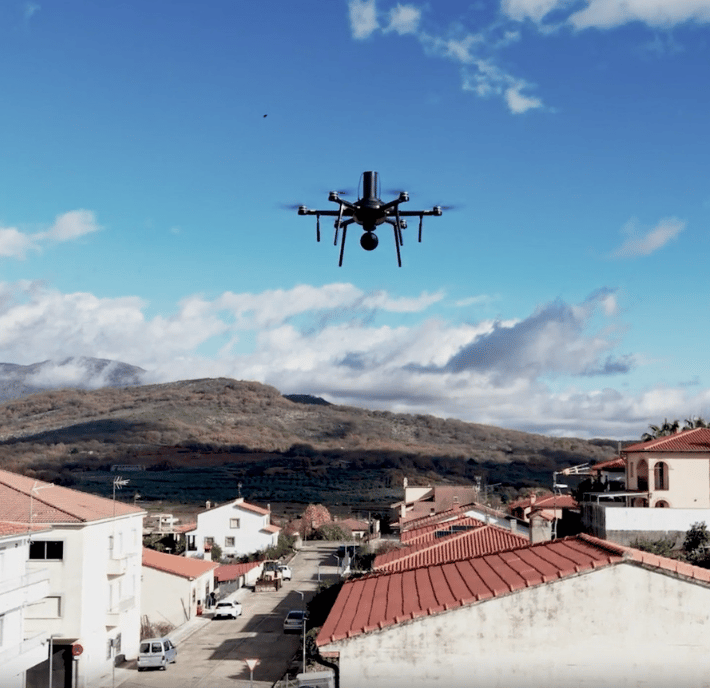
Use case context: The solution focuses on remote drone operations for applications such as infrastructure inspection, environmental monitoring and emergency response, particularly in areas requiring rapid deployment and continuous surveillance.
Technology rationale: 5G connectivity was selected for its low latency and high reliability, enabling real-time control and high-quality video streaming. Edge computing supports local data processing while network slicing ensures secure, optimised communications. APIs also support regulatory compliance, providing the required capabilities in a much more programmable way, streamlining application development.
Objectives: To improve operational efficiency, enable real-time situational awareness, reduce operational costs and support scalable, automated drone deployments.
Challenge
The rapid evolution of drone technologies is transforming multiple industries, from infrastructure inspection to emergency response. However, scaling them beyond isolated deployments has been a persistent challenge. Several barriers have stood in the way, restricting return on investment, slowing digital transformation initiatives and hindering the shift from expensive, ad hoc niche solutions to economically sustainable ones:
Operational issues: Dependence on on-site pilots leads to delays, inefficiencies and high operational costs.
Technical limitations: Connectivity gaps, latency issues and limited bandwidth hinder real-time control for BVLOS operations and payload.
Environmental/logistical constraints: Remote and hazardous environments make deployment complex and risky for human operators.
Business implications: Delayed inspections and slow response times can lead to increased risks, operational downtime and higher maintenance costs. More crucially, a slow response can result in greater damage.
Regulatory or strategic drivers: Situational awareness is a must for scaling operations safely. European countries require compliance with aviation regulations and alignment with U-Space frameworks, but it is currently very expensive to become a certified U-Space service provider (USSP) compared with other air navigation service providers (ANSPs).
Solution
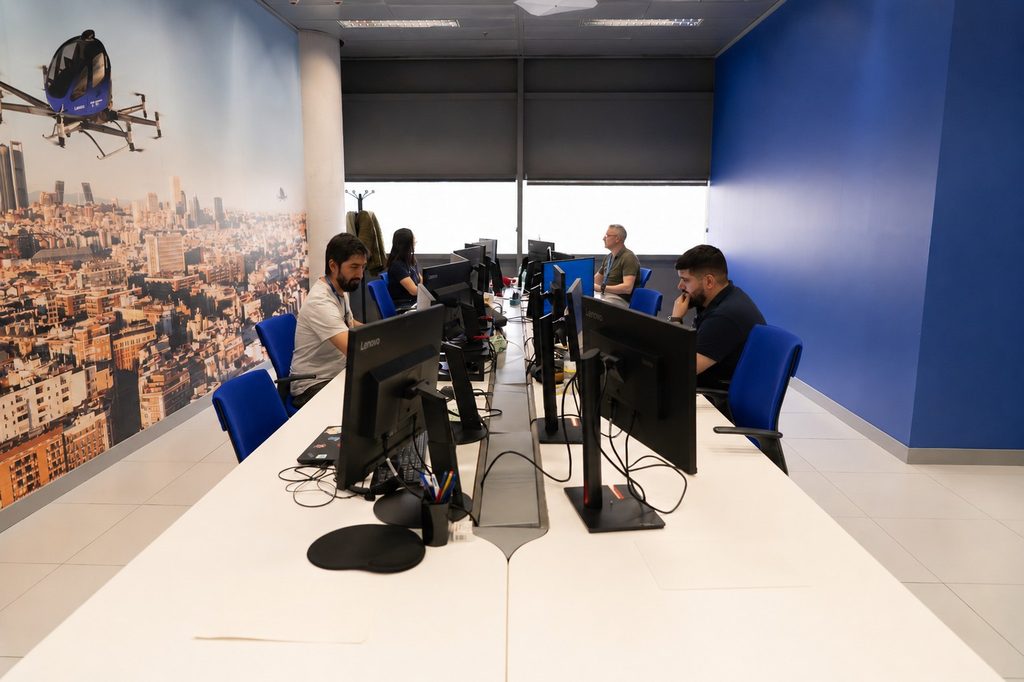
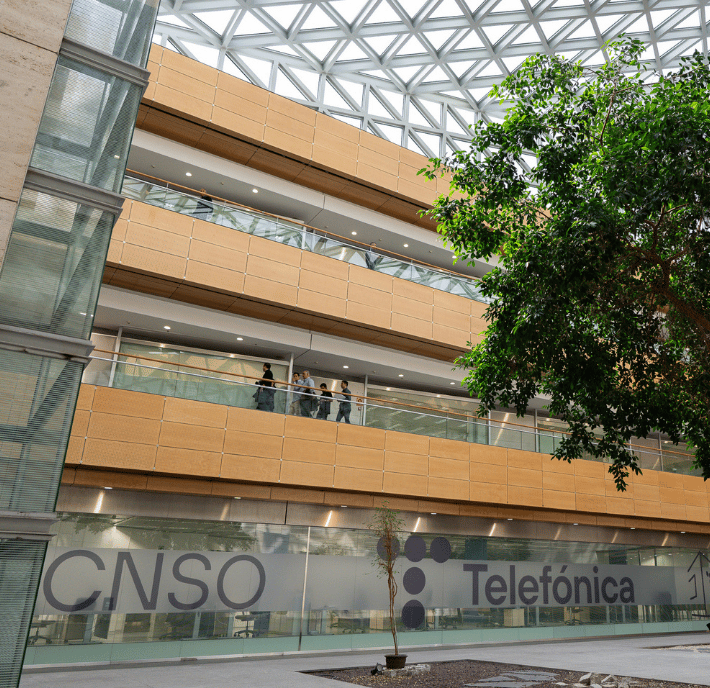
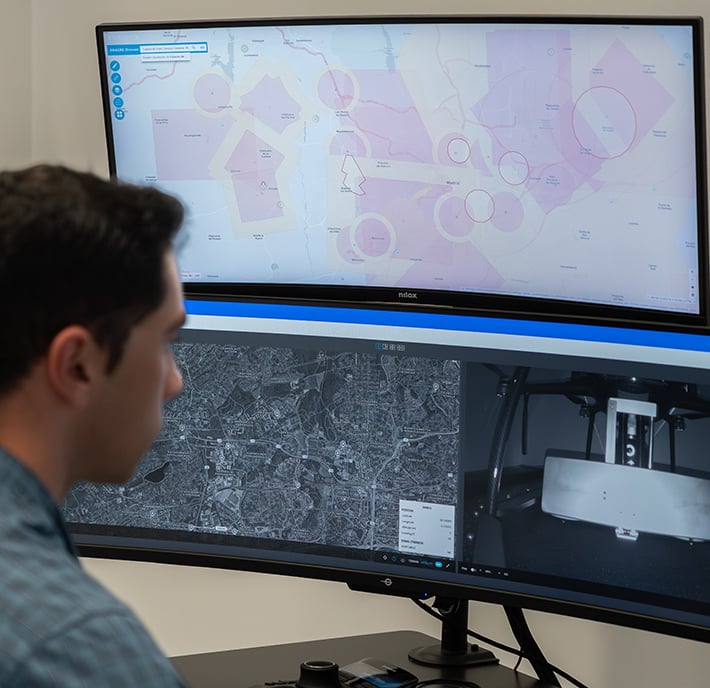
Telefónica is the first operator in Spain to offer a fully integrated, end-to-end remote drone service. Its Telefónica Drone Center, launched in 2026 and housed in its National Supervision and Operations Center (CNSO) in Madrid, supports 12 pilots operating in a one pilot per flight (1:1) configuration. However, the solution has been designed to scale, enabling a transition to one-to-many operations in which a single pilot will be able to supervise and manage multiple concurrent drone missions as soon as the regulatory framework allows.
This approach will significantly improve operational efficiency and resource use, supporting the industrialisation of drone operations by replacing localised, manually operated missions requiring on-site experts with a remote, automated and highly scalable operating model.
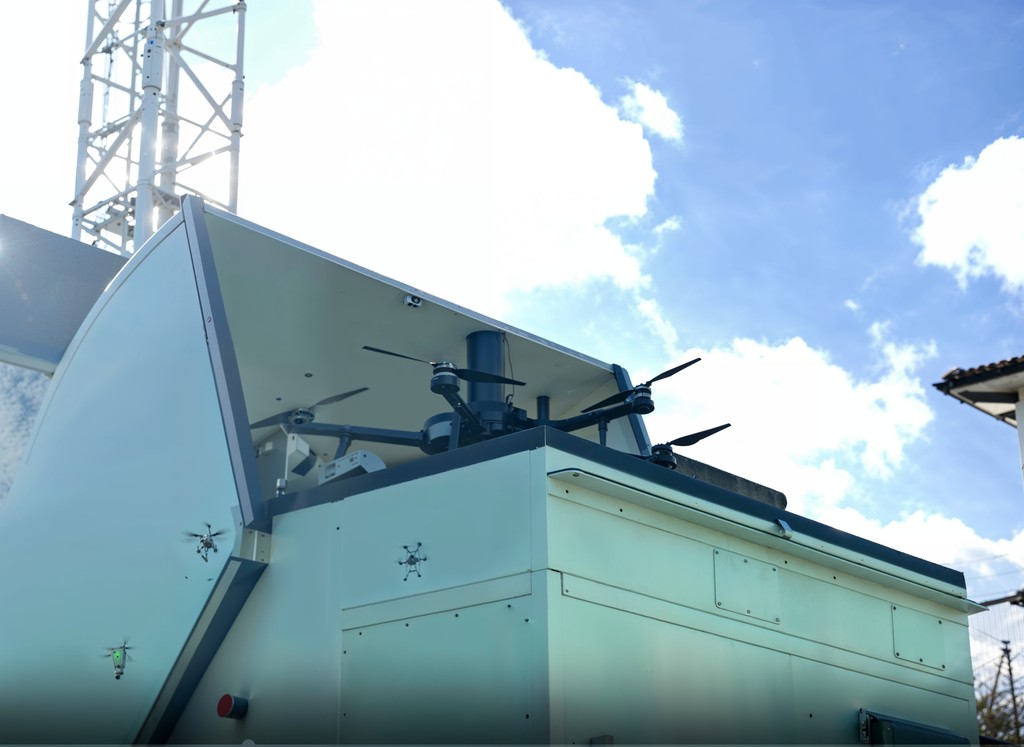
Technology overview: 5G-enabled drone-in-a-box systems deliver the best performance, with remote piloting provided by specialised operators at Telefónica’s Drone Operations Center; 5G connectivity enabling real-time control and video transmission with low latency; edge computing for data processing closer to the drone and operational environment, reducing latency and enabling real-time decision-making for mission-critical operations; AI and video analytics for advanced image analysis and network slicing; and Open Gateway APIs for population density data, dynamic airspace connectivity data or QoD for flight planning and optimised communications.
Network architecture: Centralised control managed by Telefónica, connected in real time with drones over 5G networks and APIs for managing the reliable communication needed for remote piloting. (Figure 1)
Figure 1 – Network architecture diagram
Source: Telefónica
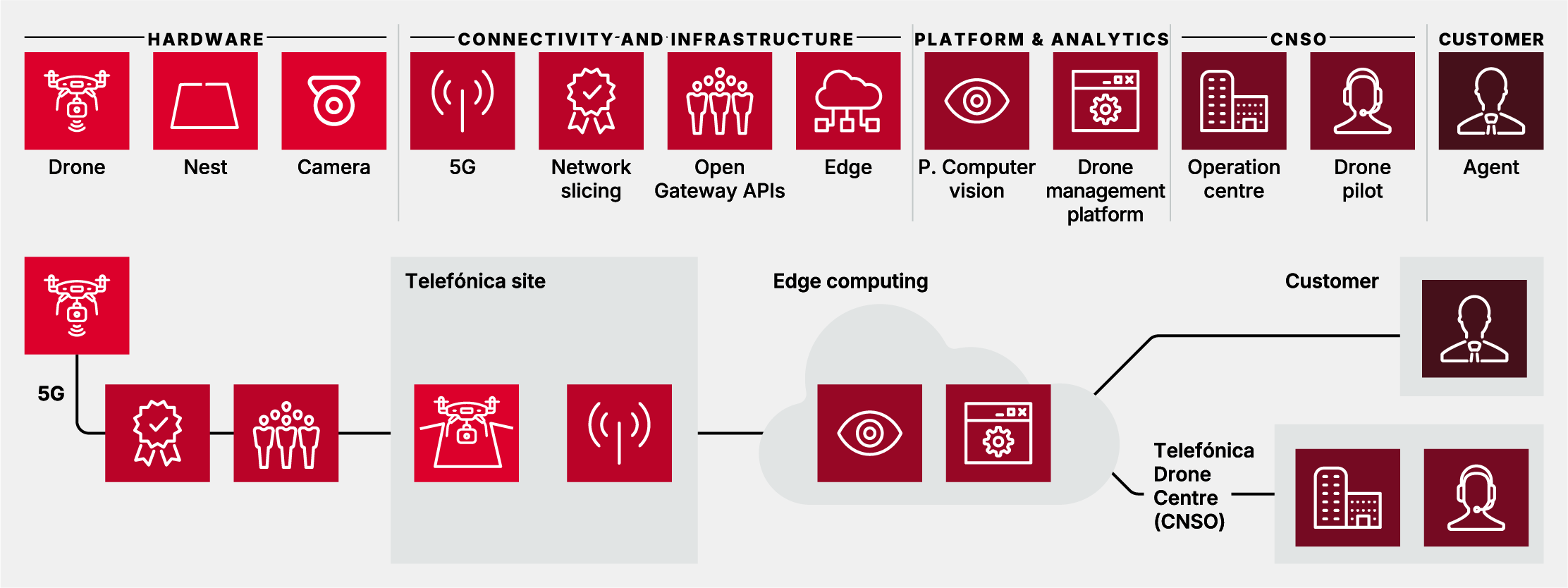
Hardware and devices: Cellular-enabled drones equipped with cameras and environmental sensors supported by automated docking and charging stations.
System integration: The platform integrates with cloud systems, real-time monitoring dashboards and analytics engines for decision support. The service currently supports U-Space services such as remote identification and traffic information and will be extended to include geo-awareness and UAS Flight Authorisation Service.
Partners and ecosystem: The ecosystem involves multiple stakeholders, Telefónica as a telecom and drone operator, drone manufacturers, software platform providers and public authorities. Together, they enable new operational models such as drone-as-a-service and flight-as-a-service, allowing enterprises and governments to adopt drone capabilities without heavy upfront investment.
Standardisation compliance: Aligned with 3GPP standards and European U-Space regulations for unmanned aerial systems.
Customers: Telefónica is collaborating with the Government of Extremadura, Government of Andalusia and the Municipality of Boadilla del Monte (Madrid) on real-world deployment and validation of the service.
Impact and benefits
Key takeaways
This initiative sits at the intersection of telecoms, aviation and digital platforms. It leverages the latest mobile network capabilities such as 5G ultra-reliable low-latency communications, edge computing and network APIs to enable real-time command and control of drones over wide areas and flight planning. The solution also aligns with emerging European U-Space frameworks, which aim to safely integrate unmanned aerial systems into shared airspace.

Lessons learned
Early coordination between telecoms, aviation and regulatory stakeholders is essential for scalable drone operations and can significantly reduce flight authorisation timelines.

Success factors
Reliable 5G connectivity, integrated platforms and automation through drone-in-a-box systems.

Scalability and future outlook
The model can scale across industries such as logistics, agriculture and smart cities, enabling multi-site operations.
Integration with 5G-Advanced features like network slicing and adding AI-driven automation will optimise the services and facilitate the work of the remote pilot, increasing the number of drones that can be managed simultaneously. In parallel, the service will evolve from cloud-based infrastructure to edge-enhanced capabilities, with a planned migration to edge computing in 2026, leveraging Telefónica’s leadership in Europe in edge data centre capabilities.
Connectivity is becoming a foundational layer for autonomous systems, enabling drones to transition from niche tools to critical operational assets. Mobile operators can position themselves as trusted partners, not only for connectivity but also to provide end-to-end services.

Key partners
If you like this report, you can download the pdf version, below:

