


Monday 12 October, 2026
For the past decade, tower companies have been one of the quiet success stories of the mobile industry. Tower companies enabled operators to release capital, scale infrastructure, and accelerate network deployment at a pace that would have been difficult under the old vertically integrated model. Despite this success, however, discussions at MWC26 Barcelona’s Tower Summit made it clear that the tower company model that has become established will not be sufficient for what is coming next.
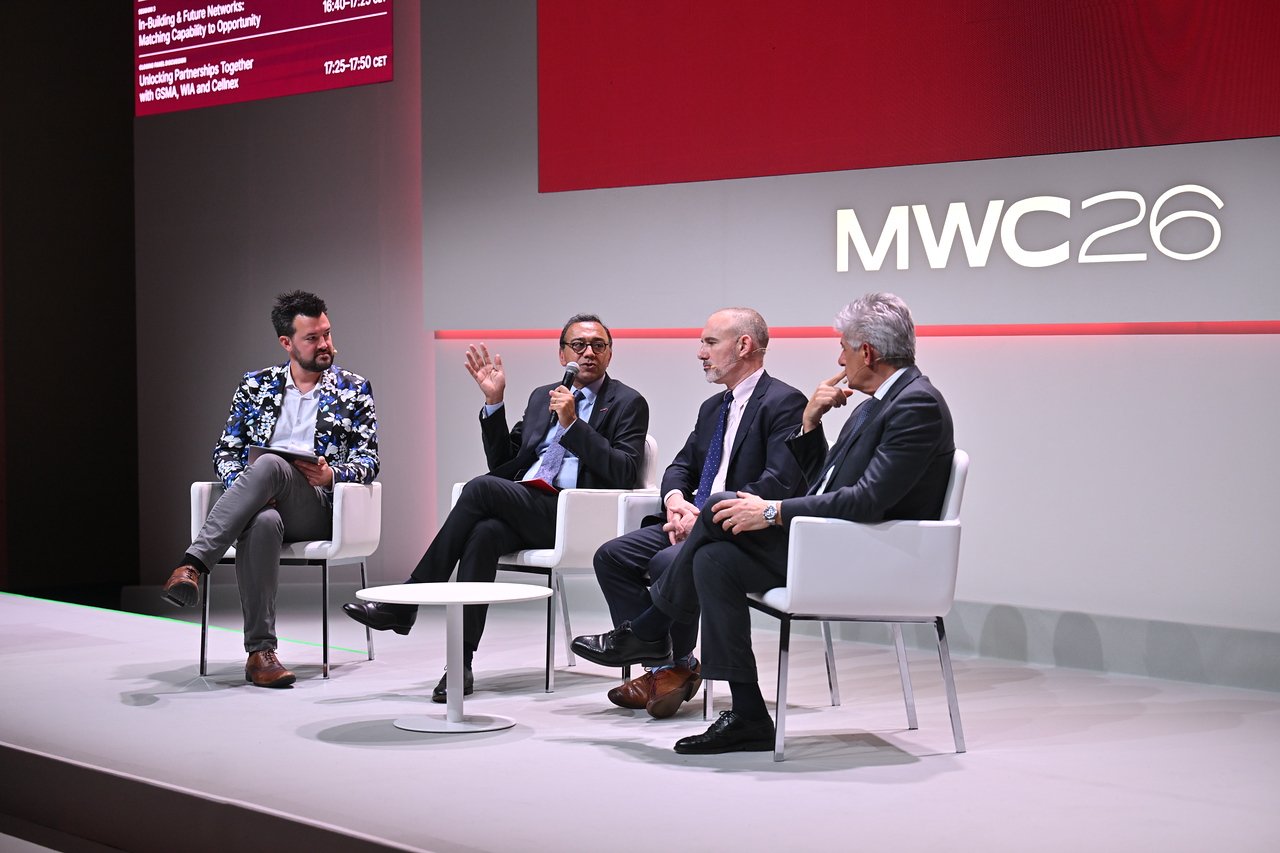
Discussions at the summit suggested the future industry developments will make it essential to have partnerships between tower companies and operators that enable far greater coordination. If the first chapter of the tower industry was about unlocking capital, the next will need to focus on sharing information and coordinating infrastructure development, and this may prove to be far more difficult.
The rise of the tower model was, at its core, a financial innovation. Mobile operators faced the enormous cost of expanding networks, and separating passive infrastructure from active network operations allowed operators to free up capital. At the same time, tower companies could scale infrastructure more efficiently through shared assets. As Emmanuel Rochas, CEO of TOTEM, explained during the summit, the transformation has been dramatic. “Today, 70% of the 4.5 million towers in the world are owned by tower companies,” he said. Which compares to roughly a quarter of sites only a decade ago.
The tower company model also unlocked massive investment from tower companies. In Europe alone, tower companies have invested roughly €65 billion over the past five years, a figure that represents around a quarter of the region’s total network capex. Infrastructure sharing also vastly improved the economics of network expansion. By hosting multiple operators on a single structure, tower companies achieved tenancy ratios averaging more than two operators per site. On top of this, energy consumption also fell significantly, and in some cases, shared infrastructure reduced energy use by as much as 40%.
Infrastructure sharing becomes infrastructure competition
Despite these successes, the tower model that enabled growth over the last 10 years has also created tensions. In particular, one observation that was raised by several speakers was pointed out by Emmanuel Rochas as he said, “what should be a strategic and industrial partnership between tower companies and operators is today mostly transactional and financial.”
Today, one particular problem created by this relational shift is increasingly visible. Indeed, rather than maximising shared infrastructure, operators and tower companies sometimes build new sites alongside existing ones. Operators and tower companies duplicate assets and miss opportunities to share infrastructure. Indeed, in some markets, up to 50% of new sites are built in competition with existing ones. As Phoenix Tower International CEO Dagan Kasavana warned during the discussion, “there’s a material cost of having towers with no customers on them.”
Another structural challenge with the tower company model is the way it aligns commercial incentives. Long-term lease agreements can lock operators and tower companies into pricing structures designed for very different market conditions. As networks evolve and operators seek to reduce operating costs or redeploy infrastructure, these legacy contracts can create friction rather than flexibility. Several speakers also highlighted how the different investment horizons of operators and infrastructure providers can complicate coordination, making it harder to adapt infrastructure quickly as networks become denser and more dynamic.
Operators and tower companies have structured their commercial relationships around lease agreements and tenancy ratios. They are not built around joint infrastructure planning. And while this model worked when the industry’s primary objective was expanding coverage and capacity, the next phase of connectivity is different. Dense 5G networks, edge computing, AI driven services and new energy demands all increase the complexity of infrastructure deployment. As a result, coordination is now what matters most. As Richard Cane, Executive Vice President and President International at SBA Communications, argued during the summit, the industry increasingly needs to “go beyond the transaction in order to find ways that we can work together.”
Data, energy and the operational challenges ahead
Better data and information sharing and greater alignment will become essential in the coming years. Richard Cane argued that operational transparency between partners will increasingly shape infrastructure efficiency. Better visibility into site performance and network demand could help operators and infrastructure providers make more coordinated decisions. Indeed, SBA Communications have taken the initiative. Richard said, “We always leverage information. We work closely with the likes of Ookla to evaluate what the relative coverage is at our sites and where there are opportunities for the operator to improve the capacity of coverage to their network. And we share that information with them.”
Meanwhile, energy emerged as one of the major themes of discussion over the future tower company model. As networks expand and become denser and more power intensive, energy management is becoming more of an issue. Ole Martin Gunhildsbu, Chief Technology Officer of Telenor Towers, highlighted how operational expectations around energy have changed. “It’s easier to argue for energy investments than it was when energy was just kind of in the back office, and so alignment is definitely needed,” he said, referring to changing trends in energy use and network performance.
Tower infrastructure may play a greater role in addressing energy challenges, with speakers at the summit discussing how towers could function as distributed energy assets. In this model, towers could store power, support energy resilience and reduce operational costs, with energy-as-a-service models combining battery storage, renewable generation and grid services beginning to emerge.
The growing importance of towers
Technological developments also point to tower infrastructure becoming a more strategic part of the global digital ecosystem. Patrick Halley, President and Chief Executive Officer of the Wireless Infrastructure Association, discussed future pressures brought by AI. “Wireless infrastructure is AI infrastructure,” he said. Indeed, as AI workloads expand and edge computing becomes more distributed, connectivity infrastructure will increasingly support the data network of the future digital economy. As a result, this trend is likely to increase the strategic importance of towers and other network assets.
This shift also raises more questions over operator and tower company partnerships. If towers are no longer simply passive assets supporting mobile networks, then the relationships between infrastructure providers and operators may need to evolve. Marco Patuano, Chief Executive Officer of Cellnex Telecom and Chair of EWIA, suggested that the industry may need to rethink its operating model. “I spend a big part of my time trying to advocate that we have to change, and we have to change fast,” he said, reflecting the wider discussion about the long-term structure of the industry.
Vivek Badrinath, Director General of the GSMA, also emphasised that technological developments will make closer collaboration across the ecosystem essential. For example, he said, “dreaming that every tower will have a data centre built inside it might be overkill, but there will be things that we will want to do at the edge with the emergence of AI.” With developments of this kind, he suggested the industry will need “technical partnerships to design towers of the future.”
The new strategic tower company model
In many ways, the tower industry now finds itself at a similar inflection point to the one that created it. The original tower company model emerged as a response to a financial challenge. Mobile network operators needed a way to fund the rapid expansion of networks. Today, there is also a fundamental challenge for mobile networks. However, it is increasingly operational as well as financial. Networks are becoming more complex, and infrastructure is becoming more deeply embedded in broader digital systems. As a result, the industry must find new ways to coordinate planning, deployment and operations.
Separating infrastructure ownership created the scale and specialisation needed to support global connectivity. However, success also reveals the limits of purely transactional relationships when infrastructure becomes more strategic. The tower model helped finance the last era of mobile growth. The next era, defined by dense networks, edge computing, AI driven services and energy constraints, will require something different. The industry now needs a deeper form of collaboration. If financial innovation created the tower industry, operational collaboration will define its next chapter. The question for the mobile industry is therefore simple. What exactly should the new tower company model look like, and how can the industry build it together?
