


Monday 9 February, 2026
Update
At MWC26 Barcelona in March 2026, our partners and GSMA Technology Team showcased a proof of concept (Open Verifiable Calling), as described in the blog below. This prompted strong interest in the PoC across the mobile ecosystem, as it showed that phone calls could be verified securely across networks. Members then formally asked the GSMA to define a vetting policy framework to enable the implementation of OVC services across voice messaging and API mobile channels.
Current status and next steps: This is now a GSMA delivery programme called Open Verifiable Communications (OVC). The GSMA Open Verifiable Communications Working Group has been set up and is developing the specifications needed to define the OVC framework, ensuring verified information can be securely transmitted, recognised, and displayed in a way that builds user trust, protects against misuse, and enables interoperability. Once this foundational work is complete, we will support our members in creating technical standards to underpin specific channel/technology implementations.
About OVC
Open Verifiable Calling (OVC) is a GSMA Foundry project designed to tackle a growing problem: how can consumers know who is really calling them? By leveraging established, open technologies, OVC introduces a framework for building verifiable trust directly into voice calls.
Fraudulent calls are at the heart of today’s consumer-targeted attacks. The traditional phone network offers no reliable way for callers to prove their identity, or for recipients to verify it, leaving the door wide open for fraudsters to impersonate anyone they choose.
Bringing Trust Back to Every Call
OVC solves this problem by delivering three key innovations that make every call verifiably trustworthy:
- Verified identities you can see: Businesses can confirm who they are, the phone numbers they can use, the name they operate under, and a recognizable logo to reassure consumers.
- Bulletproof cryptography: Identity information is protected from tampering or hijacking, so users can trust it’s authentic.
- Smarter phones: Devices can display verified caller info, giving the power of trust straight to the user.
The benefits ripple across the phone network ecosystem:
- Rebuilding consumer confidence: People can pick up the phone without hesitation.
- Filtering out fraud: Networks can block bad actors while promoting verified, trusted calls.
- Meeting regulatory obligations: Operators can deliver verifiable compliance, not just “best-effort” assurances.


Open Verifiable Calling Arrives at MWC26: Advancing Trusted Voice
At MWC Barcelona 2026, the Open Verifiable Calling (OVC) project showcased six months of work to create a framework for trusted, identity-driven voice communications, including a proof of concept for a fully end-to-end verified call.
Rich Connextions positioned Open Verifiable Communication as a broader industry vision, demonstrating that global, verifiable communications are achievable through open standards and collaboration, critical as fragmented solutions continue to erode trust and hinder growth.

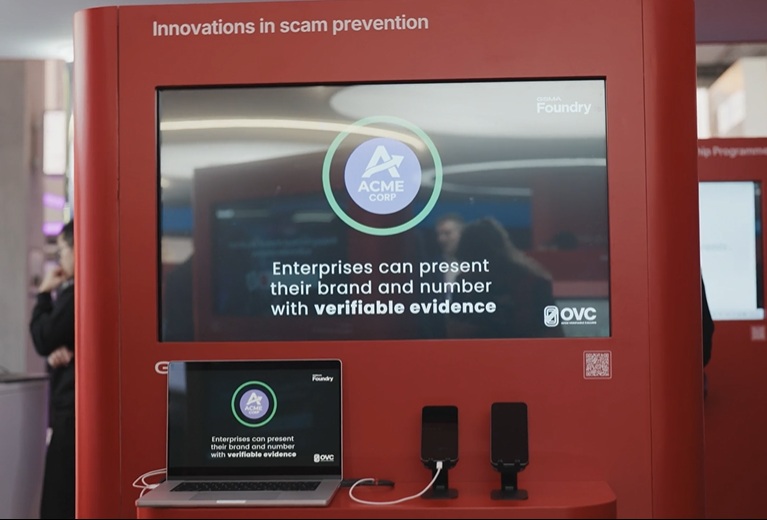
Rich Connextions also ran a live Pavilion demo and hosted two roundtables with MNOs to drive industry engagement. If you missed it, be sure to watch the video to see how OVC is helping restore trust in voice communications.
In partnership with:


