
Asia Pacific is the most disaster-prone region in the world, home to 75 per cent of people affected by disasters globally. Floods, cyclones, landslides, heatwaves, and earthquakes cause widespread destruction across multiple countries. Challenges caused by disasters are exacerbated by conflict and displacement, compounding humanitarian needs.
In 2022, the UN Secretary General launched the Early Warnings for All Initiative with an ambition for everyone in the world to be protected by an early warning system. The GSMA plays a leading role in the initiative, particularly within the ITU led Pillar 3 on “warning dissemination and communication”.
With around 1.8 billion unique mobile subscribers in Asia Pacific, mobile network operators have a critical role to play in disseminating risk alerts at scale through mobile technologies such as cell broadcast, which can deliver millions of alerts within seconds.
Significant disaster resilience measures in the region are making good progress to mitigate these risks, including through public-private collaboration and the development of mobile enabled early warning systems.
World leading early warning systems

Japan’s mobile-based emergency alert system, J-Alert, is a powerful example of an effective early warning system where mobile network operators play a vital role. The state-of-the-art system combines national warning infrastructure with operators’ cell broadcast emergency alerting capabilities, to deliver government-issued alerts for earthquakes, tsunamis and other hazards across the country within seconds. Rather than acting solely as communication providers, MNOs are embedded partners in Japan’s disaster management ecosystem. They work closely with the government and each other, not only on delivery, but also on shared operational guidelines, technical standards, and coordinated testing to ensure alerts are consistent and reliable across all networks. Regular drills and a strong culture of preparedness also help to ensure that alerts are not only received but understood and acted on quickly. The GSMA’s report on Japan’s early warning system explores this model and the role of mobile network operators in greater detail.
Progressive financing mechanisms
In Thailand, innovative use of the country’s Universal Service Fund (USF) accelerated the development and deployment of a national Cell Broadcast-based early warning system. The USF is a government initiative that telecommunications companies contribute to financially and its funds can be used for “telecommunications missions for national security or the public interest”.
The Government of Thailand formally approved Cell Broadcast as a qualifying activity in mid-2024 and subsequently allocated a total national budget of 1.125 billion Thai Baht (approximately £25.5 million) from its USO fund, distributed equally among the country’s mobile network operators to cover the full capital costs for Cell Broadcast Centre (CBC) deployments alongside three years of operating costs. The system was fully operational by September 2025 and underwent successful nationwide testing by January 2026.
Thailand is one of the first countries globally to leverage its USF to fund the rollout of a Cell Broadcast-based early warning system, and other countries around the world are now looking to draw lessons from Thailand’s approach.
Pacific collaboration for national early warning systems
In the Pacific Islands, GSMA’s partnership with the Pacific Islands Telecommunications Association (PITA) has been central to accelerating Cell Broadcast deployment. As the region’s telecommunications convenor, PITA has enabled sustained coordination and trust between stakeholders, bringing together mobile network operators, governments, and regional organisations with progress advancing across multiple island states in parallel.
Implementation began in 2025 across the Solomon Islands, Cook Islands, Samoa, and Kiribati, including the Pacific’s first live Cell Broadcast test in the Solomon Islands and a regional workshop in Fiji. This has continued into 2026 with Niue, Tuvalu, and Nauru.
Funding Innovative EWS approaches
GSMA’s Innovation Fund has supported several innovative organisations who are leading projects in the APAC region on EWS development. These projects have shown how mobile channels can improve both the delivery of warnings and the actions that follow.
For example in Nepal, NAXA combined impact-based forecasting with mobile-enabled cash assistance to support at-risk households before flooding occurs. In Pakistan, Buraq introduced IVR calls to deliver warnings and advice in multiple languages, making alerts more accessible for those with lower literacy levels.
Across the innovations, partnerships with the mobile industry have helped to give projects credibility and unlock access to unique datasets. For example in the Philippines, People in Need’s MoU with mobile operator Smart meant flood alerts were sent under the MNO’s name, strengthening trust and integration with government response. In Lao PDR, innovation fund grantee Somleng is working with Lao Telecom and to deploy an open-source, mobile-enabled early warning system that enables government agencies to disseminate official alerts via SMS and voice channels.
Other regional collaboration

Image: Signing of the GSMA-Jazz Statement of Commitment at the GSMA Digital Nation Summit in Islamabad, Pakistan, 7 August 2024.
In Pakistan, the GSMA supports the government and mobile industry to strengthen mobile-enabled early warning systems through technical support, policy engagement, and coordination. A central focus has been developing Standard Operating Procedures (SOPs) for mobile alerting, streamlining coordination and enabling faster, more consistent dissemination aligned with the Common Alerting Protocol.
In Nepal, the GSMA has worked closely with partners including the NDRRMA, the Department of Hydrology and Meteorology, the Ministry of Communications, regulator, and mobile operators Ncell and NTC to build on existing SMS-based alerting progress and advance towards more scalable approaches to warning dissemination.
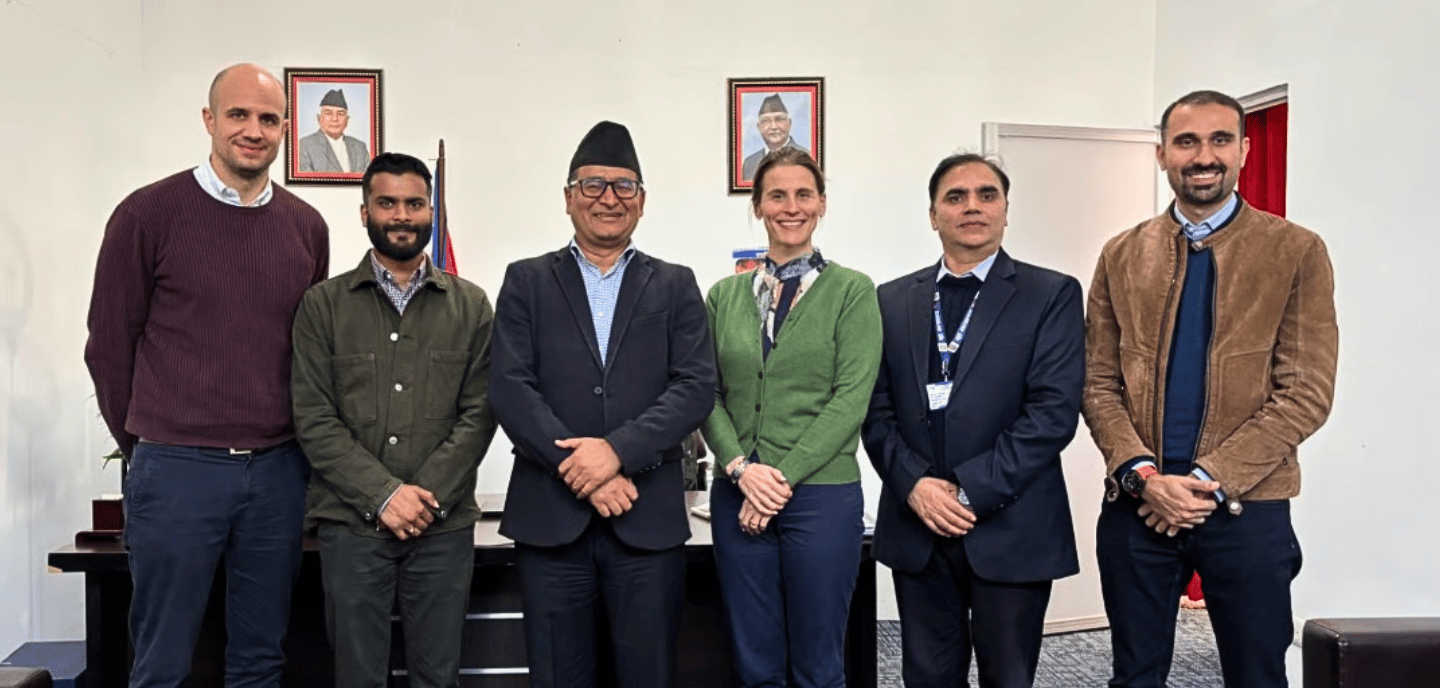
Image: Meeting with the National Disaster Risk Reduction and Management Authority in 2025
The GSMA is also strengthening its regional engagement through a partnership with the ASEAN Coordinating Centre for Humanitarian Assistance on disaster management (AHA Centre), which plays a central role in coordinating disaster response and preparedness across ASEAN Member States.
The GSMA highlights the crucial role of early warning systems in its global and regional events. At M360 Eurasia in May 2026 in Samarkand, policy discussions and roundtables focused on strengthening regional collaboration on disaster resilience and emergency telecommunications, with the growing presence of Cell Broadcast in Central Asia.
Looking forward
To scale the impact of early warning systems and ensure no one is left behind, governments and regulators across Asia Pacific must take decisive action. This means embedding mobile-enabled alerting into national disaster preparedness strategies, adopting technologies such as Cell Broadcast as a core public safety capability, and ensuring clear regulatory frameworks that enable rapid and coordinated warning dissemination.
Despite high levels of mobile coverage across the region, millions of people remain excluded from the benefits of the digital economy due to barriers such as affordability, digital skills, accessibility and trust. Closing the mobile usage gap is therefore essential to maximising the impact of early warning systems. When more people are able to access and confidently use digital services, alerts can become more targeted, more actionable and more responsive to individual needs and circumstances.
Sustainable financing will be critical. Mechanisms such as Universal Service Funds can play a transformative role in supporting both the deployment and long-term operation of early warning infrastructure. At the same time, strong public-private collaboration between governments, mobile network operators, and humanitarian partners must be prioritised to ensure systems are trusted, interoperable, and effective at scale.
With the ambition of the Early Warnings for All Initiative in sight, the opportunity is clear. By aligning policy, investment and industry capabilities, countries across the region can move from fragmented approaches to truly national, population-wide protection.
GSMA will continue to highlight this topic through its global event series, including at M360 ASEAN in Kuala Lumpur on 9-10 September 2026.
This initiative is funded by the UK government’s Foreign, Commonwealth & Development Office (FCDO) through its Global Research and Technology Development portfolio and is supported by the GSMA and its members.