



The voluntary carbon market (VCM) presents startups with opportunities to unlock financial benefits for driving climate action. However, entering the market is not straightforward and many early-stage companies lack information on the expected costs and process for entering the market. The GSMA’s Mobile for Development programme recently published guidance for startups and early-stage companies considering entering the market.
This blog explores how ATEC Global leverages IoT-enabled clean cooking technologies to generate verifiable carbon credits while tackling health, economic, and environmental challenges across 11 countries in Africa and Asia. ATEC are one of three case studies featured in the guide, more information on the VCMs and the other case studies can be found here.
The clean cooking challenge
The cooking sector accounts for about 3% of global greenhouse gas emissions, with 2.3 billion people relying on polluting traditional fuels and technologies for cooking – greater than the global emissions from aviation.
In many low- and middle-income countries (LMICs), women and children spend up to 20 hours per week collecting fuel for cooking. This not only consumes valuable time but also exposes them to severe health risks from indoor air pollution caused by biomass emissions. The WHO estimates that household air pollution leads to 3.2 million deaths a year.
ATEC’s technology solutions
ATEC addresses this challenge by providing innovative clean cooking technologies that reduce fuelwood consumption, lower carbon emissions, and improve health outcomes for families in LMICs.
They offer two clean cooking technologies tailored to different user contexts:
1. eCook IoT stove
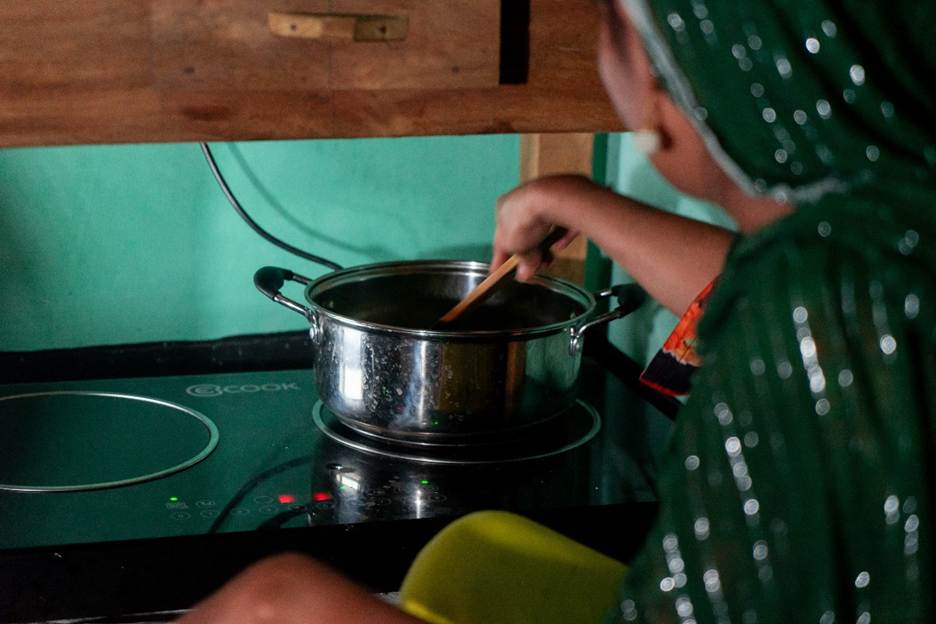
eCook stoves are high-efficiency electromagnetic induction cookers that are up to 50% cheaper to operate than LPG or charcoal stoves. They are:
- Equipped with global SIM cards for real-time usage tracking
- Integrated with PAYG solution for affordable, flexible payments
- Gold Standard certified
2. Prefabricated bio-digestors for rural farming families:
ATEC’s biodigesters convert farm waste into clean, safe biogas for daily cooking. These systems are:
- Easy and quick to install (under 3 hours)
- Integrated with ATEC’s mobile payment technology (PAYG)
- Highly carbon efficient, with each unit abating roughly 4 tons of carbon per year, totalling around 112.5 tons over its lifetime
ATEC was supported by the GSMA under the Innovation Fund for Digital Urban Services – launched in 2021 with support from the UK Foreign, Commonwealth & Development Office (FCDO). Their progress also earned them a place in the Accelerated Growth Round (AGR), a 10-month follow-on funding initiative designed to help startups scale their digital solutions and deepen market penetration.
Investing in Digital Monitoring, Reporting and Verification (dMRV)
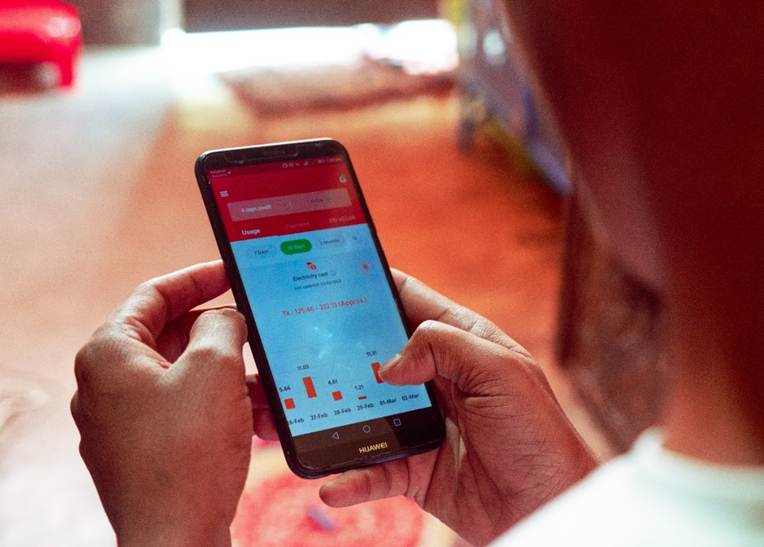
ATEC’s cookstoves capture daily usage data, enabling precise calculation of emissions reductions for each device and eliminating the risk of over-crediting. This data is aggregated through SustainCERT’s dMRV software, which converts real-time usage into verified data, ultimately generating Gold Standard-certified carbon credits. Carbon credit buyers can track credit generation in real time via ATEC’s centralised carbon dashboard, ensuring full transparency and accountability.
ATEC’s decision to adopt dMRV methods, stemmed from firsthand experience with traditional, in-person sampling in its biodigester projects in Cambodia. Recognising the limitations of traditional sampling, and driven by industry-wide concerns over over-crediting, ATEC pioneered metered methodologies for cookstoves. This proactive approach positioned ATEC as a leader in co-developing and adopting Gold Standard’s new Methodology for Metered & Measured Energy Cooking Devices. A supporting study confirmed that this methodology demonstrated the lowest levels of over-crediting.
Generating Gold Standard-certified carbon credits
ATEC is now issuing its first Gold Standard-certified carbon credits from projects in Bangladesh and Cambodia, leveraging Gold Standard’s Metered & Measured Energy Cooking Devices methodology. Emissions reductions are achieved by replacing pollution-intensive wood/charcoal stoves with electric induction alternatives, generating avoidance-based credits.
The project demonstrates additionality, meaning it would not be viable without carbon finance. Under Gold Standard’s Community Service Activity Requirements serving populations with less than 20% clean cooking adoption is a strong indicator of additionality. Carbon finance is essential for making the upfront cost of acquiring ATEC’s electric cookstove more affordable for low-income consumers.
This financing model has already led to a significant behavioural shift:
- 4,464 new users adopted the eCook stove during the GSMA grant period
- 34% cited PAYG enabled affordability as their main reason for switching, alongside the stove’s ease of use and enhanced safety features
Scaling impact through partnerships
To expand its impact, ATEC has secured three pioneering agreements with leading organisations:
1. ENGIE Group
In 2023, ATEC signed a landmark agreement with ENGIE Group, who will purchase up to 11.5 million carbon credits from projects in Bangladesh and Cambodia. This was the first major deal signed under Gold Standard’s new metered methodology, setting a precedent for data-driven carbon credit generation.
2. FairClimateFund:
Also in 2023, ATEC partnered with the FairClimateFund to pilot a revenue-sharing model that distributed income from carbon credits directly to households. Based on verifiable usage data, 70% of the credit purchase price will be transferred to mobile payments. FairClimateFund will market these credits to companies committed to supporting fair and transparent climate action.
3. KliK Foundation:
Earlier this year ATEC entered into a purchase agreement with the KliK Foundation for 100% data auditable Internationally Transferred Mitigation Outcomes (ITMOs). This project, focused on replacing traditional cookstoves in Malawi, is funded under the Article 6.2 of the Paris Agreement. The project is currently undergoing validation and will proceed upon authorisation by the two partner countries, Switzerland and Malawi.
Conclusion
ATEC Global has established a one-of-a-kind model for high-integrity carbon projects in the clean cooking sector. This model illustrates how verifiable carbon credits can finance inclusive technologies that simultaneously address the intertwined challenges of climate change, gender inequality, and public health caused by traditional fuelwood cooking.
New GSMA resource on carbon credits
Entering the voluntary carbon market (VCM) can be daunting for climate tech startups. Conversations with GSMA’s Innovation Fund grantees revealed a significant information gap, leaving many early-stage startups feeling ill-equipped to engage with the VCM. To address these needs, “The Voluntary Carbon Market: A guide for startups” from the GSMA ClimateTech programme, produced in collaboration with research partner Social Finance, provides accessible and tailored information designed to empower start-ups evaluate independently, their potential of entering the voluntary carbon market. Read more about the guide here.