




Climate change is fundamentally a financing challenge. Achieving global climate goals will require unprecedented levels of investment across mitigation, adaptation, and resilience. The International Energy Agency estimates that global clean energy investment must exceed USD 4 trillion annually by 2030 to align with net-zero pathways. At the same time, the United Nations Environment Programme projects that adaptation costs in developing countries could reach USD 310 billion per year by 2035.
Despite growing momentum, a significant climate finance gap remains. The Intergovernmental Panel on Climate Change notes that current financial flows fall far short of what is needed to both reduce emissions and strengthen resilience in vulnerable regions.
Furthermore, despite progress under Article 6 of the Paris Agreement that enables countries to cooperate in meeting their Nationally Determined Contributions (NDCs) including carbon markets, climate finance often struggles to reach smaller, distributed solutions, such as climate-smart agriculture, resilient infrastructure for communities, and off-grid clean energy systems. For instance, voluntary carbon markets (VCMs) supports companies in seeking credible ways for emissions reductions. These initiatives frequently operate in markets where financial systems are fragmented and reliable data is limited, making them difficult for traditional investors to assess.
Digital infrastructure is beginning to change this dynamic
Systems rely heavily on trust, particularly in how emissions reductions are measured, verified, and tracked. Digital measurement, reporting, and verification (dMRV) systems offer a powerful alternative as opposed to costly, slow and difficult to apply traditional methods. By combining satellite imagery, IoT sensors, and mobile connectivity, these platforms automate the collection and verification of environmental data. This improves transparency, reduces verification costs, and accelerates the issuance of carbon credits.
Mobile connectivity as an enabler of climate finance and financial inclusion
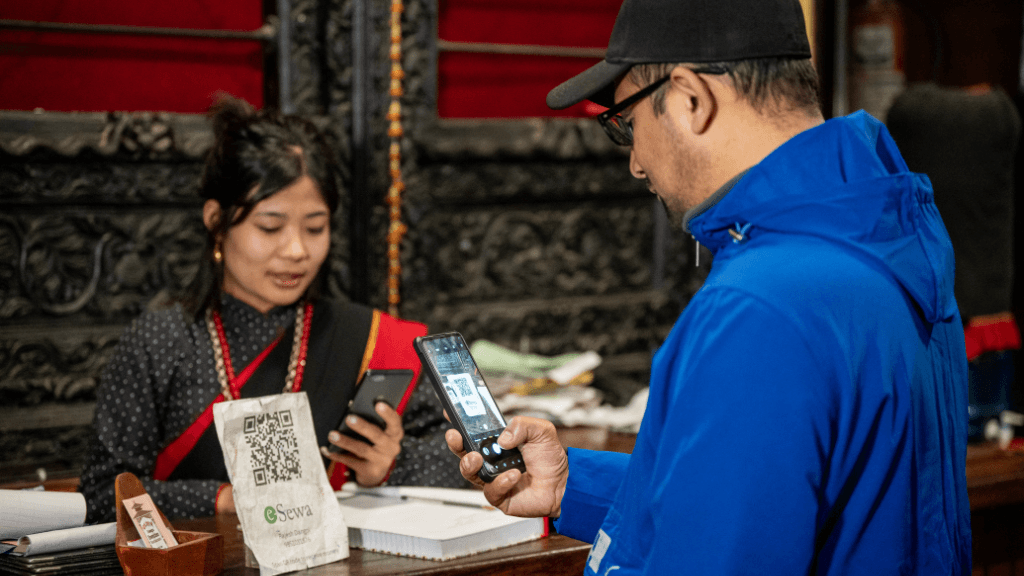
Mobile networks now cover 96% of the global population, with more than 4.7 billion people using mobile internet on their own device, providing a critical platform for digital services and financial inclusion. Across emerging economies, mobile connectivity increasingly forms the backbone of digital and financial ecosystems.
Mobile networks enable services such as mobile money, digital identity systems, and data platforms that help expand access to financial services while improving transparency for investors.
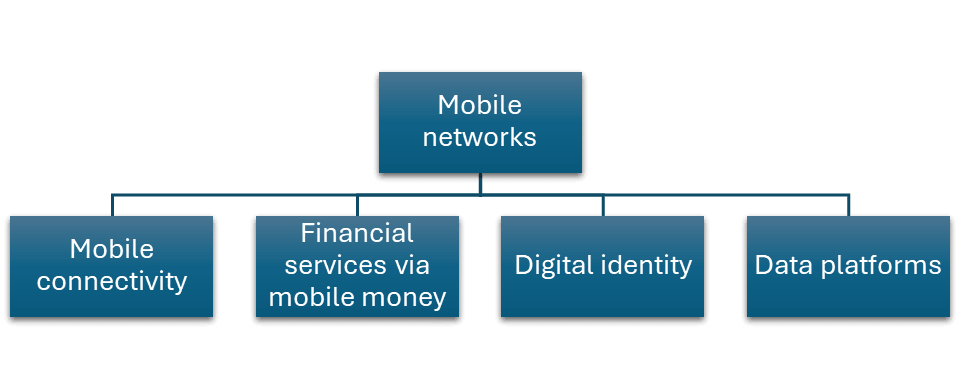
Together, these capabilities create the digital infrastructure needed to channel investment into climate solutions that were previously difficult to finance.
New financing models enabled by mobile
Across the mobile ecosystem, innovative financial models are emerging that demonstrate how connectivity and digital platforms can unlock climate investment.
- Pay-as-you-go renewable energy: One of the most widely recognised examples is the pay-as-you-go (PAYG) solar model, which allows households to pay for solar home systems through small mobile payments rather than large upfront costs. Startups like ATEC, supported through the GSMA Innovation Fund have demonstrated how PAYG financing can accelerate energy access while generating digital payment data that helps attract further investment into clean energy markets.
- Mobile-enabled climate insurance: Climate shocks such as droughts or floods can devastate livelihoods, particularly in agriculture-dependent regions. Parametric insurance products like the one provided by OKO Finance, use satellite data and environmental indicators such as rainfall levels, to automatically trigger payouts when predefined thresholds are reached. Delivered through mobile platforms, these products can provide faster and more accessible financial protection to vulnerable communities.
- Digital MRV platforms: Solutions such as Inqube’s Greencube, significantly reduce the cost and complexity of participating in carbon markets, making it easier for smaller climate projects, including clean cooking, biogas, and distributed renewable energy, to generate carbon credits. Together with mobile-enabled carbon finance, it is improving how climate revenues reach communities. Mobile money platforms provide transparent channels for distributing carbon credit payments to households and project participants, ensuring that financial benefits reach those delivering emissions reductions.
The role of governments
Scaling digital climate finance requires supportive policy environments. Governments play a critical role in enabling the adaptive systems that allow digital technologies and climate markets to function effectively.
Three priorities stand out:
- Investing in digital infrastructure and interoperability: including carbon registries, data platforms, and connectivity systems that allow climate data to move across institutions and markets.
- Encouraging collaboration and shared standards: as seen in initiatives such as the Coalition to Grow Carbon Markets launched by Kenya, Singapore, and the United Kingdom.
- Strengthening technical capacity and data governance: ensuring regulators, developers, and communities can manage digital MRV systems securely and effectively.
These measures help build credible, scalable climate finance systems.
Scaling climate investment
While these innovations demonstrate the potential of digital technologies to unlock climate finance, scaling them requires collaboration across governments, financial institutions, technology providers, and development organisations.
Three priorities are particularly important.
- First, improving data transparency so that investors can better understand climate risks and measure the impact of investments.
- Second, reducing investment risk through blended finance mechanisms that mobilise private capital alongside public and philanthropic funding.
- Third, strengthening digital ecosystems, including continued investment in connectivity, mobile financial services, and data platforms.
A catalyst for inclusive climate action
Digital technologies are enabling a shift toward more distributed and inclusive models of climate finance.
By connecting financial services, environmental data, and communities through mobile networks, the digital ecosystem is helping unlock new pathways for climate finance. These innovations are making it possible to direct investment not only toward large infrastructure projects but also toward the households, farmers, and enterprises on the front lines of climate change.
As climate risks intensify, unlocking these new financial pathways will be essential to mobilising the investment needed to build resilient and sustainable economies.
Explore more examples and insights in the ClimateTech Horizons Report, which highlights how mobile innovation is accelerating climate action worldwide.
Download the ClimateTech Horizons Report 2026
This initiative is currently funded by UK International Development from the UK government and by the Swedish International Development Cooperation Agency (Sida) and is supported by the GSMA and its members.
