




Mobile Network Operators (MNOs) in Japan are integral to the delivery of life-saving mobile alerts at scale. New research from the Mobile for Humanitarian Innovation programme (M4H) demonstrates how MNOs are embedded within Japan’s state of the art early warning system (EWS), offering practical insights into effective MNO engagement in public alerting.
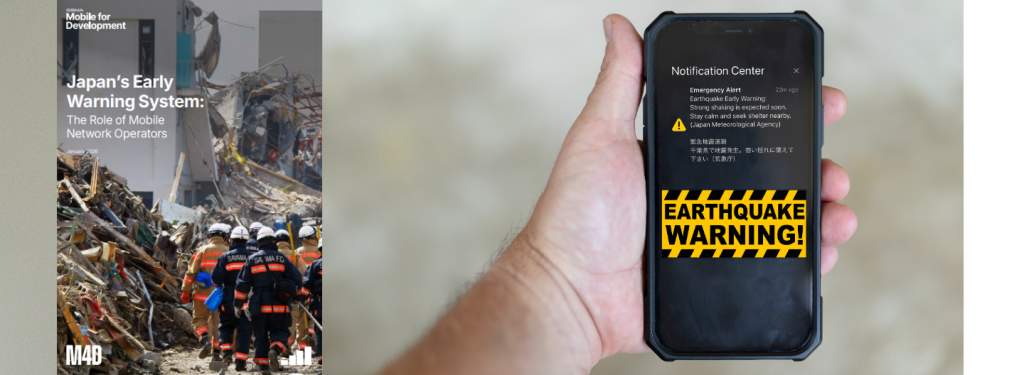
Effective EWS are critical for helping communities and authorities prepare for disasters – saving lives and reducing economic impacts. In response to this, EW4All aims to ensure everyone is protected by a multi-hazard EWS. M4H plays a leading strategic and operational role in EW4All, particularly under the International Telecommunication Union (ITU) led Pillar 3 (warning dissemination and communication).
At the national level, GSMA supports enabling environments where MNOs are effectively engaged in the design, implementation and operation of national EWS. M4H has built a substantial evidence base in support of this, including case studies of effective MNO involvement in EWS in Chile, France and most recently Japan.
Japan’s disaster risk profile
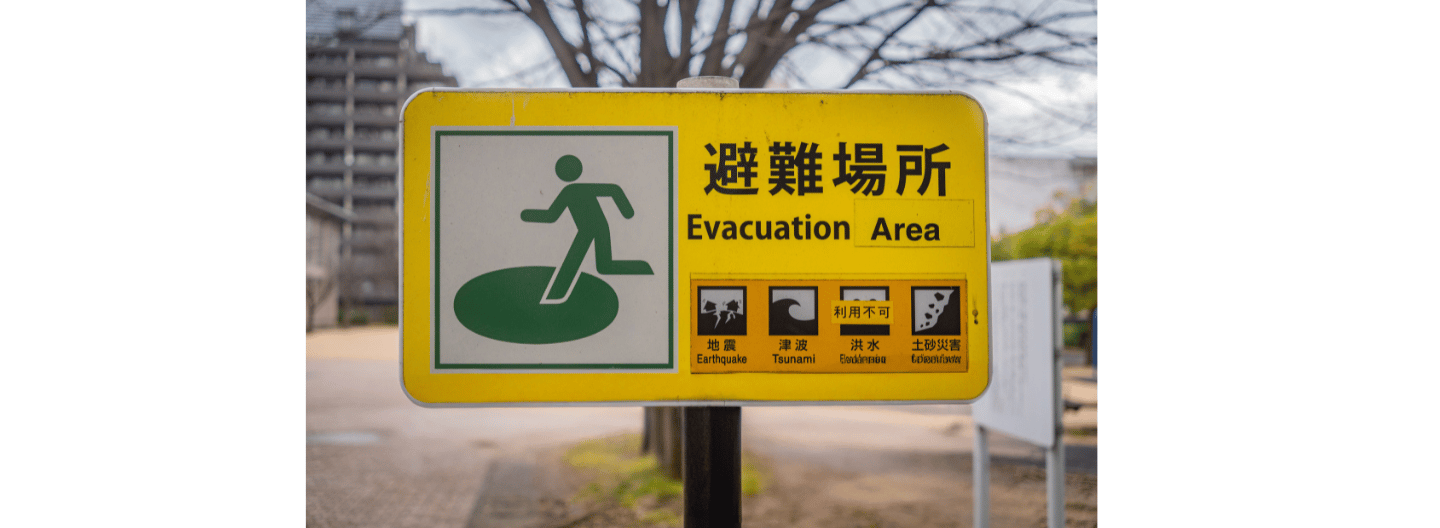
Japan is one of the world’s most disaster exposed countries, facing a multitude of climate hazards including earthquakes, tsunamis, typhoons, flooding and volcanic eruptions. Yet Japan is also home to a highly advanced multi-channel EWS. As a country with an established tradition of national and local preparedness, Japan has considerable capacity to withstand, adapt to and recover from climate disasters.
Japan’s EWS architecture
The Disaster Risk Reduction Framework in Japan uses a whole-of-society approach guided by the philosophy of BOSAI, encompassing self-help (jijo), mutual help (kyojo/gojo) and public help (kojo), whereby all Japanese communities are responsible for specific measures.
Alongside this philosophy, Japan’s EWS architecture is rooted in an established legal framework alongside clear institutional authority and coordination. The Disaster Countermeasures Basic Act defines the roles of national and local authorities. It includes MNOs as “Specified Public Institutions”, who are legally obligated to plan, prepare for and support disaster response and recovery, including ensuring priority communications for warnings and emergency operations, embedding their role in disaster communications. The Japanese Cabinet Office’s Central Disaster Management Council overseas coordination between government agencies and MNOs during emergencies.
Within this framework, MNOs function as critical Digital Public Infrastructure (DPIs), serving as the primary delivery channels of emergency warnings through their nationwide networks and high levels of device penetration. Such policies are paired with shared operational guidelines, jointly developed by MNOs in collaboration with the Telecommunications Carriers Association, which facilitate uniform message handling, reduce errors and simplify workflows across all networks during emergencies.
Japan’s EWS is well-established; MNOs began delivering cell broadcast (CB) warnings in the late 2000s, an approach recognised as best practice for EWS due to CB’s ability to reach all mobile devices simultaneously, regardless of network congestion or user registration status. This is enabled by Japan’s mobile market, one of the most advanced globally, which has 110.7 million unique mobile subscribers (from a population of 121 million) and more than 191.8 total mobile connections. Japan’s four major MNOs (NTT DOCOMO, KDDI, SoftBank and Rakuten Mobile) deliver these alerts, ensuring consistent warnings across networks and channels, even when infrastructure is impacted during climate crises.
A recent example of this occurred in 2024 during the Noto Peninsula earthquake, where both earthquake early warnings and tsunami emergency warnings were deployed. Despite the rapid development and magnitude of the event, urgent alerts were sent out to the affected region, providing critical seconds of warning for affected populations to prepare and respond.
By leveraging the extensive reach of its MNOs, Japan’s EWS uses a collaborative model whereby MNOs work together on technical specifications, shared operational guidelines and joint testing. In focusing on coordination over competition, Japan’s MNOs use mutual aid arrangements, share restoration assets post-climate event, have joint emergency connectivity hubs and coordinate drills to enable consistent delivery of alerts and ensure faster service recovery for all networks operating in Japan.
Considerations for MNO engagement in EWS
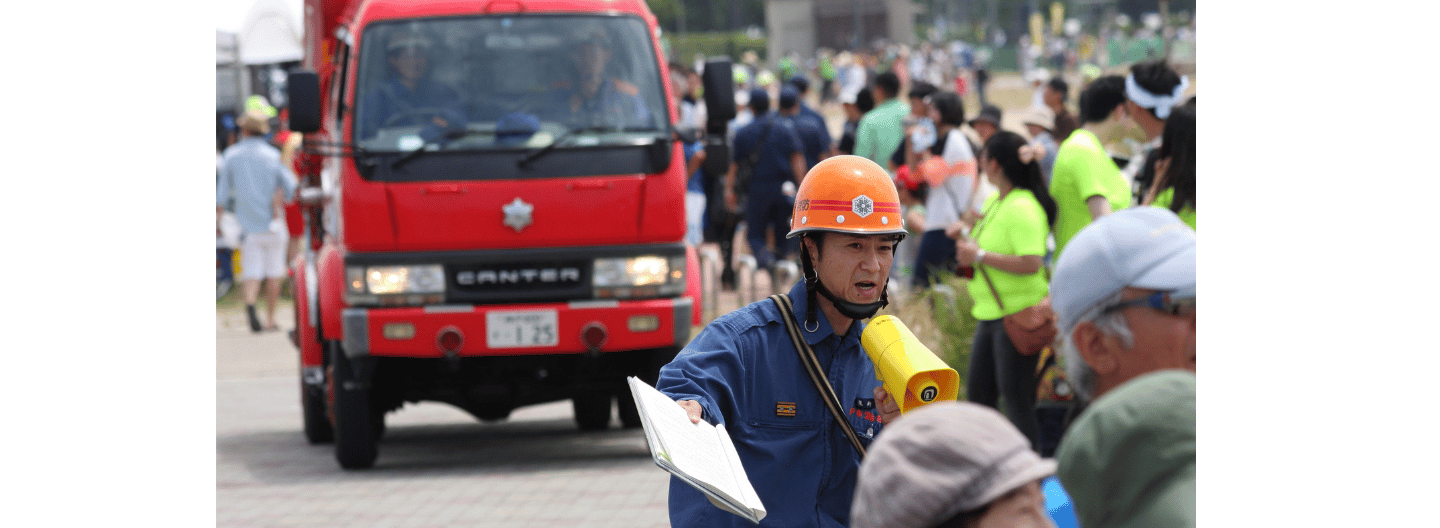
Japan’s EWS provides an important example of an effective and well-coordinated public-private model with the capacity to deliver fast and reliable alerts at a national, provincial and local scale. As such, based on the Japanese model, this research presents ten considerations for effective MNO engagement in mobile-enabled EWS:
- 1. Clear policy and governance frameworks define roles, responsibilities and coordination mechanisms between MNOs and public authorities.
- 2. Common alerting standards should be used to enable interoperable, consistent alerts.
- 3. Shared operational guidelines can support uniform message handling, reduce error and simplify workflows for stakeholders.
- 4. Strong industry collaboration embeds MNOs in non-competitive, cooperative models.
- 5. Redundant and resilient delivery paths help to maintain alert continuity via dual bearers, back-up power and multi-route transmission.
- 6. Handset compatibility measures ensure that alerts reach widest possible range of devices.
- 7. Multi-channel dissemination maximises reach and can reinforce message credibility.
- 8. Public trust, awareness and risk culture enhances the effectiveness of alerts by building public understanding and supporting appropriate public response.
- 9. Regular testing and iterative improvements can strengthen technical reliability, operational readiness and system performance.
- 10. Sustainable financing models combine public and private contributions.
Learn more about Japan’s early warning system and the role of MNOs: