At MWC25 Barcelona, GSMA Mobile for Development brought together disruptive startups and a leading mobile network operator (MNO) for the session “Behind the Scenes of AI: Shaping the Deep Tech Ecosystem for Impact”. This blog lays out the key insights shared on shaping an ecosystem that fosters innovation and creates AI solutions tailored to low- and middle-income countries. Read on to discover:
Deep tech to scale business efficiency and impactful innovations
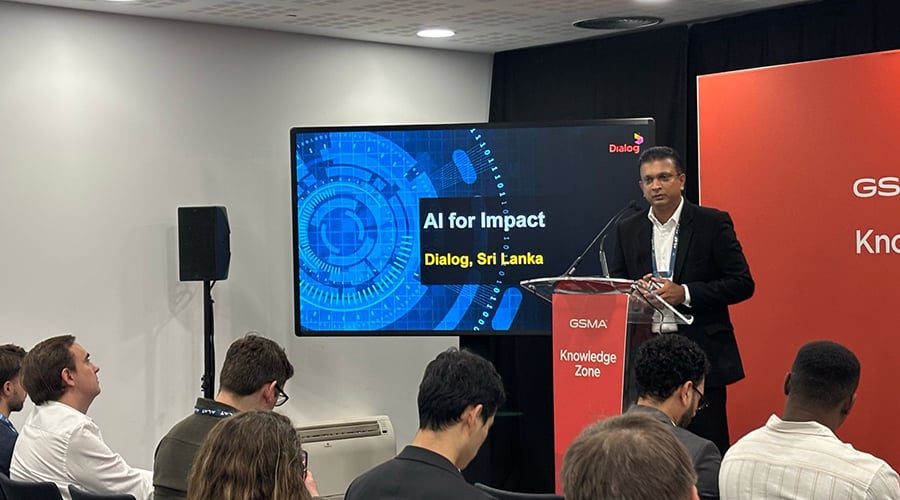
In the first half of the session, Director and Group CEO of Sri Lanka’s largest telco Dialog Axiata, Supun Weerasinghe shared the company’s AI-first result-oriented strategy across three priority areas to improve business outcomes, show impact and attract more investments into AI for MNOs:
1. Network operations
Integration of AI in network operations can improve network performance and quality of user experience. Dialog’s “AI for Networks” trial delivered in collaboration with Meta, uses Meta’s Llama AI models to analyse and optimise Dialog’s network, resulting in a 5% improvement in call quality over WhatsApp, seamless video delivery, and enhanced user experience. Dialog is also training AI models on network data to detect power leakages and run real-time network optimisation. As a result, Dialog has cut down network operations centre (NOC) by more than 50% and moved to an entirely virtual NOC, where AI agents generate tickets for field agents and run remote network troubleshooting activities.
2. Marketing and customer support
From simple image generation to full TV commercials, Dialog is employing AI to reduce the time and cost of marketing activities. In addition, AI-powered customer service agents have improved user-experience by enabling personalised customer support. The result has been a ten-fold increase in customer engagement and a 27% year-on-year growth in prepaid revenue while maintaining a net promoter score of eight.
3. Business operations
The benefit of AI is evident in improving the efficiency of business operations, particularly in building internal capacities, with over 300 of Dialog’s staff having undergone training in AI and prompt engineering. Impact-driven business solutions have also scaled. One example is Govi Mithuru, Dialog’s Agritech solution, which was supported as a grantee under the GSMA’s mAgri Programme and the mNutrition Initiative funded by UKAid. What started out as an Interactive Voice Response service providing insights on smart agriculture practices has now been enhanced by AI to provide real time guidance to smallholder farmers in local languages. This has led to 30% surge in crop yield and bolstered national food security.
Another example is Doc990, a Dialog mobile-based digital health appointment booking platform (which was supported by the GSMA mhealth programme). In 2024, Sri Lanka’s first AI–powered health scanning feature was launched on Doc990. This feature enables users to monitor vital health indicators such as blood pressure, heart rate variability and stress levels directly from their smartphones making health services more accessible and immediate.
The fundamentals for impactful AI
Supun emphasised that as a leading telecommunication company, setting the foundational layer for AI deployment is essential. This includes establishing data infrastructure, high data quality, ethical and effective data governance, and cloud adaptation. Alongside data, leveraging external partnerships with hyperscalers is also a key enabler. Via these partnerships, MNOs can tap into a large pool of both local and global expertise. Investing in the right talent and resources are instrumental to sustaining quality delivery of services and building thought-leadership and in-house expertise.
This blog is written by the Central Insights Unit. To stay up to date with our latest thought leadership pieces, sign up to our newsletter here.
Beyond internal teams, skill development and empowerment initiatives have been instrumental in equipping the next generation. One such example is Ideamart, Dialog’s global training platform that is strengthening Sri Lanka’s developer ecosystem and investing in smart school programmes and national competitions. Dialog’s handset instalment payment scheme is also creating the right foundations by successfully distributing $40 million worth of devices with minimal default rates fostered by credible credit scoring mechanisms powered by AI, thereby increasing smartphone adoption.
African deep tech startups delivering impact
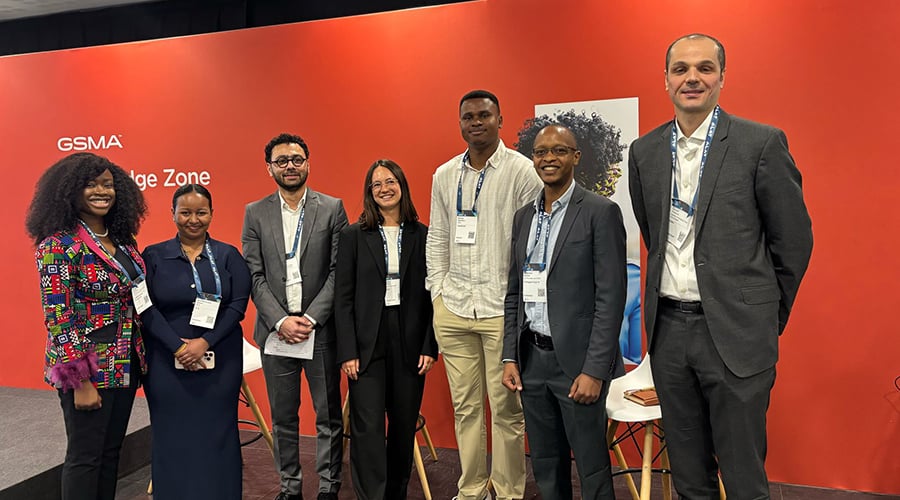
Africa’s deep tech landscape is reflective of both local innovation and global trends, its vitality is key to developing effective AI ecosystems for impact across the continent. The panel session engaged three thriving startups in Africa, catalysing the deep tech ecosystem across various sectors.
iCog Labs – Ethiopia
Betelhem Dessie is Co-Founder and CEO of iCog Labs – an Ethiopian based AI research and development company with a vision to strengthen Africa’s talent and local capacity. To date iCog Labs has empowered over 30,000 youths in technology education and skills development to inspire homegrown solutions to local challenges in Ethiopia. To address Ethiopia’s brain drain challenge, iCog Labs invests in training programmes from the primary education level upwards, in a bid to build up a large pool of talent within the country whilst still leveraging its skilled youth in the diaspora. However, maintaining this approach is capital intensive and more funding is necessary for iCog Labs to be able to make competitive offers like its foreign counterparts.
Crop2Cash – Nigeria
Showcasing AI’s application in addressing sector-specific challenges, Michael Ogundare, Founder and CEO of Crop2cash, an Agritech startup in Nigeria, shared how his company is serving over 500,000 smallholder farmers by increasing access to finance and providing digital agricultural advisory via FarmAdvice. FarmAdvice is an AI powered agent providing real-time, personalised agricultural advice to smallholder farmers in their local languages via a toll-free phone line, doing so without the need for a smartphone or internet connectivity. This innovation is progressively closing the gap between the number of agricultural extension officers and smallholder farmers in Nigeria (which is at 1:7,500 ratio).
Fastagger – Kenya
Leveraging deep tech to tackle digital infrastructural and affordability constraints is Fastagger. The Kenyan deep tech start up is addressing compute capacity gaps via edge computing. CEO and Co-Founder Mutembei Kariuki shared the organisation’s work in developing a software infrastructure that allows machine learning (ML) and AI models to run directly on edge devices, primarily targeting users with lower-end smartphones who are often left behind due to unreliable or limited access to internet connectivity.
A use case example is its ongoing collaboration with Safaricom resulting in a solution using ML on one of Africa’s biggest mobile money platform, M-PESA (with over 70 million customers across 170 countries), to enable small business holders to gain better customer insights from their financial transaction data and support M-Pesa in making business decisions to scale and increase adoption of mobile money solutions, further tapping into the African market, which accounted for over 70% of the global growth in registered accounts in 2023.
Local language datasets catalysing inclusive AI in Africa
On inclusive AI, the panel discussed the limited availability of local language datasets for LLM development. As a result, generative AI solutions, which rely on user prompts, remain at a nascent stage, despite having immense transformative potential. For instance, African languages represent only 0.02% of internet content, 2,650 times less content than is available in English. Addressing the low resource language gap is critical for reducing the digital divide and building an inclusive AI ecosystem. Betelhem shared iCog Labs’ progress tackling this challenge via Leyu. Leyu is a platform for crowdsourcing datasets from local data contributors and communities working with low-resource languages across Ethiopia to fuel innovation tailored to local needs. Betelhem highlighted the huge potential to leverage mobile big data from MNOs for resourceful data collection, however this must be backed by data privacy and ethical considerations.
Looking ahead: Fostering startup-MNO partnerships
Deep tech innovations provide opportunities for startup-MNO partnerships in data sharing partnerships, leveraging expertise, funding and integration of services for business value and impact. The rapid and widespread adoption of mobile-enabled services presents an opportunity for innovators to utilise mobile big data (e.g. anonymised location and mobile financial services data) to train AI models and deliver locally relevant solutions to their users.
GSMA Mobile for Development is leading on exploring what the future of such partnerships could look like via its ongoing study on global AI use cases across Africa and Asia and the GSMA Innovation Fund for Impactful AI.
Watch the full session
The Central Insights Unit is currently funded by the UK Foreign, Commonwealth & Development Office and supported by the GSMA and its members. The views expressed do not necessarily reflect the UK government’s official policies.