



Pakistan has one of the most significant mobile gender gaps globally, with women 38% less likely than men to use mobile internet, and therefore benefit from it. Like many other countries, women and rural populations are less likely to use mobile internet in Pakistan. For example, 60% of urban men and 45% of urban women now use mobile internet, compared to just 49% of rural men and 26% of rural women. The key barriers reported by the unconnected in Pakistan are lack of literacy and digital skills and, for women, a lack of approval from their families to start using mobile internet. Tackling these barriers could significantly transform the lives of rural populations – especially women – while unlocking commercial opportunities for the mobile industry.
Jazz’s Mera Goan Live (‘My Village is Digitally Enabled’) customer education initiative is one of several interventions they have undertaken to drive the digital and financial inclusion of women and rural populations. Launched in 2023, this initiative leverages the GSMA Mobile Internet Skills Training Toolkit (MISTT) and was proactively designed to educate women as well as men in rural communities about the benefits of mobile internet and mobile money, equipping them with essential digital skills. The first two phases of this campaign were implemented across 97 deep-rural villages in Pakistan, reaching over 23,000 men and 17,000 women by the end of 2023, exceeding Jazz’s expectations of women’s participation in these villages.
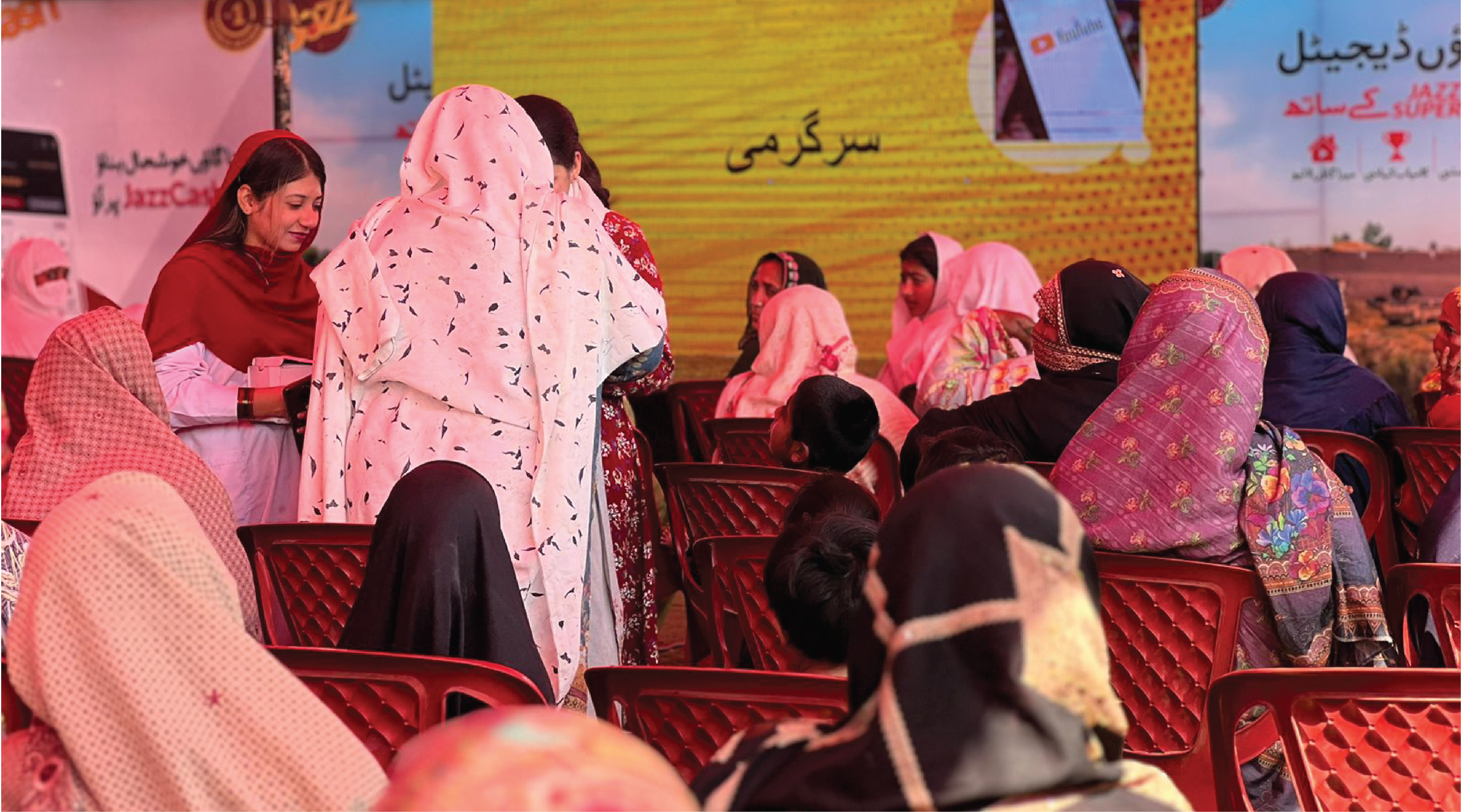
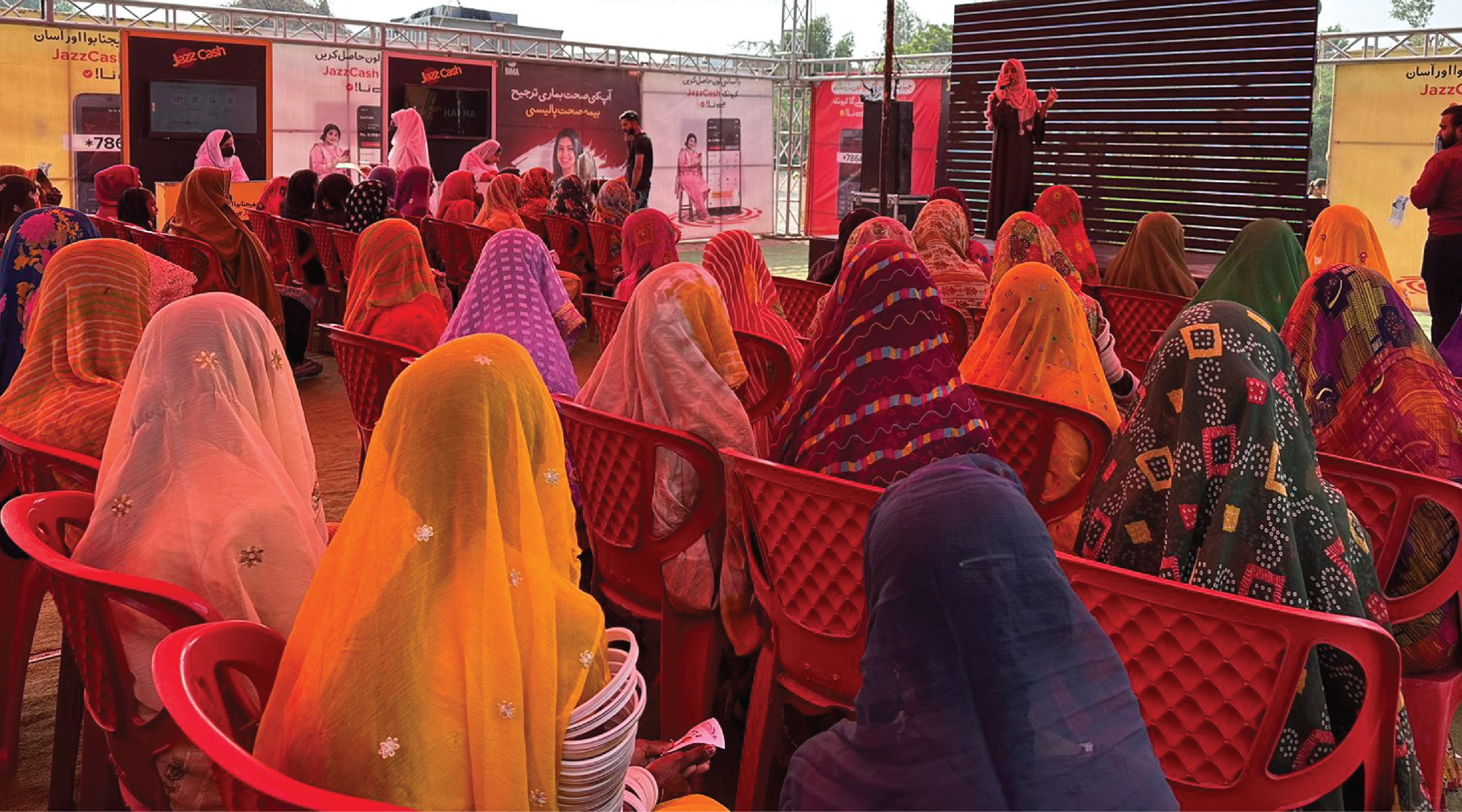
The Mera Goan Live initiative drove customer awareness and education through tailored, in-person sessions for men and women. These dynamic, interactive sessions featured MISTT digital skills videos on big screens, alongside entertaining, humorous and educational skits. Participants had the opportunity to practice new skills on devices with support from local champions and Jazz agents. Local champions, incentivised by Jazz, built anticipation ahead of the sessions and shared personal examples of how mobile is improving their livelihoods during the events. Jazz offered participants the option to sign up for ongoing, personalised support to continue their digital journey.
Jazz reported that these campaigns were engaging and well-received among both men and women, promoting the benefits of mobile internet while respecting cultural norms. Despite not being the primary objective, the Mera Goan Live initiative also improved local awareness and perception of Jazz’s brand and drove a significant rise in Jazz Cash mobile money activations and data usage by rural men and women.
9 lessons from Jazz’s Mera Goan Live campaign:
1. Pre-event awareness campaign was effective in securing women’s participation at training sessions.
Jazz’s brand ambassadors, or local champions, conducted door-to-door visits the day prior to the training sessions to encourage men to attend the session and bring their wives, sisters and mothers as well. The promise of competitions for free smartphones and gifts for women who attend helped spark interest. As a result, female attendance exceeded Jazz’s expectations, with around 80-100 women per village attending each session, despite initial estimates of only around 30-40 per village.
2. Staggering digital skills training sessions for men, then women, suited cultural norms, encouraged female attendance and allowed for more tailored sessions.
Jazz scheduled men’s training in the morning and women’s in the afternoon. This approach aligned with the cultural norms of these rural villages, where men and women typically do not mix in large formal gatherings. It also allowed men to experience the training firsthand, building trust and easing any concerns about women attending later. Gender-specific sessions also allowed for careful curating of content to appeal to men’s or women’s preferences and address gender-specific misconceptions or concerns.

3. Female trainers and ambassadors facilitated hands-on learning to improve engagement and outcomes with women participants.
To ensure comfort and social acceptance, women trainers and local female ambassadors were recruited to lead the group training sessions for female participants, while men were taught by male trainers. Women were given opportunities and support to practice new digital skills, such as setting up social media accounts and promoting their crafts online. This hands-on approach helped build confidence, particularly among women with limited digital experience. As a result, many women signed up to receive additional support from Jazz to further leverage mobile money and mobile internet in their lives.
4. Messaging that emphasised everyone can use mobile technology and that families can achieve greater economic resilience and well-being using mobile phones were well received by both rural men and women.
The Mera Goan Live campaign messaging had two key themes:
- Inclusivity: Everyone, regardless of gender, could benefit from mobile internet. To respect societal norms, the campaign avoided singling out women, emphasising instead that everyone can use mobile technology. Training materials and skits featured both men and women to reflect this inclusive approach.
- Economic resilience: The family’s economic resilience could improve if all members, including women, used mobile money and mobile internet. Collective use of phones was highlighted as a way to benefit the entire family.
5. Adopting a community engagement approach fostered broader support and inclusion, accelerating mobile internet adoption in settings with strong traditional gender norms.
This approach is particularly effective for reaching women in environments with distinct gender roles, where traditional norms may otherwise limit their access to mobile internet. While one-on-one education can influence individual perceptions of the internet’s value, new internet users, particularly women and their potentially supportive spouses, may still face resistance from the wider community. This one-on-one approach also takes more time. Educating the entire community simultaneously can accelerate critical mass adoption of mobile internet and help reduce negative experiences for individual women who may be early adopters in their communities.
6. Local champions served as effective advocates and motivators within the community.
These champions, both men and women from each village, shared personal stories of how mobile technology had improved their livelihoods, making the message more relatable and authentic than if delivered by Jazz staff. By using community figures who could connect with local cultural and language needs, societal barriers were broken down. For example, one woman champion, unable to appear on video due to cultural norms, shared videos of her surroundings and work to promote her business, maintaining privacy while using social media. Many women champions followed similar practices, showcasing their crafts or farming activities while adhering to tradition, such as wearing burkas. Their stories demonstrated that women could benefit from mobile internet while respecting cultural norms, inspiring others in the community to do the same. The involvement of their families in the sessions further reinforced the message that mobile technology could improve livelihoods without compromising tradition.
7. Sessions that combine entertainment with education boost participant engagement.
To make the sessions both enjoyable and informative, Jazz created light-hearted, humorous skits that addressed common misconceptions about mobile technology and the internet, while also tackling social concerns related to online usage. For example, Jazz staged a skit where a person dressed as a mobile phone listed its supposed drawbacks, while another character countered with the benefits. Jazz intentionally included women actors in these skits and demonstrated how men and women can use mobile phones to help families thrive through practical examples.

8. Offering additional, relevant services tailored for women encouraged more women to attend and enhanced the overall value of the initiative.
To boost female attendance at the training sessions, Jazz partnered with various value-added service providers, including its digital health partner BIMA, which offered free medical consultations at the training locations. This service was promoted during the door-to-door campaign, appealing to women who might not have otherwise participated, and providing a socially justifiable incentive that further convinced gatekeepers to allow women to attend. BIMA’s collaboration at these sessions further showcased the personally appealing and externally justifiable use cases the internet can enable for women. Additionally, the provision of free medical consultations likely had a positive impact on Jazz’s brand perception in these villages, reinforcing its commitment to community well-being.
9. Building local capacity ensured ongoing support and sustainability after the initial training sessions.
Jazz recruited, incentivised and empowered male and female brand ambassadors in each village. These individuals can offer essential assistance to those who may have had limited or no exposure to mobile technology or the internet. In rural areas, access to support can be especially challenging, particularly for women who may face mobility restrictions due to social norms. By building the capacity of local digital champions or ambassadors, Jazz is helping to ensure a reliable source of ongoing support for rural customers.
Jazz will expand this campaign to reach additional rural areas and address further challenges faced by rural women through offering affordable internet-enabled devices and recruiting formal female sales agents to provide ongoing support to women.
The Connected Women programme is funded by the UK Foreign, Commonwealth & Development Office (FCDO), the Swedish International Development Cooperation Agency (SIDA), and supported by the GSMA and its members.
