
In March 2025, the GSMA in partnership with the WASH Innovation Hub at the Administrative Staff College of India, convened the Digital Urban Utilities Forum (DUUF) in response to Bengaluru’s escalating water crisis, bringing together water sector experts, ecosystem enablers and startups, to explore digital innovations for sustainable solutions to the city’s water challenges. The forum’s discussions centred on emerging technology solutions from AI-driven groundwater monitoring and IoT-enabled borewell management to smart metering and water reuse. This blog outlines the challenges facing Bengaluru’s water sector and summarises the key takeaways from the convening.

Bengaluru’s population has tripled to 15 million since the 1990s, overwhelming its water resources. The city’s current water supply, sourced from the Cauvery River (51%) and groundwater (49%), is theoretically sufficient to meet the daily demand of approximately 2,632 million litres. However, ageing infrastructure, energy-intensive transport of Cauvery River water (lifted from a reservoir ~350 meters lower than the city’s elevation and over 90km away) and unregulated borewells -over 500,000 unauthorised borewells and 14,000 government drilled wells, half of which are now dry, according to officials-, pose serious risks to long-term sustainability.
These challenges disproportionately affect low-income communities, as water tanker prices shot up to ₹1,500-₹1,700 for a 12,000 litre load during summer months of last year – placing significant burden on households, especially since authorities had capped the price at ₹1,000 – ₹1,200.
Bengaluru generates nearly 1,940 million litres of wastewater daily, but 24% (nearly 500 million litres) is discharged untreated. Among the treated volumes only a limited proportion is reused: 30% for non-potable domestic uses, and 20% for commercial and industrial needs. This underutilisation underscores a missed opportunity for water reuse and reduction in freshwater extraction dependence.
Recognising that Bengaluru’s water crisis stems as much from failure in management as from absolute scarcity underscores the need to invest in circular water systems, improving urban water governance, and aligning city growth with sustainable water use principles.
Digital transformation in urban water management: Lessons for Bengaluru
| Shirpur-Warwade in Maharashtra | This town is the first in India to achieve 100% smart water metering by installing 13,500 Automatic Meter Reading (AMR) devices. As a result, daily water demand saw a 33% reduction and billing delays fell from two months to five days. |
| Panaji Smart City project | Over 3,000 IoT-enabled smart water meters were installed in the city for real-time monitoring and management. This helped lower non-revenue water from 61% to 14% and saving ~4.8 crore litres of water annually. |
| Chennai Metropolitan Water Supply and Sewerage Board | This city introduced a Metering-as-a-Service (MaaS) model through a Design-Build-Finance-Operate-Transfer framework. The goal is to achieve 90% metering coverage by 2025–2026, with a strong emphasis on reducing non-revenue water. |
Beyond individual city initiatives, national programs such as the Jal Jeevan Mission (JJM) are promoting large-scale adoption of smart technologies, and integration of IoT-based platforms, real-time monitoring, and automated billing systems. Global market trends reinforce this momentum. GSMA’s research projects that IoT connections in utility services across low- and middle-income countries (LMICs) will more than double by 2030, with water emerging as a key area alongside energy and sanitation.

Startups driving water innovation
At DUUF Bengaluru, several homegrown and scalable digital innovations were showcased—each offering practical solutions to Bengaluru’s most urgent water challenges. These included IoT-based automation, AI-driven analytics, and last-mile service delivery platforms:
Solution Focus: IoT-based borewell and tank automation
Key Impact: Nimble Vision developed an integrated Ni platform combining IoT sensors, AI, and 4G connectivity to automate borewell operations. Deployed across multiple sites, the solution has reduced pump failures by 90%, enabled remote control, and saved over 400 crore litres by preventing over-extraction and dry runs.
Solution Focus: IoT & AI-based smart valves & utility management
Key Impact: Ilonnati Innovations Piloted with Hyderabad Metropolitan Water Supply and Sewerage Board, the system uses IoT, AI/ML, and digital twins, enables real-time flow, contamination detection, remote control of pipelines, and automated alerts. This solution reduces manual intervention.

Solution Focus: AI-powered water intelligence for industrial users
Key Impact: FluxGen offers a hardware-agnostic platform with wireless IoT sensors, cloud analytics, and an AI assistant (AquaGPT) that integrates with SCADA (Supervisory Control and Data Acquisition)/GIS tools. In one deployment, their solutions were able to cut water withdrawal by 50% and reduced water use by 26%. The solution is used by 100+ enterprises across India and abroad.
Solution Focus: Wastewater recycling for potable and industrial reuse.
Key Impact: Boston Whitewater uses a patented 11-stage treatment and IoT monitoring system to convert excess Sewage Treatment Plant water into Indian Standard Specifications for Drinking Water (IS 10500) grade water. To date, it has recovered over 1 billion litres and sells 1.03 million litres/day to nearby industries, closing the reuse loop.
Solution Focus: IoT-enabled last-mile water delivery, quality assurance, and urban resilience.
Key Impact: JanaJal operates IoT-integrated Water-on-Wheels (WOW) vehicles that deliver safe drinking water to underserved communities, with real-time monitoring of water quality (TDS, pH, temperature) supported by digital payments via RFID (Radio-Frequency Identification) or mobile. Under Atal Mission for Rejuvenation and Urban Transformation (AMRUT) 2.0, with the support of the GSMA’s Innovation Fund, 33 WOWs served 12,000+ users in Delhi and Ghaziabad.
Key learnings from the forum
This edition of the DUUF was structured around two focused panel discussions -one on pioneering technology, and the other on policy, partnerships, and community engagement. The sessions highlighted the diversity of digital tools available and the critical need for supportive ecosystems to translate pilots into city-wide transformation.
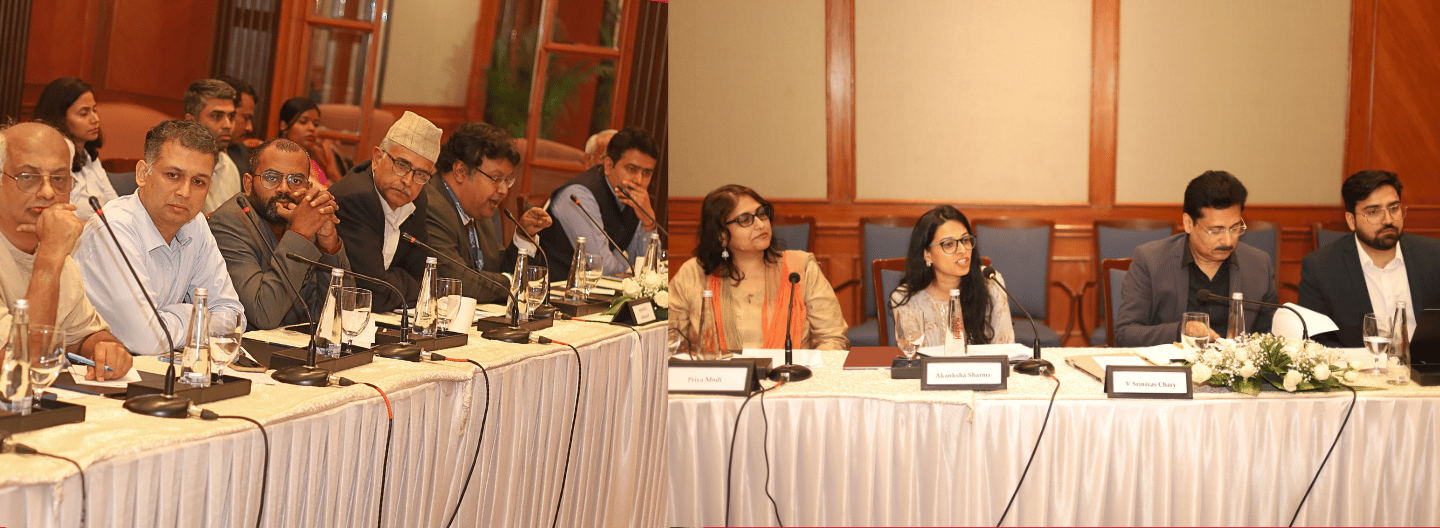
The following takeaways outline what is needed to scale digital water innovations more effectively and equitably across Indian cities, especially Bengaluru:
1. Channel early-stage capital to unlock innovation:
Scaling digital water solutions requires more than just early-stage capital—it demands a clear and supported pathway from innovation to adoption. While mobilising risk capital through blended finance, CSR, and catalytic grants remains vital, it must be complemented by technical assistance, streamlined procurement processes, and regulatory clarity. Startups and MSMEs also need better access to market intelligence, pilot opportunities with utilities, and frameworks for product validation and certification. These elements, together, help bridge the gap from promising pilots to widespread deployment—ensuring that high-impact solutions can scale sustainably and equitably across diverse urban contexts.
2. Make government procurement innovation-ready:
Government procurement processes, often fail to keep pace with market evolution. This hinders the scaling journeys of many promising solutions. Empanelment processes that assess due diligence, impact, and interoperability can help level the playing field—allowing state utilities and municipalities to access innovation without bureaucratic delay.
3. Build trust through clear certification pathways:
Digital and hardware innovations often lack clear certification pathways, which hinders adoption by utilities wary of unproven technologies. To build trust and ensure quality, there is a need for sector-specific certification protocols co-developed by regulatory bodies, standards agencies (such as Bureau of Indian Standards or the Jal Shakti Ministry), and innovation hubs in partnership with utilities. These should cover performance benchmarks, interoperability, and safety standards—particularly for water quality monitoring, IoT-enabled systems, and reuse technologies. Establishing such protocols will provide a structured validation route, helping utilities de-risk procurement and adopt new solutions with greater confidence.
4. Leverage mobile infrastructure for smart water system:
From borewell monitoring to smart metering, nearly every innovation at the forum relied on decentralised data collection. Leveraging mobile operator networks, NB-IoT, and 4G/5G systems is essential for scaling cost-effective, last-mile data infrastructure—especially for utilities with limited in-house digital capacity.
5. Embed innovation in long-term urban planning:
Finally, forums like DUUF highlight the need for ongoing policy dialogue between innovators, regulators, and city planners. Smart technologies can only thrive when embedded into long-term water planning frameworks, supported by leadership, standards, and communities.
These enabling conditions apply not only to startups but also to mobile network operators, who are increasingly integral to smart water ecosystems. Insights from the Smart Cities Roundtable at Mobile World Congress 2025 outlined mobile operator’s transition from connectivity providers to full solution integrators offering IoT, AI, and data-driven platforms. Their networks and platforms provide the backbone for real-time data collection, remote monitoring, and interoperability; key ingredients for scaling digital solutions like smart meters, IoT-enabled valves, and leak detection systems. Nokia’s presentation at the forum showcased its Open Industrial IoT (IIoT) and Integrated Operations Center (IOC) solution and made a compelling case for how mobile industry players are also evolving into orchestrators of smart infrastructure.
Nokia’s role in advancing smart water infrastructure
Nokia is helping cities build smarter, more resilient water systems by integrating Industry 4.0 and 5.0 technologies into urban utility networks. Its Open Industrial IoT Operations Architecture enables real-time automation, monitoring, and control of water infrastructure—allowing utilities to manage everything from supply and distribution to wastewater and irrigation through a unified, standards-based system.
A key feature of Nokia’s approach is its interoperability: Utilities can integrate any IIoT-enabled device into a common platform for seamless data management, analytics, and operations. This reduces fragmentation, increases efficiency, and supports scalable digital transformation.
Globally, Nokia’s smart water solutions are already in use for instance, in Australia, Vodafone deployed Nokia’s NB-IoT technology to improve coverage, reduce power draw, and enable secure, low-latency water monitoring. In Vietnam, telecom operator Viettel implemented Nokia’s Integrated Operations Center for smart cities, centralising utility operations across sectors.
As India advances from 5G to 5G Advanced and eventually 6G, Nokia’s solutions—like digital twinning and AI-based asset monitoring—can be adapted to solve local water challenges. Their flexible architecture makes them well-suited for Indian utilities looking to modernise without overhauling existing infrastructure.
Conclusion: Charting Bengaluru’s smart water future
The GSMA Digital Urban Utilities Forum in Bengaluru was an exciting convening space where the potential of digital innovations and the role of digital innovation and cross-sector collaboration in tackling the city’s pressing water challenges were underscored. The forum painted an optimistic yet pragmatic vision that by embracing a suite of digital innovations, cities like Bengaluru can address their water challenges with greater resilience and efficiency. The real test lies in scaling these solutions across diverse urban contexts, embedding them into long-term planning and institutional frameworks. The evidence-based dialogue at the forum made one thing unmistakably clear: digital innovations tailored to the local context and local policy priorities will not only safeguard Bengaluru’s water future, they will also define it.
The GSMA’s Digital Utilities programme has hosted similar workshops in cities such as Delhi, Nairobi, Freetown, Kigali, and Kathmandu, with each forum tailored to address the specific service gaps and innovation ecosystems of its host city. We continue to seek opportunities to collaborate with local partners and city leaders to advance inclusive, tech-enabled approaches to urban utility resilience.
This initiative is currently funded by UK International Development from the UK Government and is supported by the GSMA and its members.