


This is the second of a two-part series on addressing technical literacy as a barrier for women. The post features the work of Indosat.
Adopting a user-centric design when developing an app, a mobile phone interface, or a service can be a powerful way to overcome the technical literacy barrier and hence, to make the use of a mobile phone easier and more intuitive to resource-poor women.
As highlighted in a previous blog post, Indosat is transforming a product with a very low uptake into a sustainable, well designed and profitable product that addresses the specific needs of the resource-poor women in the Indonesian market. By learning from the unsuccessful prototype and thanks to a deep understanding of the wants and needs of Indonesian women when it comes to mobile phones, Indosat is planning to evolve the Wobe app into a launch-pad in order to increase adoption of data/digital services for women.
Specifically, in the months to come, Indosat aims to turn the Wobe into a tool able to deliver mobile financial services, mobile commerce and mobile health services to Indonesian women, thereby targeting the whole women segment of their customer base, including women entrepreneurs. Wobe, thus, will become a women-dedicated channel to deploy communication and Mobile Financial Services, incorporating the already existing mobile money service Dompetku. Also, the Wobe app can be a powerful way to push Mobile Financial Services to women, who, in Indonesia, are for the 80% unbanked.
Wobe, an ambitious Android-based app, is fronted by a team of Southeast Asian women with experience in development and technology. The app seeks to let women in emerging markets in Asia learn, through mobile-optimized and localized online learning delivered through an interactive way, and to earn real side income, through micro-entrepreneurship opportunities. Starting with the resale of prepaid phone credit, Wobe will help women access a smartphone-driven life which improves their access to mobile technology and to financial services.
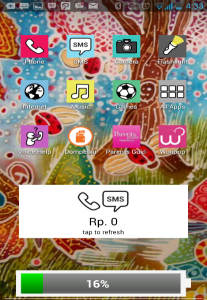
Wobe is being developed out of Jakarta and Singapore at the moment, with an estimated beta launch in Q4 2014. Here is a screenshot of the early iteration.
Adrianna Tan, CEO and founder of Wobe, is assured of the need for such an app through a decade of technology and development work in South and Southeast Asia. “Through all of my work in non-profits and in mobile technology, I know for certain that women are the most under-served demographic — particularly women in the lower to lower-middle income bracket. This demographic will only grow further, and we need to be able to cater to them — starting with putting phones and opportunities to improve their lives in a concrete way through their phones.”
While the beta launch will happen in Q4 of 2014, and we don’t have concrete data from the pilot to share yet, we can draw some key lessons from the Indosat example that should be taken into account when developing apps, mobile interfaces or services to ensure that women are not left out:
- Do not underestimate the importance of user-centric design – a design that is not tailored around the consumers is bound to low uptake. When developing an app, a mobile interface, or a service, the wants and needs of the end user should be taken into account throughout the whole process
- Know your customers – women represent 40% of the Indonesian workforce and are therefore an important market segment with specific wants and needs. Additionally, it is crucial to understand that women are not a homogeneous segment and that the needs of the women in the rural areas differ significantly from those living in the cities. With this in mind, delivering content that is relevant to them is key in order to get uptake. Mobile health and mobile financial services are good examples of relevant content when the target market are women
- Provide relevant content – the service should deliver information that is of interest of the target market to facilitate uptake of the product. However, providing relevant content is not enough to attract customers if they are not aware of the service. To overcome the awareness, a proper marketing effort is required. For instance, it is worth considering Below-The-Line marketing approaches, as suggested by our Marketing Handbook, which tend to work better than Above-The-Line approaches in rural and diverse settings, as they deliver targeted messages to niche audiences
- Know your limits and outsource when possible – Apps do not need extensive infrastructures to operate: if they are designed well, it is very easy to deploy them. Usually an MNO doesn’t have either the capacity or the time to develop an app in-house – the lesson from Indosat is to outsource the development of an app to specialized firms when possible
- Do not underestimate commercial sustainability – as outlined in previous posts, commercial sustainability is key to reaching scale and ensuring internal buy in of the project. Indosat understood that women represent 40% of the Indonesian workforce and are therefore an important market segmentthat must not be left out, as there are conspicuous commercial and social benefits to addressing it
- Keep it simple!