


This is a guest blog written by Perry Fernan Flores, a Research Consultant with Zapienza.
Is it worth investing in mHealth? Given that most mHealth innovations are stuck in the pilot stage, mHealth stakeholders often have doubts.
In South Africa, where almost every household (98% based on recent research conducted by the GSMA) across all socio-economic classes has access to a mobile phone, the rationalisation for using phones to reach out to Bottom of the Pyramid (BoP) consumers is compelling. Based on this reasoning alone, it would seem worthwhile to invest in mHealth in order to help educate pregnant South African women and mothers of children under the age of two, as a means of preventing maternal, perinatal and under-5 mortality, 40% of which is avoidable.
Investment Criteria
In reality, the factors that stakeholders take into account when considering an mHealth investment are not that simple. For the government or public sector as well as insurance providers, some of the main issues that they need to answer are:
- Does the mHealth intervention really help in changing health behaviour?
- Does it help in improving people’s health?
- Is it more cost effective than current or other new alternative interventions?
For private sector organisations such as mobile operators, shareholder accountability means that the following questions must be answered, for any initiative that requires considerable financial and human resource investment:
- Is there a financial return on this investment?
- What does it bring to my organisation?
- Can it help strengthen existing customer relationship or reduce customer churn?
- Or can it help bring in new customers?
Donors, especially those pertaining to foreign governmental organisations, have the same considerations as public entities. Constrained by limited resources, they would like to understand:
- How can mHealth services become commercially sustainable, beyond pilot phase?
These are some of the key questions that the Mobile for Development mHealth team is trying to address through the Pan-African mHealth Initiative. In South Africa, the focus of the initiative is on maternal, newborn and child health (MNCH). In Côte d’Ivoire, Ghana, Kenya, Malawi, Mozambique, Nigeria, Rwanda, Tanzania, Uganda and Zambia, the focus is on both nutrition and MNCH.
Consumer Research Insights
In order to answer some of the questions above, 2000+ South African women have been interviewed for a nationally representative market research study funded by UK Aid. This study has been conducted in order to understand the needs and wants of pregnant women and mothers with children under the age of two, to comprehend their mobile usage and habits, and recognise their perception and experience of existing MNCH messaging services and other mHealth services.
We gained a number of interesting insights:
- 80% of the women surveyed stated that they are the health-decision maker of the household and are generally “self-aware” of their own personal health needs and find information about their babies (rather than their own pregnancies) interesting
- 35%, 19% and 42% are already using smartphones, feature phones and basic phones respectively, with the remainder 4% not owning one (see Figure 1 below). However, segmenting the respondents between BoPs and non-BoPs, we found out that majority (65%) of the BoP consumers continue to own basic phones whereas the proportion among non-BoP is only half of that (32%).
- When concept testing was conducted to test the women’s perception towards various mHealth services, between 70% and 80% said that they would be interested in using the services tested if they were provided for free (see Figure 2 below). However, not all are willing to pay for the services if a minimal fee is going to be charged. Moreover, given their higher disposable income, non-BoP consumers have a stronger interest and willingness to pay for mHealth services compared to BoP consumers.
What are the implications of these insights?
- In order to make MNCH messaging services more relevant, it is important to link pregnancy-related advice to how it impacts the baby’s overall growth. 41% of BoP consumers (compared to 32% among non-BoPs) become pregnant at the age of 15 to 24 and 66% are, or end up as, single-mothers. Additionally, widening the scope of a messaging service beyond MNCH can potentially broaden the appeal of the service. As an example, adding job related tips could be invaluable to BoP women, particularly as many of them are unemployed.
- While the majority of BoP consumers continue to have basic phones, it is imperative to develop a “transition plan” that takes into account that in two to three years’ time, most BoP consumers will likely have switched to smartphones as well.
- Developing premium services, targeting non-BoP consumers, may be crucial in order to make the service more relevant to the needs and wants of such consumers. Developing a two-tiered “freemium business model” should be considered, to make it commercially viable to subsidise a free service targeted to those who have a limited ability to pay.
In addition to the above learnings, the consumer research undertaken has unearthed many other interesting insights, which mHealth stakeholders in South Africa may find useful when assessing their respective organisational mHealth strategies.
If you would like to learn more about our consumer research, please join the GSMA and other mHealth stakeholders at a workshop entitled “Integrating Mobile into Health” on 1st July 2014, at the Da Vinci Hotel in Sandton, South Africa.
Figure 1. Mobile phone type ownership among pregnant women and mothers of children up to two years of age.
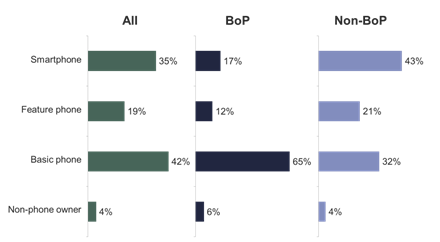
Figure 2. Interest and willingness to pay for mHealth-related services among pregnant women and mothers of children up to two years of age
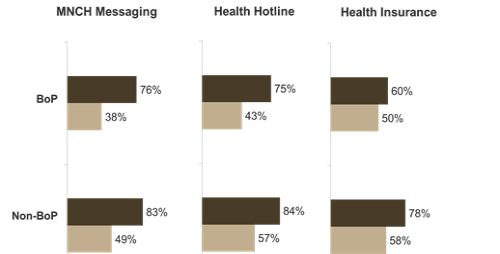
Top – Interested if provided for free (all respondents). Bottom – Willing to pay some amount (those who are interested).
For more information on the GSMA Mobile for Development mHealth, please contact us on mhealth@gsma.com. For information on various mHealth initiatives, click here. For more information on GSMA mHealth resources, click here.