



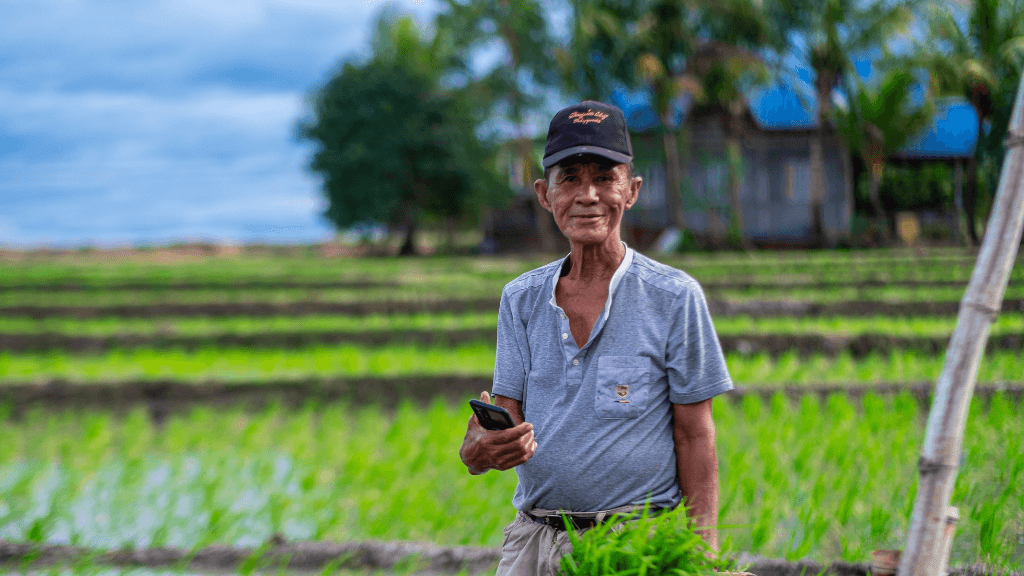
‘The climate action cycle is a continuous loop of anticipation, preparation, adaptation, absorption and mitigation; ensuring that each disaster strengthens our capacity to face the next.’
Climate change has made preparedness not just an aspiration but a necessity. Floods, cyclones, heatwaves and droughts have become frequent events where traditional methods of forecasting and planning have struggled to keep up, often reacting to disasters rather than anticipating them. This is where Artificial Intelligence emerges as a critical tool, helping communities, governments and businesses shift from reactive crisis management to predictive resilience.
AI has already transformed weather forecasting. Machine learning models now deliver hyperlocal predictions at 200-meter resolution with up to 90% cost reduction, directly benefiting sectors like transport, energy and insurance. Early-warning systems powered by AI can sift through satellite data, historical weather patterns and IoT sensor feeds to anticipate extreme events. More importantly, they can inform infrastructure decisions like where to build flood barriers or how to optimise evacuation routes, helping communities prepare rather than merely respond.
A real-world example comes from Lisbon, where Bentley Systems’ flood simulation software enables planners to model rainfall scenarios and decide where to construct intercepting tunnels. This forward-looking approach is expected to prevent over 20 major floods going forward. Similar strategies, adapted to the context of fast-growing cities, can aid traffic management, energy demand balancing, waste and water optimisation, and air quality control, all critical as urbanisation intensifies the pressure on limited resources.
Prior to the integration of AI digital tools focussed on preparedness suffered from:
- Operational bottlenecks: Manual data cleaning and siloed systems slowed decisions during fast-moving hazards.
- High costs & limited reach: Forecasting and risk analytics were expensive and centralised; warnings often missed rural/low-connectivity communities.
- Weak feedback loops: Sparse post-event evaluation meant forecasts and protocols didn’t improve quickly; lessons weren’t institutionalised.
Why AI Matters for Preparedness
What makes AI indispensable is not just its speed or cost-efficiency, but its ability to fill gaps where traditional systems fall short:
- Data volume & complexity: Before AI, manual forecasting methods couldn’t process the vast streams of data from satellites, sensors and social platforms. AI integrates these to generate real-time, actionable insights.
- Granularity of predictions: Traditional forecasts often worked at regional scales; AI can deliver street-level insights, critical in densely populated urban areas.
- Adaptability: Static models can’t adjust quickly to new variables. AI systems learn continuously, updating predictions as climate patterns evolve.
- Accessibility: By lowering costs, AI democratises tools once restricted to wealthy nations or big corporations.
AI in Action in LMICs
With increasing number of climate events around the world, many are realising that preparedness isn’t a luxury anymore, it’s a survival strategy. With limited fiscal space to rebuild after disasters, low- and middle-income countries (LMICs) benefit most from preventive approaches that minimise losses in the first place but also builds adaptive capacity through smarter cities, sustainable agriculture and resource-efficient economies that thrive despite climate uncertainty. Evidence shows that every US $1 invested in disaster risk reduction can save between US $4 and $11 in avoided losses, underscoring the high returns of resilience investments.
- Africa: The region has witnessed some of the most devastating desert locust upsurges in 2020 in Kenya and 2022 in South Africa’s Eastern Cape, that posed enormous risk to livelihoods of farmers and overall food security. Solutions have been identified and built that combines real-time data from ranger patrols, remote imaging and various sensors to generate real time wildlife and/or pest reports. However, by integrating AI and remote sensing via satellites, it has fast-tracked response by capturing data on soil moisture, wind, humidity and vegetation index that helps estimate locust breeding period and issue an alert to farmers of locusts’ birth 3 months in advance. Digitals tools like eLocust3m (Developed by FAO and Penn State University) are handy in ensuring that real time data is timely transmitted after validation to the national data centres for appropriate response. Another example is GiveDirectly that uses AI flood forecasts to deliver early cash to affected in Kogi, Nigeria, with 93% feeling prepared before the floods and reduces food insecurity by 90%. This aligns with GSMA’s AI for Africa (2024) report, which found that nearly half of the continent’s AI use cases already target agriculture and climate action, underscoring the growing shift toward predictive and preventive solutions. The study also highlights persistent gaps in data infrastructure, compute power and digital skills, areas critical for scaling such anticipatory models across LMICs.
- South Asia: Delhi in India, has faced record-breaking heat, with temperatures soaring past 45°C and reports touching 54°C, putting millions, especially outdoor and informal workers at risk of heat illness and stroke. While the India Meteorological Department issues warnings, existing Heat Action Plans (HAPs) remain broad and lack detailed mapping of heat-prone zones or vulnerable populations. Heat is absorbed, trapped and felt differently block by block, depending on land use, construction materials, density and the presence or absence of green cover. The Sunny Lives AI model by SEEDS and Microsoft, combines satellite imagery, building layouts and demographic data to assess indoor heat risks. An additional layer of Heat Vulnerability Index that maps exposure by age, gender and income, can support target cooling centres and resources precisely. These innovations can move India from general advisories to data-driven, hyperlocal resilience, aligning with wider policy goals on energy efficiency, water security, job creation and air quality and ultimately, saving lives as the planet warms. GSMA M4D’s Digital Utilities program has commissioned a study to understand the opportunities and application of digital tools to address urban heat and it’s consequences.
While anticipation often brings to mind early warning systems, it goes far beyond alerts. Forecast-based actions are emerging as a game-changer, where AI models trigger pre-planned measures such as cash assistance, food distribution, or infrastructure protection before disasters strike. For instance, Rumsan (Nepal), a GSMA Innovation fund grantee, uses blockchain technology and sensors to deliver early warning messages and efficient cash distribution before and during the natural disasters, in geographies where 80% of population are at the risk of climate related event. The technology shown how combining AI-driven forecasts with mobile money platforms can speed up relief to remote or unbanked communities, reducing transaction costs and delays.
Furthermore, the GSMA Innovation Fund for Impactful AI highlights how mobile-first and connectivity-driven AI projects in LMICs are turning promising models into deployed solutions, emphasising that connectivity, mobile infrastructure and smart partnerships are critical enablers of predictive resilience. These insights reinforce that delivering AI-based anticipatory action goes beyond algorithms and focusses on digital inclusion and ecosystem readiness.
Similarly, predictive analytics are being used to pre-position aid supplies, manage water and energy demand and stabilise food systems under stress. These anticipatory solutions expand preparedness from “warning and waiting” to acting early and efficiently, saving lives and strengthening resilience in vulnerable regions.
What’s Next: From Prediction to Resilience by Design
As these tools mature, cities can go beyond monitoring and forecasting to stress testing entire systems. This is where the integration of Generative AI with Digital Twins becomes transformative. Imagine virtual replicas of cities that continuously ingest data from vehicles, buildings and IoT sensors. Planners could run “what-if” scenarios and adjust infrastructure investments accordingly. Such digital twins could also model drought impacts on agriculture, forecast energy transitions, or optimise water-sharing agreements across border; turning AI into a backbone for long-term climate adaptation.
According to ABI Research, such systems could save over USD 282 billion annually by optimising resource utilisation, preventing infrastructure failure and reducing disaster recovery costs. Looking ahead, the concept of a “twin of twins”, which essentially means interconnected digital twins across cities, countries and geographies, can offers a holistic approach, enabling cross-learning and global resilience networks.
Why It Matters Now
LMICs are at a crossroads. They contribute the least to global emissions yet face the harshest impacts of climate change. Unlike wealthier nations, they cannot afford to rebuild repeatedly after disasters. By investing in AI-based systems for anticipation and preparedness, LMICs can:
- Save lives by providing early warnings.
- Reduce economic shocks by protecting agriculture, energy and transport systems.
- Attract climate finance by showcasing data-driven, future-ready planning.
- Leapfrog costly legacy systems, adopting AI-enabled solutions that are lighter, scalable and community-focused.
By filling critical gaps in data, prediction and planning, it helps societies shift from reactive responses to proactive strategies by combining global innovation with local wisdom. From Lisbon’s flood tunnels to India’s heat action plans, the evidence is mounting; preparedness powered by AI saves lives, livelihoods and resources.
As COP30 convenes in Brazil, the world’s focus on AI as a driver of resilience will test whether we can harness it not just for innovation, but for equity, empowerment and early action in this decisive decade for climate action.
This initiative is currently funded by UK International Development from the UK government and by the Swedish International Development Cooperation Agency (Sida) and is supported by the GSMA and its members.
