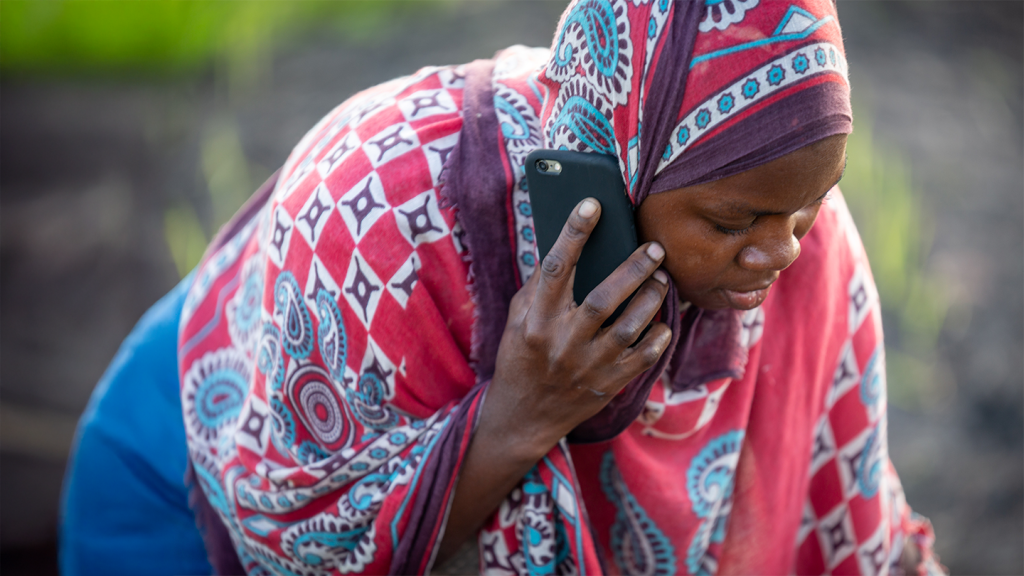
A woman in a colourful red and blue patterned scarf talks on a black mobile phone, reflecting handset affordability, while looking down outdoors with blurred greenery in the background.

Handset Affordability

Expanding access to affordable handsets to drive digital inclusion in low- and middle-income countries

Why handset affordability matters

Billions of people don’t use mobile internet because they don’t own a handset or don’t own the right handset. Many others depend on a shared or borrowed device to go online. The lack of handset ownership is disproportionately leaving women, rural communities, and lower-income groups behind.

For over a decade, GSMA Mobile for Development has worked with mobile operators, governments, donors and other partners to tackle the barriers to digital inclusion in low- and middle-income countries. This page brings together our research, tools and lessons on handset affordability. Our aim is to raise awareness of what works, so approaches can be replicated and scaled to reach the underserved.
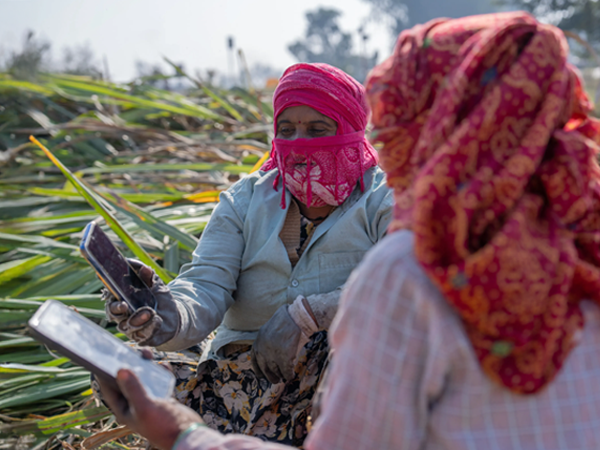
Two women sit in a sugarcane field, one holding a smartphone and tablet to research handset affordability. The woman facing the camera wears a light button-through shirt, a patterned headscarf covering her face, and dark gloves. Both are draped in vibrant, patterned headscarves.

Our approach

We offer strategic advice and practical support to help design, implement and scale handset affordability initiatives. This is backed by granular data, research and learnings from past engagements, helping us reach the underserved, and women in particular.

Improving handset affordability requires addressing two dimensions simultaneously: 

  • Ability to pay: Reducing device costs, expanding access to financing and addressing the costs beyond ownership. 
  • Willingness to pay: Designing relevant offers, communicating them effectively, reaching the underserved through the right channels, and supporting people to start, and keep, using their handsets.

Our work with our partners spans both, because neither can be solved in isolation.
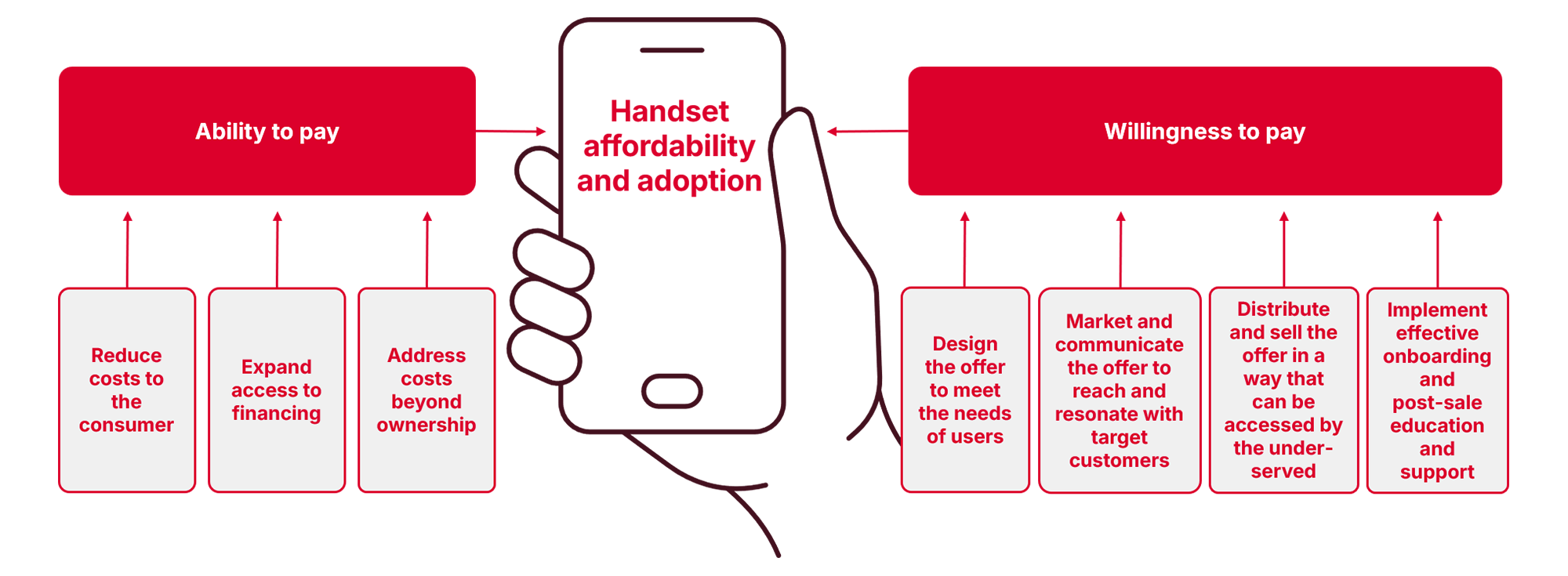
Diagram shows a hand holding a smartphone labelled “Handset Affordability and Adoption.” Left: Focus on “Ability to pay” with actions—reduce costs, expand financing. Right: Boost “Willingness to pay” through design, market, and distribute.

Resources

Explore practical resources, research, case studies and tools to help design and scale effective handset affordability initiatives. 

Handset Affordability Guide

Coming next year: A practical guide to designing and implementing handset affordability initiatives that are commercially sustainable and socially impactful, with real-world examples throughout.

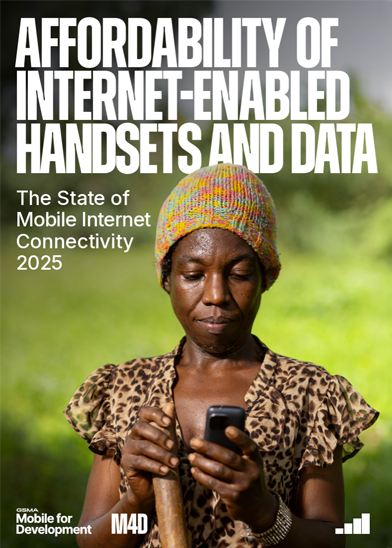
A woman in a colourful knitted hat looks at her mobile outdoors, with greenery in the background. Large white text reads, “Handset Affordability and Internet-Enabled Devices: The State of Mobile Internet Connectivity 2025.” Logos appear at the bottom.
Affordability of Internet-Enabled Handsets and Data
A woman in colourful clothing sits outdoors, holding a mobile phone and smiling. She is surrounded by fresh produce in baskets. The text reads: “Handset Affordability: Making internet-enabled phones more affordable in low- and middle-income countries. April 2022. GSMA.”.
Making internet-enabled phones more affordable in low- and middle-income countries
A woman sits outdoors, smiling as she uses a mobile phone, highlighting Handset Affordability. The image is tinted blue and pink. The GSMA logo is at the top left. The text reads: “Accelerating affordable mobile phone ownership in emerging markets. July 2017.”.
Accelerating affordable smartphone ownership in emerging markets
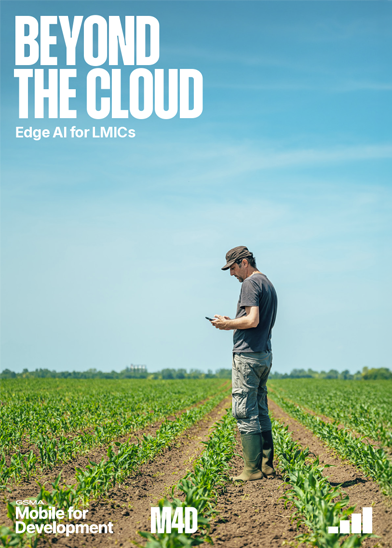
A man stands in a green crop field, looking at a mobile device—highlighting the importance of handset affordability in bridging digital gaps. The sky is blue and clear. White text at the top reads, “BEYOND THE CLOUD, Edge AI for LMICs.” Logos for Mobile for Development and M4D are at the bottom.
Beyond the Cloud: Edge AI for LMICs
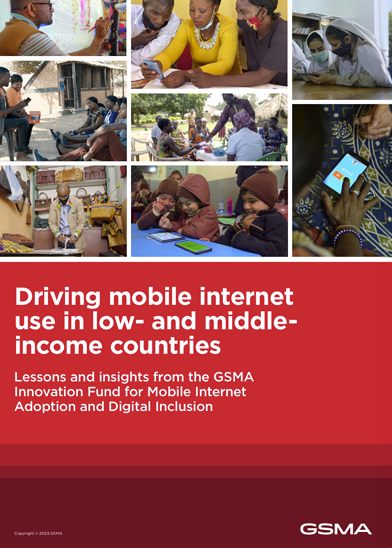
Collage of diverse people in low- and middle-income countries using mobile devices, such as smartphones and tablets, in everyday settings—emphasising the importance of handset affordability in expanding access. The lower section has a red overlay with the report title: “Driving mobile internet use in low- and middle-income countries.”.
Driving mobile internet use in LMICs: Lessons and insights from the GSMA Innovation Fund
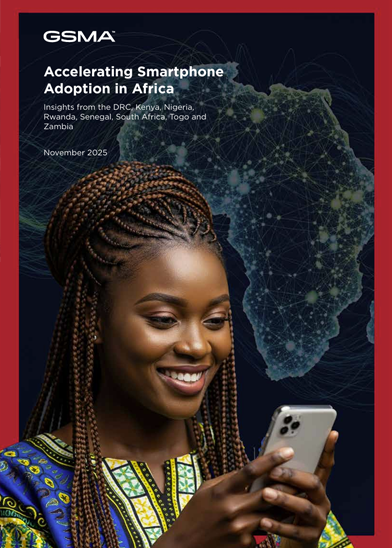
A smiling woman in a colourful patterned shirt looks at her mobile phone, highlighting handset affordability as key to connectivity. Behind her, a dark map of Africa with glowing blue network lines is visible. The cover text reads: “Accelerating Smartphone Adoption in Africa” with additional details above.
Accelerating smartphone adoption in Africa
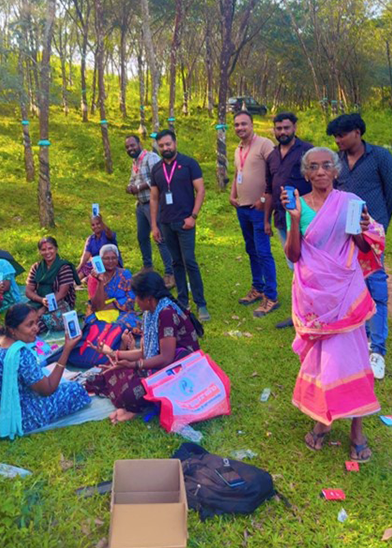
A group of people, some seated on grass and others standing in a lush, sunlit forest. Seated women in colourful sarees proudly display new mobile phones, highlighting handset affordability; nearby, men with lanyards observe the excitement.
How Jio is improving handset affordability and access for the underserved in India
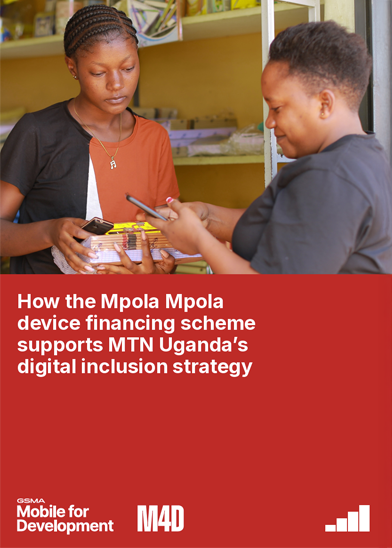
Two women stand at a shop counter; one uses a mobile, the other holds a small box—perhaps discussing handset affordability. Shelves with goods fill the background. The lower section of the image is red with white text about MTN Uganda’s digital inclusion strategy and GSMA Mobile for Development.
How the Mpola Mpola device financing scheme supports MTN Uganda’s digital inclusion strategy smartphone adoption in Africa
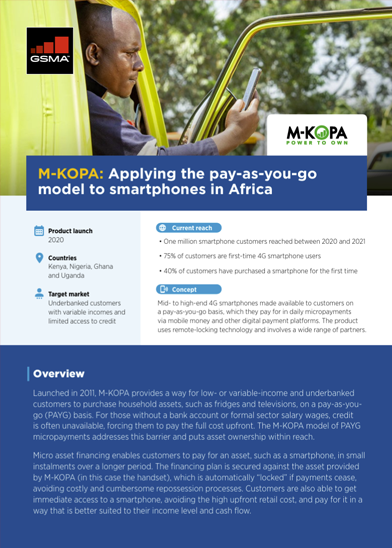
A tablet displays the M-KOPA site. Text reads, “M-KOPA: Applying pay-as-you-go model to smartphones in Africa” with stats highlighting handset affordability: 1M smartphones sold, coverage in Kenya, Nigeria, Ghana, Uganda, 75% of customers outside cities, and 40% of sales via mobile money.
M-KOPA: Applying the pay-as-you-go model to smartphones in Africa
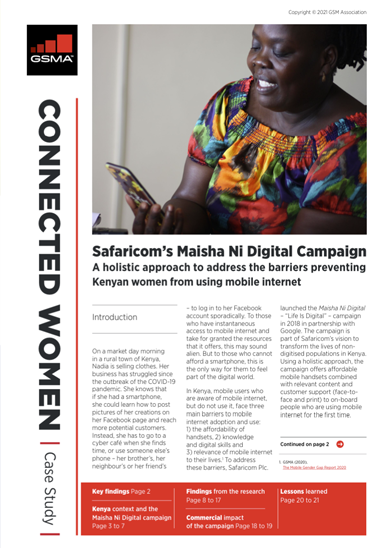
A case study cover page titled “Safaricom’s Maisha Ni Digital Campaign” with text, GSMA and Connected Women logos, and an image of a smiling woman using a smartphone and laptop at a kitchen counter—highlighting the theme of handset affordability. Section headings and summary points appear in red boxes.
Safaricom’s Maisha Ni Digital case study
A hand holds a mobile phone with a cracked screen, displaying the phone dialler app. The phone, highlighting handset affordability, is in a blue and red case. The blurred background keeps focus on the hand and device.
Empowering governments to design effective handset subsidy programmes with the GSMA’s new toolkit
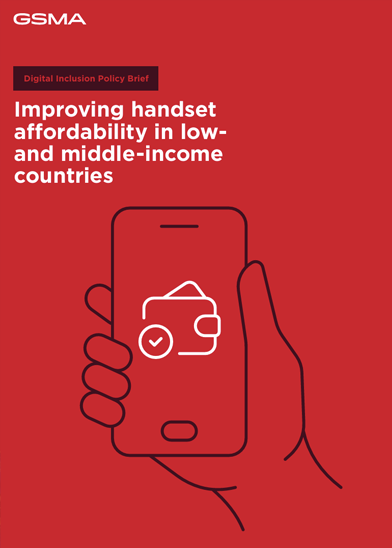
A red cover shows a hand holding a mobile with a wallet and tick icon on the screen, highlighting the concept of handset affordability. Text reads: “GSMA. Digital Inclusion Policy Brief. Improving handset affordability in low- and middle-income countries.”.
Policy brief: Improving handset affordability in low- and middle-income countries

Explore our broader resources:

Handset Affordability at the GSMA

The GSMA brings together research, initiatives and resources to advance solutions that improve handset affordability and enable more people to access mobile-enabled digital services.

The Handset Affordability Coalition

The GSMA Handset Affordability Coalition brings together key stakeholders to advance innovative solutions to enhance handset affordability.

Mobile Taxation

The GSMA works with governments and industry to promote fair and efficient taxation policies that support affordable mobile services and digital inclusion.

Work with us

Is your organisation working to improve access to affordable handsets in low- and middle-income countries or interested in doing so? We’d love to collaborate. If you’re interested in working with us or finding out more about our research and tools, we want to hear from you. 

Register your interest below to connect with our team. 



Three logos: 1) Global Research and Technology Development with a blue globe icon, 2) Swedish flag with “Sweden Sverige,” 3) Gates Foundation in black serif text—all supporting Handset Affordability initiatives.

This work is currently funded by the UK Government’s Foreign, Commonwealth & Development Office (FCDO) through its Global Research and Technology Development Portfolio, and by the Swedish International Development Cooperation Agency (SIDA), and is supported by the GSMA and its members. Some of the research and work on handset affordability and adoption is also funded by the Gates Foundation.