



As climate-driven disasters continue to grow in frequency and intensity, early warning systems (EWS) are invaluable in alerting people of imminent threats. Advanced warnings of events like earthquakes, tsunamis, or floods have been shown to strengthen emergency preparedness and save lives. With 96% of the world covered by a mobile network and 5.8 billion unique subscribers, mobile technology is a critical channel to reach large numbers of people rapidly and at scale.
The power of cell broadcast
Cell broadcast (CB) is a highly effective technology that enables immediate dissemination of alerts to mobile users, including those who aren’t local to the area. Crucially, CB is not impacted by network congestion that typically occurs in an emergency, when many individual users may be attempting to make calls and send messages. This means critical alerts can be sent to millions of mobile handsets in a matter of seconds.
The speed and scale of CB makes it an essential communication channel for EWS, especially when combined with other methods like sirens and media broadcasts to ensure the widest possible reach. More insights on the opportunities, challenges, and considerations associated with CB-enabled EWS can be found in the GSMA’s 2023 report, “Cell Broadcast for Early Warning Systems: A review of the technology and how to implement it“.
The GSMA and Early Warnings for All
Recognising the increasing prevalence of disasters as well as the lifesaving impact of EWS, the UN launched the Early Warnings for All (EW4All) initiative in 2022, which calls for every person in the world to be protected by an EWS.
The GSMA is playing a leadership role in the EW4All initiative through our Mobile for Humanitarian Innovation Programme (M4H) – in particular, working in partnership with the International Telecommunication Union (ITU) who lead Pillar 3, which focuses on warning dissemination and communication. The GSMA Director General sits on the initiative’s Advisory Panel.
Growing adoption of CB-enabled EWS
Cell broadcast has been deployed for disseminating early warnings in some countries for decades, and an increasing number of countries are currently implementing it for this life-saving purpose.
The mobile industry makes a vital contribution through enabling the technology, and through partnership with governments and other stakeholders to achieve progress on protecting everyone on earth with an EWS. Alongside industry, M4H is working in multiple countries to convene relevant stakeholders, carry out research, provide technical assistance, and highlight best practice. Some recent examples include:
Solomon Islands
M4H has partnered with the Pacific Islands Telecommunication Association and Omnitouch to enable cell broadcast for early warning, with a successful first test of CB-enabled alert dissemination taking place in May 2025. Situated in the Pacific ‘Ring of Fire’, a chain of islands vulnerable to regular earthquakes and volcanic activity, the Solomon Islands is the first in this region to pilot the system. The project will continue with expansion of CB-enabled EWS across the Pacific Island region in the coming years.
Tanzania
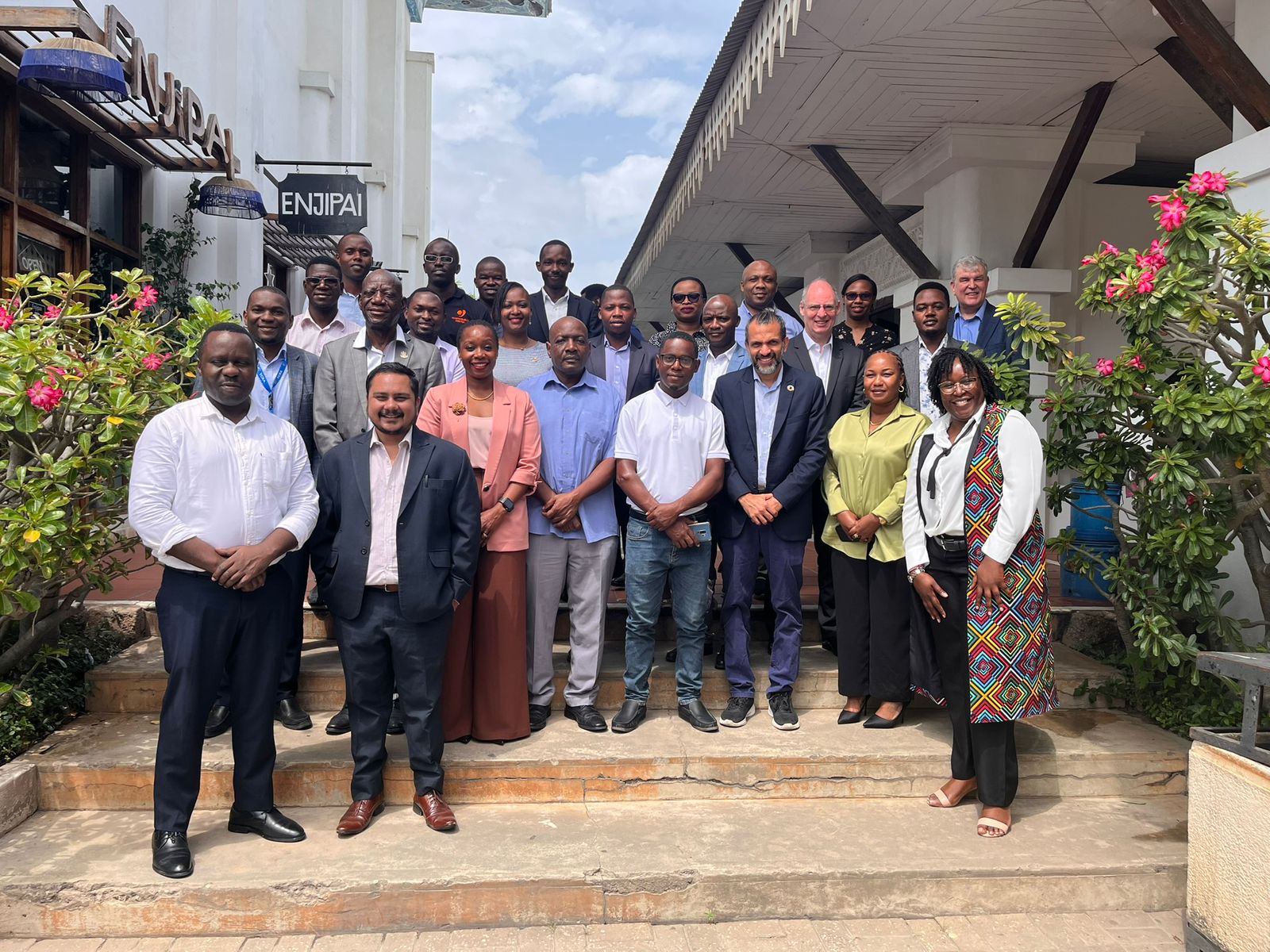
Over the past year the GSMA convened government agencies, regulatory bodies, and mobile network operators in Tanzania to evaluate the country’s readiness for a CB-enabled EWS. This work culminated in a series of high-level meetings and a workshop on CB readiness in February 2025, with plans underway to develop a blueprint for the system. Our work in Tanzania is also taking a human-centred design approach, incorporating user research to ensure the EWS is inclusive of diverse needs and leaves no one behind.
India
India’s public warning system – SACHET – now integrates four major operators to enable nationwide delivery of location-based SMS alerts. More recently, C-DOT has been working with operators to implement CB functionality, with testing underway. This marks a significant milestone in strengthening the country’s disaster preparedness through mobile technology. As implementation progresses, India’s model offers valuable lessons for other high-risk, high-density contexts. Read our new case study for more insights.
Thailand
Prone to disasters like earthquakes and tsunamis – most recently, a 7.7 magnitude quake in March – a CB-enabled EWS has been under development in Thailand for several years. New milestones have been reached in 2025, with three rounds of CB testing in May and full deployment expected in July. Mobile operators such as True have been working closely with disaster management authorities, noting their support and the significant benefit the new EWS will provide to the population.
Kuwait
Kuwait successfully tested its CB-enabled EWS in late 2023, as part of a wider digital transformation initiative led by the government. Mobile operator Zain has supported the adoption of CB throughout the process and has continued to voice its commitment to supporting EWS and humanitarian connectivity initiatives, including in GSMA-led policy dialogues held in April 2025.
Continued industry leadership on EW4All
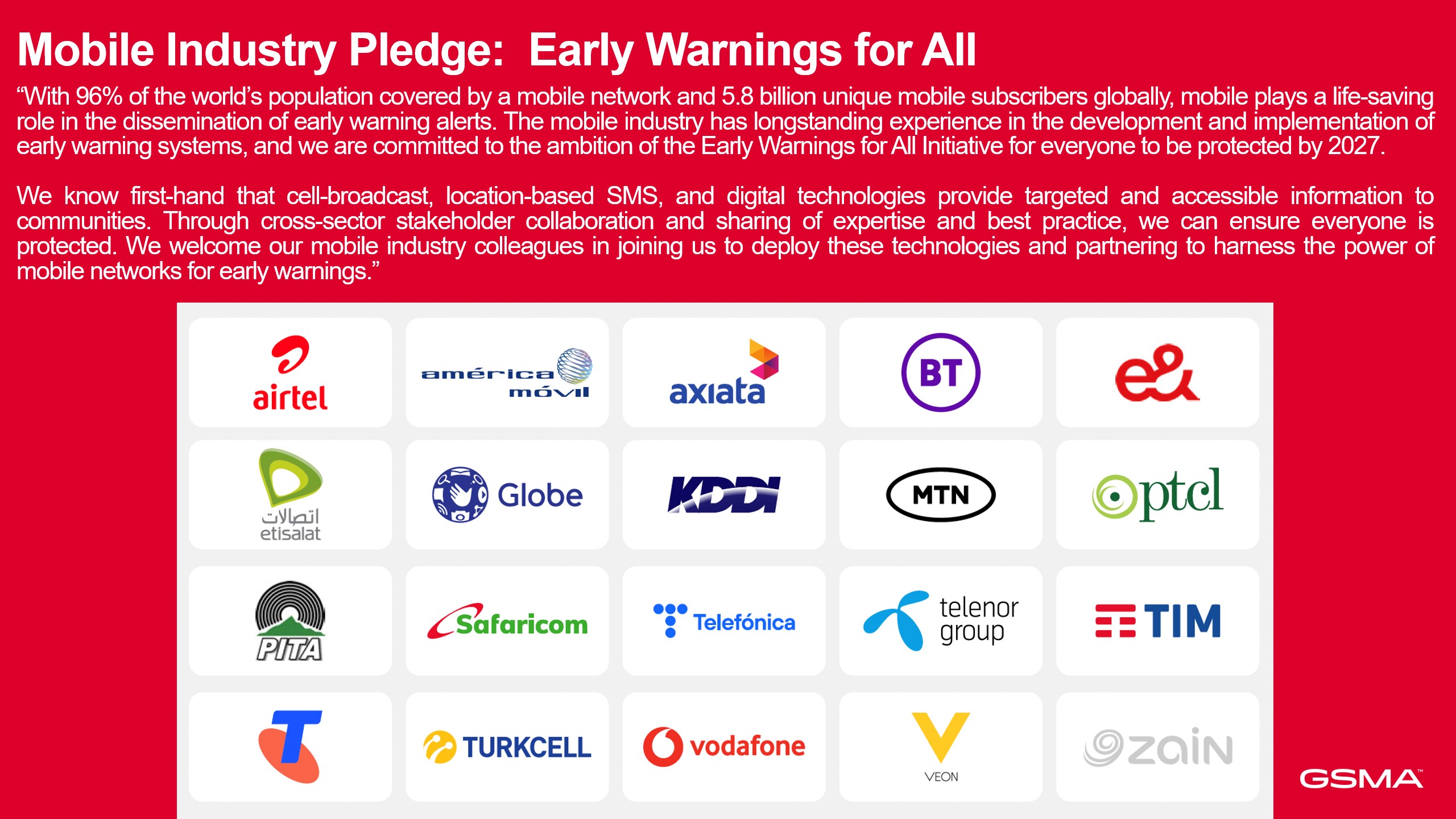
In 2023, the GSMA and the ITU launched an industry pledge, bringing together mobile operators in support of the EW4All initiative and committing to leverage partnerships and expertise to realise its objectives.
As more countries look to strengthen their early warning capacities and harness the potential of lifesaving technologies like cell broadcast, the GSMA will continue to engage with industry, government stakeholders, and humanitarian organisations to promote these efforts. Follow the GSMA’s M4H Programme for the latest updates.
