


Advancing digital gender equity
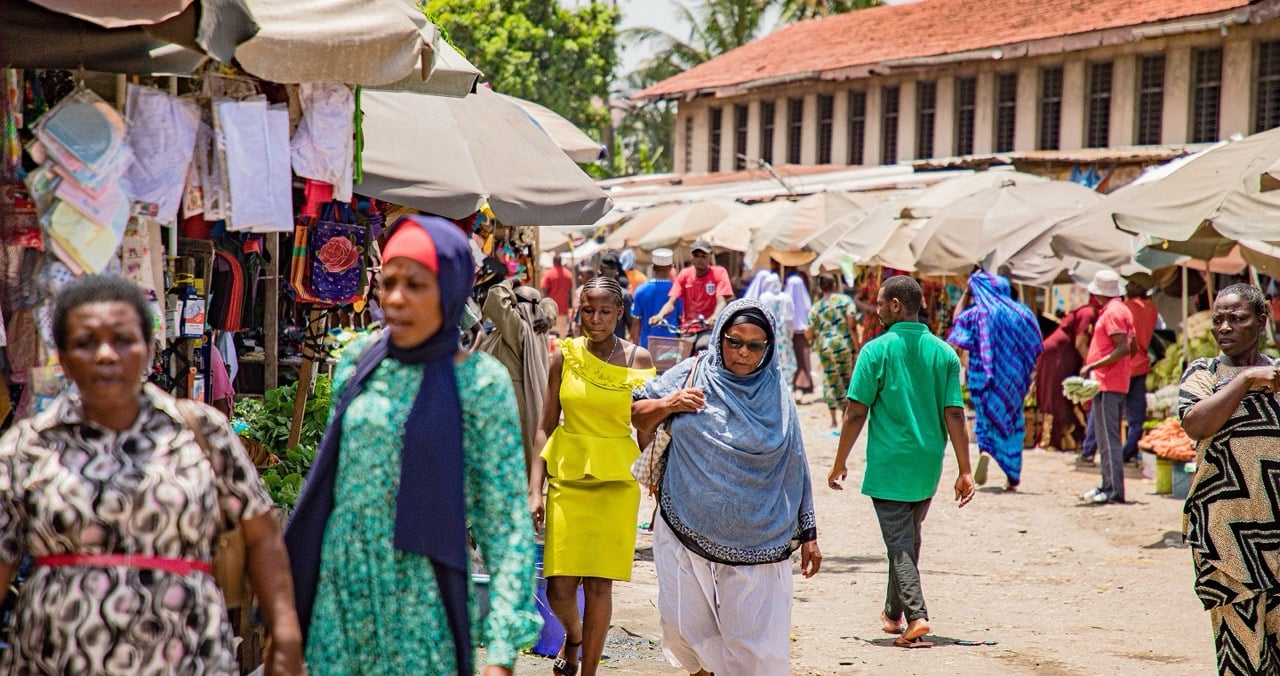
While global connectivity is increasing and more women are connected than ever before, 3.4 billion people remain digitally excluded. The majority – 885 million – are women and live in low- and middle-income countries (LMICs), around 60% in South Asia and Sub-Saharan Africa. Across LMICs, women are still 14% less likely than men to use mobile internet, which translates into 235 million fewer women than men using mobile internet. Progress in closing the mobile internet gender gap has stalled, and gender gaps in smartphone ownership and overall mobile ownership have remained relatively unchanged, at 14% and 8%, respectively, in 2024. Meanwhile, the gender gap in mobile money account ownership in LMICS has widened since 2021 to 36%.
As mobile connectivity becomes increasingly important to economic and social participation, leaving the mobile gender gap unaddressed will exacerbate existing inequalities and cause women to miss out on opportunities for better livelihoods, well-being and climate resilience.
2023–2025: Sustaining advocacy and scaling up action to close the mobile gender gap
The Connected Women team, with support from the UK Foreign, Commonwealth & Development Office (FCDO), the Swedish International Development Cooperation Agency (Sida), the Gates Foundation and the GSMA and its members, have been a vital voice on the mobile gender gap. With progress stalling across LMICs, the team’s advocacy and awareness-raising efforts have ensured the issue remains on the international agenda and a priority for national policymakers. The Connected Women programme’s annual flagship Mobile Gender Gap Report continues to fill a critical data gap and be widely cited and used by numerous organisations.
The team have also continued to provide targeted advisory support to the mobile industry, governments and other partners, underpinned by our data and insights on key barriers such as handset affordability and digital skills. Over the past two years, the team has worked with 24 MNO partners as part of the GSMA Connected Women Commitment Initiative to accelerate digital and financial inclusion for women. In parallel, the team have trained more than 240 representatives from government and regulatory agencies on the drivers and opportunities to address the mobile gender gap, supporting governments in Ghana, Kenya, India, Indonesia, Pakistan and the Philippines to implement or enhance policies.
Measuring gender impact
Our Monitoring, Evaluation and Learning (MEL) approach ensures that the thematic areas of the Mobile for Development (M4D) programme support the equitable inclusion of women in mobile services through evidence-based, responsive strategies. Our MEL is designed to better understand:
- How women are using mobile services, digital solutions and their impact
- Women’s needs and the barriers they face to accessing and using mobile services
- What stakeholders are doing to reach and support women with mobile services and the effectiveness of their approaches
- How to reach and support female-inclusive and female-led startups launching innovative digital solutions
We combine quantitative and qualitative methods to track women’s access to and usage of mobile internet, and understand the barriers they face, such as affordability, digital skills, social norms and safety concerns. We track the impact of advocacy efforts to foster stronger commitments from industry and government. We also monitor enabling policies and industry practices, benchmarking progress on gender-inclusive digital ecosystems and promoting accountability through the sharing of evidence.
We focus on advancing digital and financial inclusion by improving women’s access to mobile internet and mobile money services. Our targeted advisory support, advocacy, partnerships and policy engagement with MNOs, governments and other partners are helping to close gender gaps. The GSMA Innovation Fund also supports innovations and startups led by women, reinforcing our commitment to gender-inclusive and sustainable solutions.
50+
MNOs have joined the Connected Women Commitment Initiative since 2016

80m+
additional women collectively reached
24
MNOs so far renewing their commitments beyond 2024
The GSMA Innovation Fund has supported women’s leadership in innovation by selecting and supporting
17
women-led or -founded startups1 out of 62 total investments.
Through rigorous research and thought leadership, the GSMA generates evidence to raise awareness of the mobile gender gap, why it exists, successful approaches to addressing it and the benefits of doing so. This work has inspired action by industry, policymakers and other stakeholders, and provided valuable insights that inform targeted interventions to advance gender equity in mobile services.
Data on the mobile gender gap and the barriers women face are driving action to address the digital gender divide. The Mobile Gender Gap Report 2025 presents the latest data on the mobile gender gap, drawing from more than 17,000 face-to-face surveys across 15 LMICs. It explores the structural and social barriers preventing women from accessing and using mobile internet, while outlining urgent actions needed to close the gender gap. The report also highlights the significant socio-economic value of addressing the mobile gender gap – not just for women, but for the mobile industry, national economies and society at large. Regularly cited by organisations such as the World Economic Forum, the W20, Deloitte and the Asian Development Bank (ADB), the Mobile Gender Gap Report is a trusted reference shaping global conversations and priorities.
We use our gender data and insights to deliver tailored workshops and technical advisory that translate insights into practical strategies for partners.
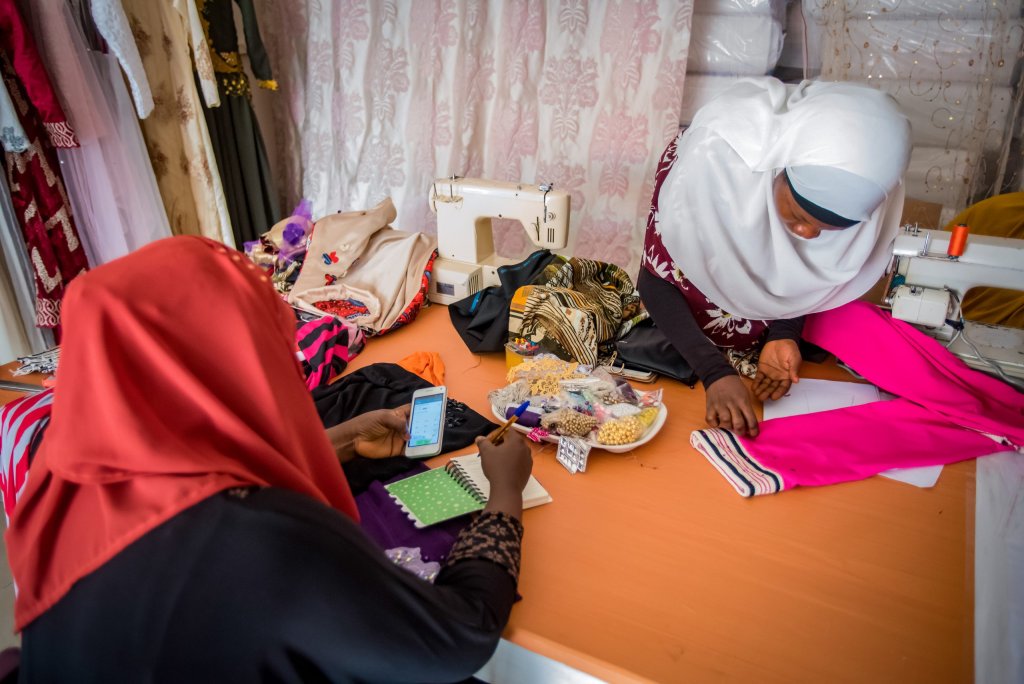
Mobile phones can be a powerful source of economic and social empowerment for women micro-entrepreneurs (WMEs). Yet, across LMICs, they are less likely than men to use them for their business. To address this gap, we conducted research in 10 LMICs and are working with MNOs and other partners to identify, test and scale approaches that reach WMEs more effectively. The research found that WMEs are often unaware of the variety of ways a mobile phone can be used for their business, and how to derive maximum benefit from mobile services. Many also do not have access to an internet-enabled handset. We have used insights such as these to advise and support more than 20 partners, more than 10 of which have already taken steps to address these issues.
In workshops in Ghana, for instance, we used in-country research and data to inspire and support MTN to serve WMEs in ways that are both commercially sustainable and socially impactful. Following the workshop, it launched Adwumapa in 2025, a solution for WMEs offering a range of services, including relevant service bundles, financial literacy training and digital payment solutions. Tailoring products and services to women’s needs, aspirations and relevant use cases can expand access to digital tools that empower their businesses and livelihoods.
In Pakistan in 2023, we shared our research, data and recommendations for reaching WMEs with JazzCash. Since then, JazzCash has created an all-female sales team to drive in-person, group-based onboarding events for WMEs. By mid-2025, 830 women had been reached and 444 onboarded to JazzCash’s merchant payment solution or personal m-wallet service – tools that now help them to increase their financial autonomy, build business credibility and gain confidence in managing finances and transacting securely. This demonstrates how our evidence and technical assistance, when paired with partner action, delivers real progress on digital and financial inclusion.
To reduce the gender gap in mobile ownership and usage, we bring together MNOs and commercial and development partners to develop inclusive products and services. In the past two years, we have worked with MNOs and private-sector partners to reach women in ways that are both commercially sustainable and socially impactful.
Creating and sustaining partnerships with MNOs is critical to reducing the mobile gender gap. The Connected Women Commitment Initiative was launched in 2016 and has forged partnerships with more than 50 MNOs across LMICs that have made formal commitments to reduce the gender gap in their mobile internet and/or mobile money services customer base. So far, they have collectively reached more than 80 million additional women with these services.
Connected Women Commitment Partners since 2024
Connected Women Commitment partners have actively addressed barriers to women’s mobile access and use by:
- Raising awareness of the benefits of mobile internet and mobile money for women and their families
- Making internet-enabled handsets and services more affordable
- Improving women’s confidence and digital skills
- Enhancing mobile safety and security
- Ensuring services are tailored to women’s needs.
Their efforts are wide-ranging and include:
- Women-focused marketing campaigns
- Handset affordability interventions
- Digital skills training
- Recruiting female agents
- Adapting products and services to be more relevant to women
- Using new approaches to distribution to better meet women’s needs and mobility constraints
An example of this work is Jazz Pakistan’s Mera Gaon Live (“My Village is Digitally Enabled”) campaign. A Commitment Partner since 2022, Jazz launched the campaign following a GSMA strategy workshop in 2023. The aim was to raise awareness of the benefits of mobile internet through in-person digital education sessions for women and rural communities. By the end of 2024, the campaign had reached 97 villages, educating more than 17,000 women.
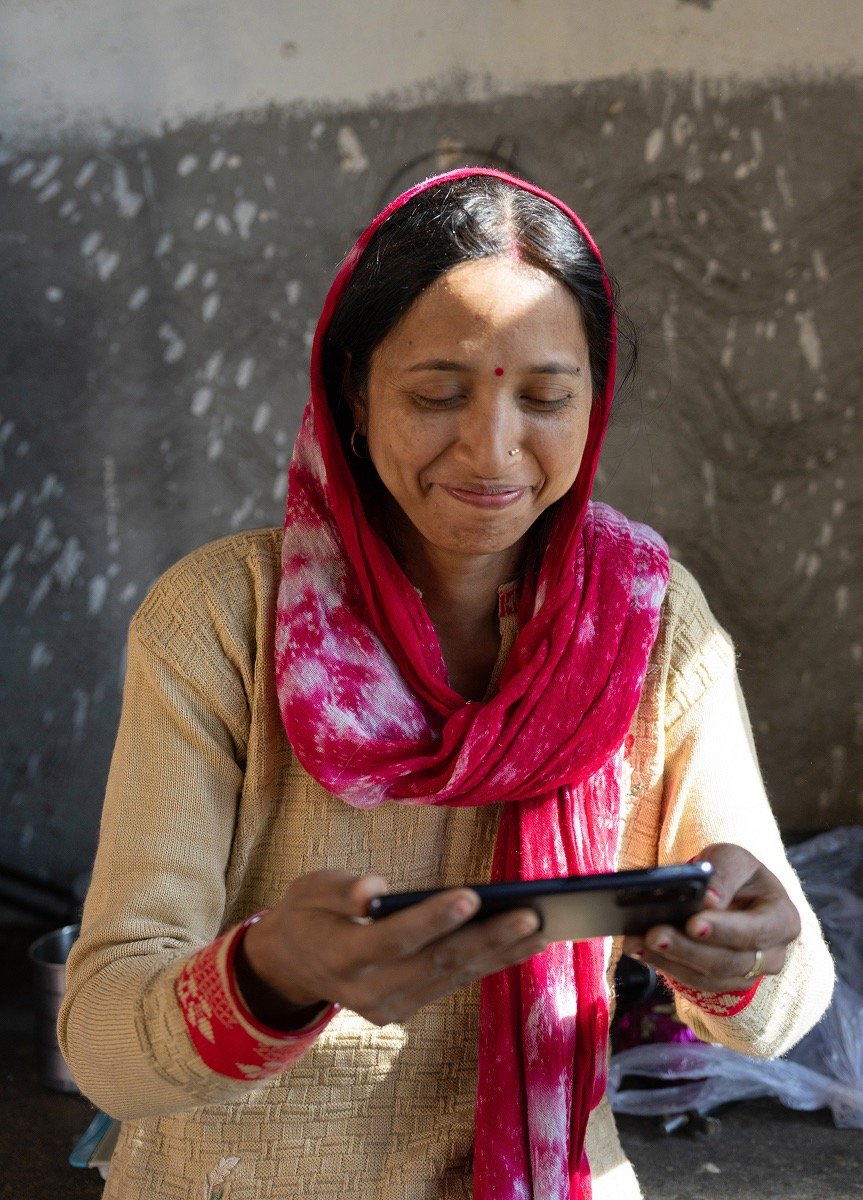
Another example comes from India, where the GSMA’s research identified digital skills training needs for women. Using these insights, the GSMA and Reliance Jio collaborated to develop needs-based training resources, including videos in Hindi and Tamil. Jio’s pilot reached more than 5,000 rural women through retail stores, digital channels and self-help groups, with 81% reporting they had learned new skills, 80% an improved ability to access and use mobile internet and 90% a positive impact on their lives. Since then Jio has grown the campaign, delivering it through multiple channels to reach the underserved, including women, at scale. This has included a collaboration with Reliance Foundation and in-person training through self-help groups and other digital channels. By the end of 2024, around 200,000 women had been trained in self-help groups across eight Indian states, and more than 2 million unique viewers accessed the training resources through Jio’s YouTube channel and in-store efforts. Jio has translated the training content into eight additional languages to take the campaign to more regions in India.












Over the past two years, there has been a growing trend in Commitment Partners offering lower cost handsets, especially for women. In Sri Lanka, for instance, Dialog Axiata identified handset affordability as a key barrier to women accessing mobile internet based on insights from a 2024 GSMA strategy workshop. With targeted technical support from the GSMA, Dialog Axiata launched a women-focused campaign under its existing LesiPay device financing scheme. Women who enrolled in the scheme received three months of free mobile data and a complementary headset. Several thousand women benefit from the Lesi Pay device financing scheme each month. Similarly, as part of its Connected Women Commitment, Banglalink Bangladesh launched the “Ladies First” handset campaign, bundling data with smartphones to reduce barriers to women’s mobile adoption and improve affordability. Following a GSMA Connected Women workshop, Mobilink Microfinance Bank Pakistan launched a pilot providing women a choice of a smartphone with bundled data or a loan subsidy. To date, more than 400 smartphones have been distributed.
Through the GSMA Innovation Fund, we have accelerated gender-inclusive innovation by investing in early-stage, women-led solutions that tackle real-world development challenges. In the past two years, the Innovation Fund has invested £1.4 million in 10 early-stage, women-led solutions in eight countries. Of the 62 organisations supported by six rounds of the GSMA Innovation Fund between 2020 and 2024, 17 (27%) were founded, co-founded or led by women2 – a relatively high proportion in the context of global trends. In Africa in 2024, female-founded startups raised a smaller share of deals (18%) and funding (7%) compared to 2023. In Southeast Asia, funding for female tech founders has dropped by 42% from 2023. As funding and support decline in these regions, access to financing, technical assistance and relevant networks are even more important to supporting innovative female business leaders in LMICs.
How the GSMA-backed, women-led Bhumijo is improving women’s public health in Bangladesh
In Bangladesh, an estimated 70 million people – around 41% of the population – lack access to safe sanitation. In Dhaka alone, more than 5 million people commute daily, yet there are fewer than 50 usable public toilets. This shortage disproportionately affects low-income communities and women, many of whom spend 12 to 16 hours a day outside their homes.
Architect and urban planner Farhana Rashid founded Bhumijo in 2016 with a clear mission: as a women-led social enterprise, Bhumijo directly addresses the sanitation challenges faced by women in urban areas by providing safe, hygienic and affordable public toilets.
With the GSMA’s support in 2022, Bhumijo piloted smart toilets equipped with digital payments, automatic entry, sensor-based monitoring and a mobile app for hygiene information and subscriptions. By the end of the grant period in 2023, eight facilities were fully digitalised, providing safe access to more than 100,000 women from low-income communities in locations like markets, transport hubs and hospitals.
Bhumijo’s female leadership and focus on women’s needs have attracted major partnerships, including Unilever’s TRANSFORM accelerator and WaterAid, which have enabled it to install another 24 digitalised facilities and have an even bigger impact on public health, dignity and safety for women in Bangladesh.
How the GSMA supported Freetown Waste Transformers to solve an energy problem with waste
Sierra Leone has one of the lowest rates of energy access in the world, with 76% of the population living without electricity. In Freetown, poor waste management adds to the challenge, as only about 30% of waste is safely collected while the rest ends up in illegal dumpsites, on the streets or in the ocean.
Founded in 2019 by Aminata Dumbuya-Jarr, Freetown Waste Transformers (FWT) tackles both these issues simultaneously by converting organic waste into renewable energy using anaerobic biodigesters. Drawing on her experience in the waste sector, Aminata set out to reduce waste, cut pollution and expand access to clean, affordable power.
With support from the GSMA, FWT developed DortiBox, Sierra Leone’s first digital waste collection platform. The app uses GPS to help households and businesses schedule pickups, map more efficient collection routes and supply biodigesters with the organic waste needed to generate clean energy.
By the close of the grant, FWT had launched the DortiBox app, onboarded more than 350 users and trained 322 waste collectors. Their services benefited 46,552 Freetown residents through timely waste collection, higher incomes for collectors and electricity provided from the Aberdeen Women’s Centre waste-to-energy site. FWT also diverted 11.85 tonnes of organic waste from landfills and generated 12,205 kWh of clean energy.
Partnerships have strengthened the model. FWT integrated mobile money transactions through Africell Sierra Leone and Orange Money Sierra Leone,3 making payments more convenient for users. Africell also became an off-taker of the clean energy produced by FWT’s biodigesters, supporting its circular approach to waste and energy.
We support and contribute to policies to accelerate digital inclusion for women at the national and international level
Closing the mobile gender gap requires concerted action by governments and stakeholders to address women’s barriers to mobile access and use. We leverage our data and evidence to influence policy, providing capacity building and advisory support to policymakers and regulators, and participate in global forums to ensure these barriers are a priority.
For example, in 2023, we supported the Pakistan Telecommunication Authority (PTA) and UNESCO in developing the PTA’s Digital Gender Inclusion strategy, which was launched at MWC Barcelona 2024.
The GSMA supported the policy development process by (1) sharing data and insights on the mobile gender gap in Pakistan; (2) sharing policy best practices in addressing the barriers to mobile internet adoption and use; (3) actively contributing to the development of the policy and providing feedback where requested; and (4) convening MNOs in Pakistan to ensure they had an opportunity to provide inputs.
These efforts helped ensure that PTA’s final Digital Gender Inclusion Strategy focused heavily on addressing the key barriers women in Pakistan face to accessing and using mobile phones and mobile internet. Now that the strategy is being implemented, the GSMA has joined and is contributing to the working groups. This engagement has inspired other governments to act as well. After hearing about our support for the PTA policy development process, another government agency, GIFEC (Ghana Investment Fund in Electronic Communications), approached us to help them explore whether a similar policy and strategy might be feasible in Ghana. We intend to work with them on this over the coming year.
For several years, we have been playing a key role in Women 20 (W20), the official G20 engagement group for advancing women’s economic empowerment and gender equality. In 2024, we strategically engaged with the W20 Brazil process through evidence-based advocacy, policy inputs and the representation of GSMA leaders. Our insights, drawn from the Mobile Gender Gap Report 2024, informed key messaging and recommendations, culminating in strong commitments in the W20 Brazil Communiqué to halve the digital gender gap by 2030 and invest in inclusive digital tools and public services. Our efforts continued in 2025 with the W20 South Africa agenda, with our messaging and recommendations on investing in digital inclusion programmes and addressing key barriers to device affordability and digital skills reflected in the final W20 South Africa Communiqué. Separately, the G20 South Africa Leaders Declaration reaffirmed a commitment to halve the gender digital divide by 2030. Our sustained engagement highlights the critical role of data-driven advocacy.
We also participated in a targeted, multi-pronged advocacy strategy for the inclusion of digital gender equality in the Beijing+30 Declaration and Platform for Action adopted by UN Member States in March 2025, a landmark document that will shape national gender equality agendas for years to come. As a result, bridging the digital gender gap was named one of six priority areas in the Beijing +30 Action Agenda, marking a major step forward in global digital inclusion.
Capacity building for meaningful impact
We have shared tailored data, analysis, insights and recommendations with policymakers and regulators in several countries. Our Bridging the Mobile Gender Gap capacity building course equips policymakers in LMICs to understand the scale of the mobile gender gap and the factors driving it. The course provides actionable insights and recommendations on improving digital inclusion for women, with a focus on barriers such as affordability, digital skills, safety and relevant content. Recognising mobile as a transformative tool for societal benefit and inclusion, the course empowers participants to interpret gender-disaggregated data, integrate gender perspectives in strategies and budgets and develop practical action plans to close the mobile gender gap. Between 2023 and 2025, the course was offered both in-person and through online learning platforms, training more than 240 individuals from governments and regulatory agencies in more than 40 countries.
How the Bridging the Mobile Gender Gap course for policymakers in Kenya helped rural women learn digital agriculture skills
In Kenya, women in rural areas face barriers to mobile access and digital skills, limiting their ability to benefit from mobile-enabled opportunities in agriculture and beyond. Addressing this gender gap is central to inclusive digital development.
Dr. Emma Otieno, Deputy Director of Fund Strategy Development at Kenya’s Universal Service Fund (USF), completed the GSMA’s Bridging the Mobile Gender Gap course in 2022. Inspired by its insights, in 2024 she initiated a new USF project with the Kenya Agricultural & Livestock Research Organization (KALRO) to upskill rural women in digital agriculture. The project is expanding connectivity to research and community centres, providing devices for women and persons with disabilities, and delivering tailored digital skills training.
Now in its first year, the initiative has already signed key partnerships and deployed new services. It is set to reach more than 10,000 women and their families, empowering them with digital tools to improve productivity, livelihoods and resilience.
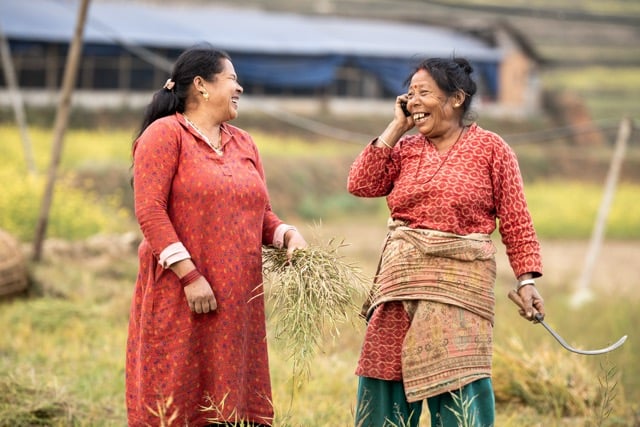
The mobile gender gap in LMICs is not going to close on its own, and with progress stalling we will double down on influencing our partners to act on this crucial issue. We will continue to support them with data and insights that truly move the needle, including on handset affordability, social norms and other barriers that women face to participating and thriving in the digital world.
- Founded by teams comprised of 50% women or more. ↩︎
- GSMA. (July 2025). GSMA Innovation Fund Impact Portfolio 2024–2025. ↩︎
