


De-risking innovation in Low- and Middle-Income Countries
Digital technology is a critical driver of growth and resilience in low- and middle-income countries (LMICs), where 3.7 billion people rely on it for connectivity. One important way it is making a difference is in humanitarian response and disaster preparedness in high-risk regions. However, many of the innovators behind these digital solutions have lacked the funding and support to de-risk and scale their innovations. The GSMA Innovation Fund bridges this gap by offering equity-free grant funding and tailored technical assistance to innovators leveraging digital technologies in LMICs (see Box 1).
Supported by the UK Foreign, Commonwealth & Development Office (FCDO) and partners, the GSMA Innovation Fund helps small and growing startups, small and medium enterprises (SMEs) and non-profits to de-risk, develop and scale innovations that foster inclusion and sustainable change in communities
During the 18-month grant cycle, grantees receive funding and tailored technical assistance from the GSMA to amplify their impact. This includes support to form partnerships with mobile network operators (MNOs), governments and other key stakeholders
This targeted, hands-on support is designed to strengthen the capacity of grantees, overcome challenges to scale and accelerate innovation. Technical assistance includes:

Facilitation of partnerships with MNOs (where relevant and possible)

Tailored venture-building support to build the grantee’s capacity.

Facilitation of connections with investors (where relevant and possible)

Participation in bootcamps (learning exchange programmes with grantees and alumni, capacity building and connections with investors and other ecosystem stakeholders)

Monitoring, evaluation and learning (MEL) support to assess the grantee’s impact and theory of change

Increasing grantees’ visibility and profile to potential partners through features in GSMA publications and participation in industry-leading events organised by the GSMA.
Each round of the Innovation Fund focuses on a specific thematic challenge, such as digital inclusion, climate resilience or humanitarian response, bringing together a diverse group of organisations (see Box 2). For a fuller picture of the Fund’s grantees and their solutions, see the GSMA Innovation Fund Impact Portfolio 2024–25.
GSMA Innovation Fund themes

1. Mobile Internet Adoption and Digital Inclusion

2. Assistive Technology

3. Digital Urban Services

4. Climate Resilience and Adaptation

5. Anticipatory Humanitarian Action

6. Accelerated Growth

7. Humanitarian Challenges

8. Impactful AI
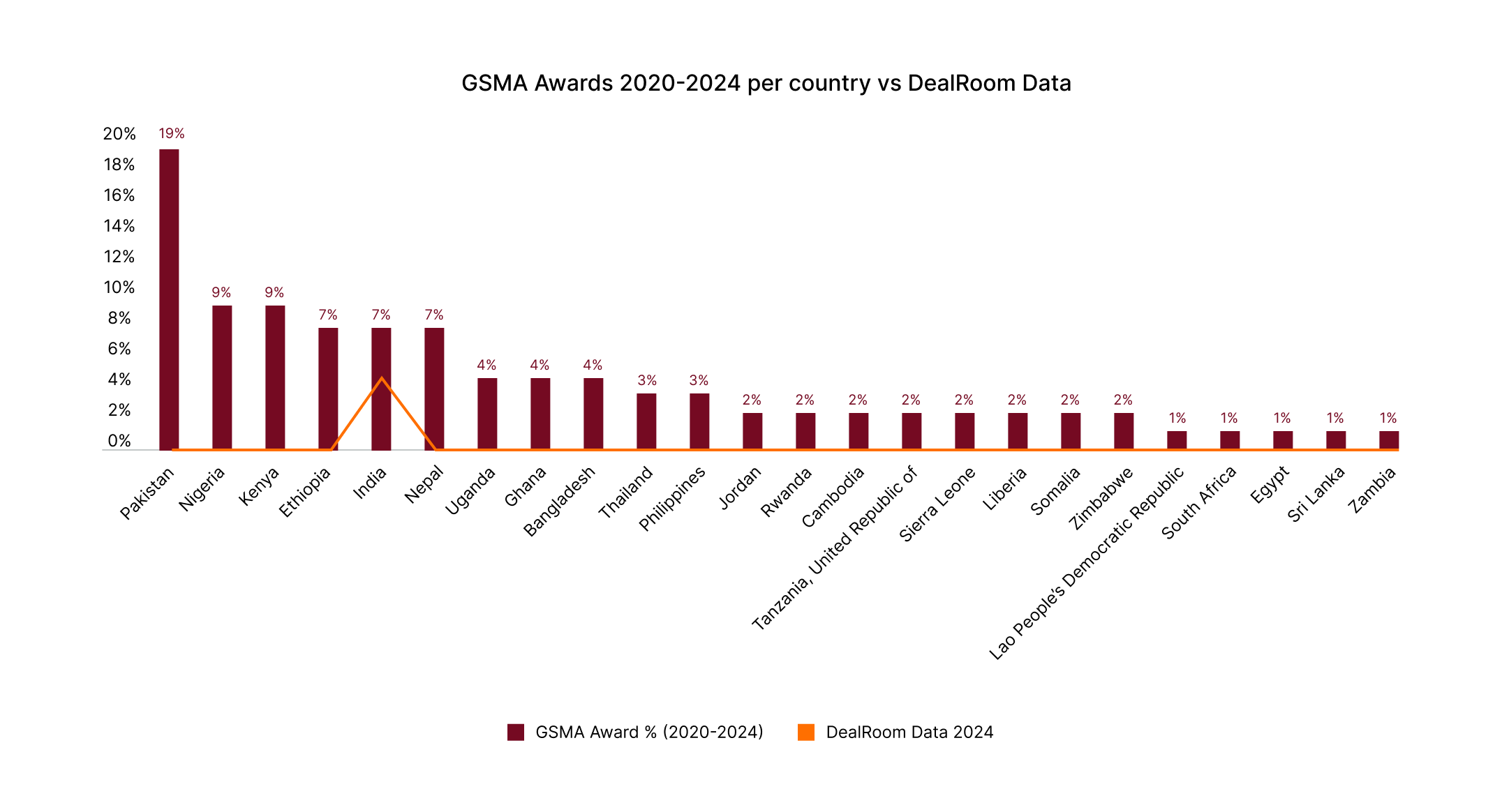
This funding has played a critical role in countries where venture capital (VC) is scarce, as they are often considered too risky for investment. By investing in early-stage digital solutions in these markets, the Fund attracts further private-sector engagement. For example, the Fund has supported startups in markets such as Pakistan, Ethiopia, Sierra Leone and Uganda, ensuring innovation can launch, scale and deliver social and environmental impact. This support can be transformational – since 2021, Innovation Fund grantees have raised a total of £71.1 million. This is a multiplier effect of £7.60 for every £1 invested.
Analysis of recent funding activity among grantees shows a dynamic mix of investment sources. Equity investments accounted for 33% of the total raised, while grants and blended finance contributed 28% and 27%, respectively. Debt financing made up 12% of the funding, with revenue-based financing and convertible notes each representing 1%. This diverse funding landscape is a testament to the resilience and adaptability of the Innovation Fund portfolio.
Impact of the GSMA Innovation Fund, 2020-2025

65
Startup supported innovations

£12 m
Funding
distributed

24
Project countries

38
Partnerships (MNO and non-MNO)
Measuring the impact of the GSMA Innovation Fund
The GSMA measures the impact of the Innovation Fund by examining how grantees’ digital solutions catalyse social impact, the scalability of these solutions and the role of digital technology and contextual factors. By tracking indicators like follow-on funding, revenue and user growth, the GSMA can assess commercial scalability and sustainability. The GSMA aims to understand how scaling these solutions can amplify social impact and create long-lasting, meaningful change for underserved and vulnerable users.
Over the past two years, the GSMA has deepened its understanding of how digital innovation contributes to poverty reduction, improved livelihoods and resilience. The Innovation Fund de-risks and accelerates digital solutions by early-stage startups that create meaningful change for users, communities and markets, including greater resilience to shocks (see Figure 2).
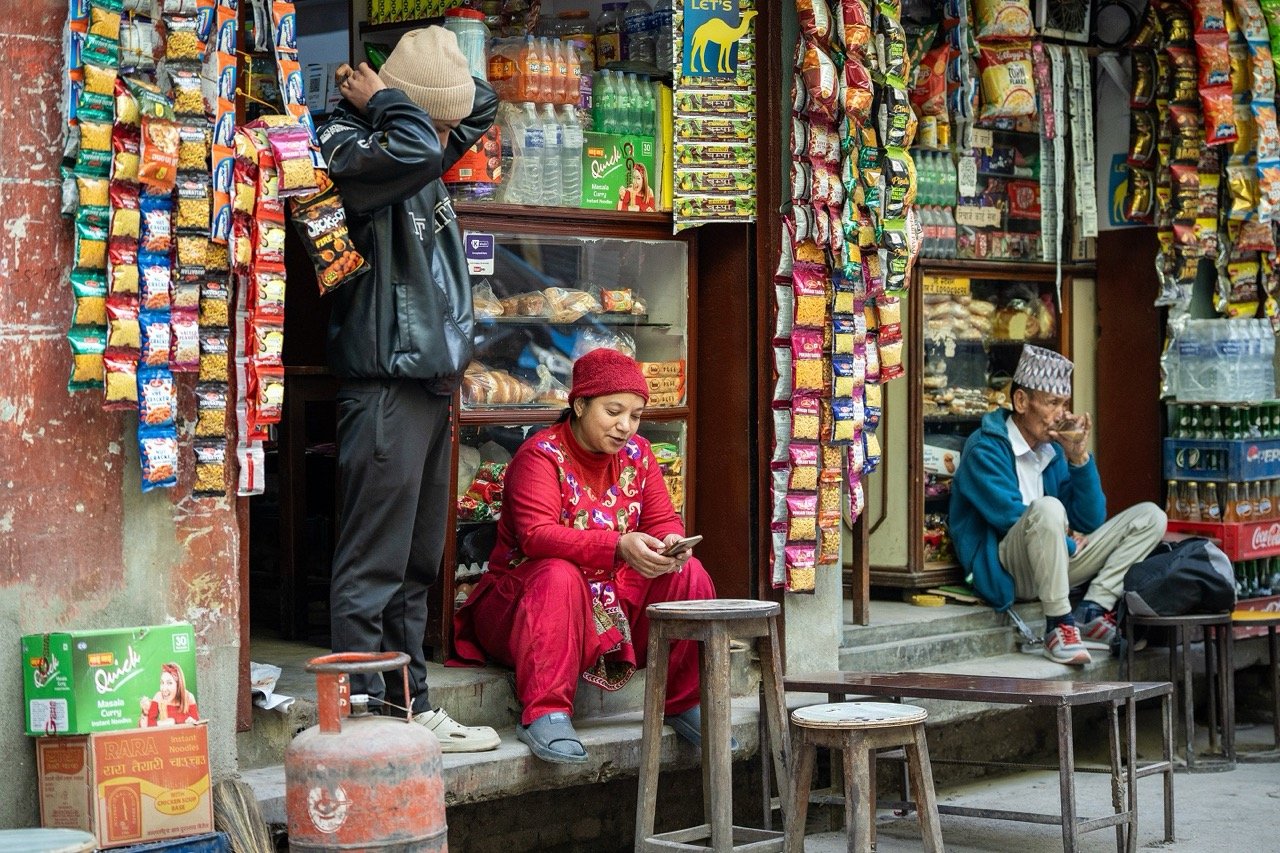
In 2024, the Innovation Fund Investment Inclusivity study examined the extent to which four grantees’ digital solutions contributed to social impact. These solutions included GeoKrishi, a climate-smart agricultural extension platform in Nepal; Lumkani, a smart fire alarm and low-cost insurance product in South Africa; TaskMoby, an app-based job-matching platform in Ethiopia; and Ensibuuko, digital banking services for savings organisations in Uganda.
Within this sample. the most significant impact was the tangible boost to users’ resilience from greater asset security and the ability to access information and financial services that support income generation. These are often sustained, marginal gains as solutions enable users to modestly increase their income (through agricultural yields or small-scale business growth), building a financial cushion that can be used to plan for the future, invest or save. Crucially, this helps users develop real resilience to financial and climate shocks.
83%

of users saw increased income
81%

of users saw increased income
66%

of users reported fire prevention or mitigation
60%

of users found more stable employment
While digital technology can be a powerful catalyst, the benefits are not automatic. Access to digital technology and mobile internet, usage and poverty reduction do not always move in tandem. To understand when and how digital solutions deliver meaningful impact, the Innovation Fund team also looked at the nature of the grantees’ impact, the pathways through which it occurs and the role of digital technology in enabling it. Findings showed that digital tools are central to a grantee’s impact and digital technology acts as a catalyst when solutions:
- Localise information by tailoring services to users’ specific contexts and removing the cost of travel to markets or centres.
- Customise services by providing information and support that is relevant to individual needs and locations.
- Improves the efficiency of information by enabling users to receive timely, accurate updates faster than through traditional channels
Localised, customised and efficient digital tools strengthen livelihoods and resilience
Ensibuuko (Uganda)
92% of users report better control over savings and loans.
Digitalises savings and loan records for village savings and loan associations (VSLAs), reducing paperwork and fraud while improving trust and transparency.
- Localises services for rural groups without heavy infrastructure.
- Customises tools (apps, USSD, ledgers) to meet different user needs.
- Improves efficiency by cutting administrative time and enabling timely repayments.
Lumkani (South Africa)
Reduces fire risk and builds financial resilience for vulnerable families.
Provides fire detectors with SMS and community alerts bundled with affordable insurance for residents of informal settlements.
- Localises early warnings for high-risk neighbourhoods.
- Customises products for low-income households excluded from formal insurance.
- Improves efficiency by combining alerts and payouts for rapid response.
GeoKrishi (Nepal)
62% of farmers report higher incomes, better planning and resilience.
Delivers personalised, climate-smart advice via a mobile app for smallholder farmers, from localised weather alerts to crop recommendations and veterinary support.
- Localises information to farm-level conditions.
- Customises advice by crop, location and farmer profile.
- Improves efficiency with quick, accurate data that saves time and reduces risk.
These insights underscore the value of de-risking solutions that not only reduce barriers to accessing digital technologies but also deliver meaningful benefits. Where digital technology acts as a key enabler, these solutions can improve the livelihoods and resilience of underserved and economically vulnerable users.
Growth in users, revenue, partnerships and follow-on funding
This year it became clearer how digital solutions create social impact at scale. The Fund tracks scale across the portfolio through indicators like growth in users, revenue, partnerships and follow-on funding up until 18 months after the end of the grant. But, scale is more than numbers – it is also a process of demonstrating value and expanding reach until long-term sustainability is achieved. For startups, social enterprises and non-profits, this often requires a “safe space” to develop ideas and build capacity.
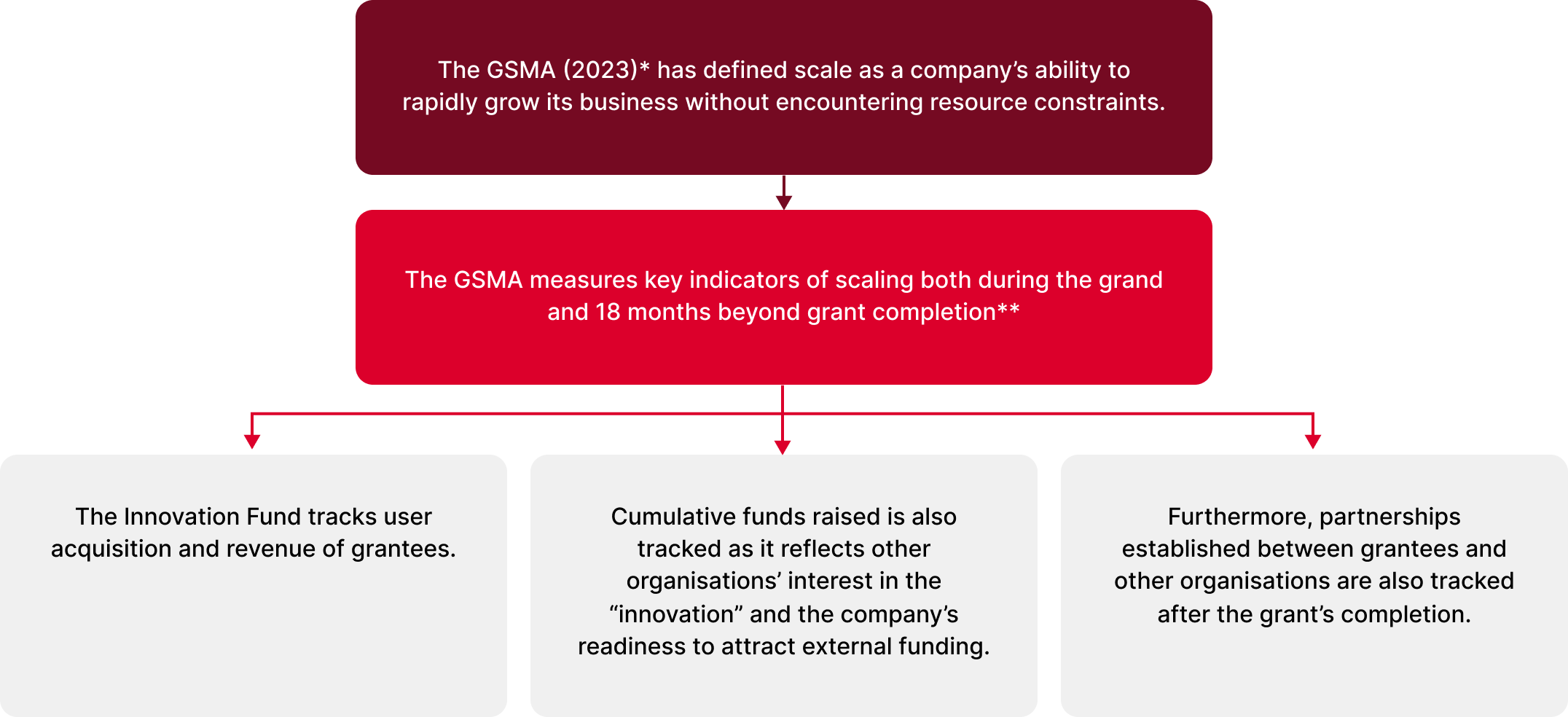
An analysis of grantees and their impact confirms that scaling requires more than a good product and support to de-risk an innovation. Other preconditions like enabling regulation and tailored technical assistance to build capacity for growth are essential. Metrics for scale need to be contextualised and refined based on the business model, market conditions, country context and stage of maturity. This can then define the type of support and technical assistance grantees and their digital solutions need to unlock growth.

£71.1m
Follow-on funding: for rounds 1–7.
7.6 x
The investment made by the GSMA Innovation Fund.
77.6m
People reached by portfolio organisations
40%
of grantees are actively scaling their businesses, as of 2024

$5.7m
In total revenue generated during the grant period
21m
supported to adapt
Grantees scale in different ways:
Expanding reach:
Growing the user base within the same context by targeting new customer segments or increasing market efforts.
Africa 118 expanded its job tech marketplace (TaskMoby) from Addis Ababa to three additional Ethiopian cities and created 1,841 jobs. Its primary target group is unemployed graduates from technical and vocational education and training institutions (TVETs). TaskMoby provides less formal gig work to help TVET graduates get paid work experience – a step to more formal employment.
Functional scaling:
Adding new features or services to increase value for existing customers and attract new ones.

CoAmana enhanced its platform to better reach farmers
CoAmana’s digital agriculture marketplace provides farmers with tools to boost productivity, manage risks and access drought-resistant seeds, financial services and climate-resilience information. CoAmana enhanced its web, USSD and mobile platforms, trained agents and supported adoption of best practices. During the grant period, the platform reached 86,000 users, including more than 21,000 farmers who received support to adapt to climate change.
Replication:
Introducing the solution in new contexts, with necessary adaptations or simplifications to ensure wider applicability.

ATEC (Bangladesh) has scaled its solution to five countries
ATEC has replicated its clean cooking solution, eCook Stove, in other Asian and African markets (Cambodia, Nepal, Malawi, Rwanda, Tanzania). A successful pilot project sold 500 units in each market, and the Innovation Fund grant helped ATEC develop the product and launch it in Bangladesh. The GSMA also profiled ATEC at MWC Kigali, giving its team a chance to learn more about the market and find potential partners to expand their business in Africa.
Strategic partnerships can provide a pathway for startups to scale innovative solutions. Across the GSMA Innovation Fund portfolio, there are several examples of partnerships between startups and MNOs, companies, government institutions and other startups.
When done well, these partnerships can create “win-wins” for both parties. For startups, they enable easier customer acquisition, digital payments, innovative financing, lower costs and integration in super-apps – strengthening their value proposition and building trust through association with a known brand. For MNOs, partnerships introduce new use cases and market segments, support environmental, social and governance (ESG) priorities and enhance brand image. For example, Bakhabar Kisan (BKK), a grantee of the Climate Resilience Innovation Fund, partnered with MNO Zong, gaining access to Zong’s subscriber base to provide weather and agricultural advisory services for thousands of new customers in rural areas. Since the partnership began in 2023, BKK’s user base has grown from 251,185 to 3,270,906.
Another grantee, Lersha, formed a partnership with Ethio Telecom, one of Africa’s largest MNOs with more than 92% national coverage in Ethiopia. By signing a memorandum of understanding (MoU) with Telebirr – Ethio Telecom’s mobile payment platform – Lersha enabled its agents to open digital accounts for farmers in remote areas. This initiative helped more farmers adopt technology and facilitated wider rural access for Telebirr. Building on this momentum, Lersha and Telebirr developed a joint plan to deliver microloans and insurance to 58,000 smallholder farmers, using Lersha’s agent network for distribution. Lersha continues to expand its reach by establishing other partnerships, including with Safaricom and M-PESA, which are using Lersha’s agents to grow their own rural networks.
Since 2023, the GSMA Innovation Fund has facilitated more than 30 partnerships with MNOs.


2024 also saw partnerships develop between Innovation Fund alumni, demonstrating the sustained impact of the Fund’s support for innovative business models. For example, Nigeria’s Koolboks and Zambia’s WidEnergy entered an agreement to distribute Koolboks’ solar-powered freezers in Zambia. Koolboks, a pay-as-you-go (PAYG) solar refrigeration provider, and WidEnergy, a women-led PAYG solar provider, met at an Acumen event in Kampala, Uganda. After a few months, they signed a distribution agreement enabling WidEnergy to distribute Koolboks freezers. Both organisations are aligned in their mission to empower micro, small and medium enterprises (MSMEs), particularly those led by women, with affordable and reliable energy products. Koolboks has trained the WidEnergy team on its solar freezer systems, including product knowledge, installation, maintenance and hands-on troubleshooting.

In mid-2025, Innovation Fund grantees Komunidad (Philippines) and Aloi (Nepal) partnered to test a proactive disaster response system in the Philippines, combining real-time climate alerts with cashless aid distribution. The pilot will work with local government units (LGUs) to automate weather-triggered cash relief for vulnerable workers in flood- and typhoon-affected areas, delivering funds via mobile wallets to speed assistance and improve transparency.

Another example of collaboration is the cross-continental merger in 2024 of Eneza Education in Kenya and Knowledge Platform in Pakistan. Now a global edtech venture headquartered in Singapore, the company is operating as Knowledge Platform and will serve more than a million students in Africa and Asia via mobile, web and SMS. The merger unites Eneza’s business-to-consumer (B2C) model with Knowledge Platform’s business-to-business (B2B) approach to improve educational access in LMICs. Eneza’s affordable, far-reaching services will combine with gamified learning from Knowledge Platform to deliver math, science and language education.
The GSMA Innovation Fund supports humanitarian innovations that strengthen disaster response and risk preparedness in vulnerable, disaster-prone areas. Across two rounds of grants, the Fund has backed a range of solutions – from low-tech tools to frontier technologies – enhancing preparedness, response and recovery.
Between 2023 and 2025, the Fund supported 17 digital innovations in the humanitarian sector, helping improve crisis response and build resilience to humanitarian challenges. During this time, the Fund backed solutions that leverage mobile digital technology to anticipate potential humanitarian impacts and enable effective early response. By focusing on the important theme of anticipatory action, the Fund supports digital solutions to minimise humanitarian impacts and improve preparedness for sudden-onset crises.
The Innovation Fund team is currently exploring the nature and dynamics of scale for humanitarian digital innovations. In the Fund portfolio, this happens by reaching more users, scaling into new markets and expanding solutions into additional service lines. For example, Drop Access Limited’s digital solution, VacciBox, was created in response to inadequate access to vaccines and medications, which was exacerbated by poor energy access in health facilities in a refugee setting in Turkana County, Kenya. VacciBox is a portable and solar-powered mid-range medical grade refrigerator that will impact at least 250 million children, women and adults who would have otherwise missed health services like immunisation. Another grantee, TearFund, provides climate information and insurance cover to agro-pastoralists in the Borena and Konso zones of Ethiopia. In partnership with Nyala Insurance and Oromia Insurance, Tearfund provided parametric insurance via the Jamii.one platform. To enhance insurance coverage, Tearfund collaborated with the Ethiopia Meteorological Agency and Viamo (a technology-focused social enterprise) to deliver weather forecasting data and agricultural extension advice. Climate information was disseminated to farmers and pastoralists through SMS and interactive voice response (IVR) systems. After reaching more than 43,000 farmers, including 21,000 women, and connecting more than 17,000 farmers to financial institutions, TearFund is seeking to scale its platform by expanding the insurance products offered and securing additional funding.
In Nepal, 15.1% of the population live in extreme poverty and are highly vulnerable to disasters. Slow humanitarian assistance often traps people in poverty, but Rumsan, a blockchain company, is tackling this through its Rahat platform for anticipatory action.
The GSMA Innovation Fund for Anticipatory Humanitarian Action supported Rumsan to strengthen its digital early warning system (EWS) and digital humanitarian cash delivery in flood-prone communities of Nepal’s Terai region. Through Rahat, Rumsan links real-time flood triggers to smart contracts that automatically send alerts via SMS and voice messages, releasing pre-assigned digital tokens to vulnerable households. By working closely with local governments and communities, the solution delivers faster, smarter early action – giving people the tools to anticipate and prepare for floods.
Rumsan, in collaboration with Mercy Corps and the Danish Red Cross, is implementing this solution to strengthen community resilience and reduce delays in humanitarian aid delivery. During the grant period, the initiative reached 4,500 people through 43,000 early warning messages (via SMS and IVR), which included notifications on cash disbursements and disaster preparedness alerts. In addition, 774 people affected by flooding received cash assistance, with a total of $85,000 disbursed to support recovery. Rumsan also secured an additional $688,000 in investment from other sources, demonstrating improved investment readiness.
To learn more about the Innovation Fund’s humanitarian portfolio, see the humanitarian section of the Impact Portfolio report.
Emergeing technologies, particularly AI, have great potential to have a meaningful impact. Still, the role of AI in addressing global challenges by providing solutions for communities in LMICs remains under-explored. Innovation Fund alumni have been using AI in creative, context-specific ways to improve existing services rather than reinvent them. As one grantee stated, “AI is just a tool.” For example, its value lies in helping farmers adapt to climate change, improving accessibility for persons with disabilities and expanding the reach of trusted information. Innovation Fund grantees are developing and using AI applications across a range of areas, from issuing early warning alerts and providing tailored farming or health guidance to enabling sign language interpretation and ecosystem monitoring through sound and image recognition.

Crop2Cash, an agritech grantee based in Nigeria, uses AI to increase access to climate-smart agricultural advice and inputs for smallholder farmers. Its FarmAdvice service applies generative AI (GenAI) through an IVR platform, allowing farmers to call a toll-free number at any time to receive tailored guidance in English, Yoruba or Hausa. By fine-tuning large language models (LLMs) with local agricultural knowledge, weather data and remote-sensing insights, Crop2Cash delivers personalised, context-specific recommendations and connects farmers to high-yield, drought-resistant seeds via USSD.

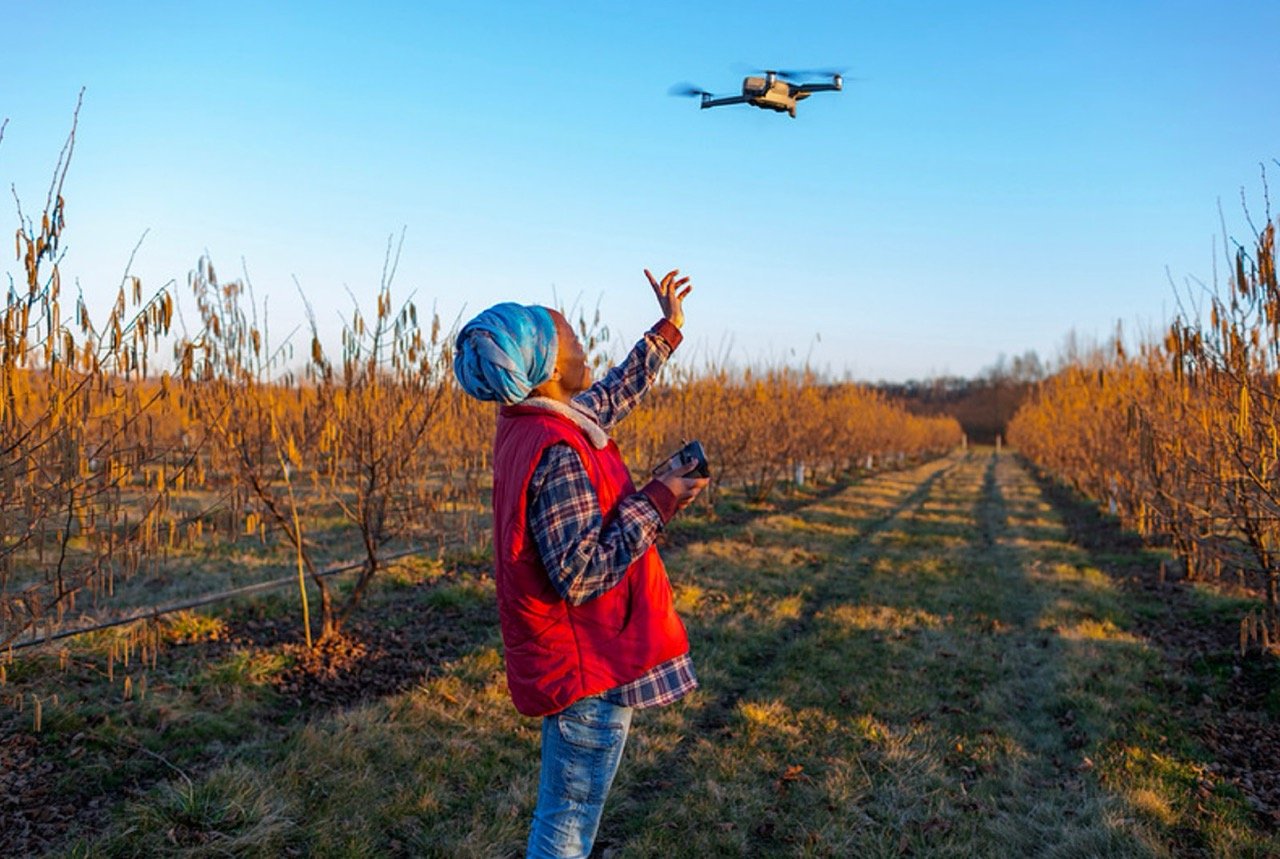
DeafTawk, an assistive tech grantee based in Pakistan, uses AI to bridge the communication gap for Deaf users. Through its mobile app, users can either connect to a network of thousands of human interpreters via two-way video calls or use an AI-based tool that converts text and audio in multiple languages (including Urdu, English and Spanish) into sign language via an avatar with more than 95% accuracy. More than 68,000 people use DeafTawk’s platform regularly.
Building on the experiences of current and former grantees, the Fund launched the GSMA Innovation Fund for Impactful AI in early 2025, with full announcement of the grantees in early 2026. 625 applications were received from 40 countries across Africa, the Pacific, South and Southeast Asia, with most applications coming from Ghana, Kenya, Nigeria, South Africa, Uganda, Bangladesh, India, Indonesia, and Pakistan.
Grounding innovation in local realities is central to the Fund’s approach. More than 90% of applications proposed solutions that would be designed and delivered in-country, spanning sectors such as healthcare (20%), agriculture (15%), digital inclusion (13%) and financial inclusion (12%). Proposed solutions included computer vision for diagnostic tools, natural language processing (NLP) for local language chatbots and machine learning for credit scoring and supply chain optimisation, all of which showcase the potential of AI to address development challenges in LMICs and lay the groundwork for sustainable impact.
