Design Thinking - Track 2.4 EN | Mobile for Development
Back
Track 2:

Step by step learning journey

Let’s apply our knowledge

You will now go through a series of steps that will help you apply design thinking to co-creation and user testing. To get the most out of the exercises, you will be asked to step outside your comfort zone. With that in mind, we propose that you begin by planning small celebrations to mark the end of each phase of your project. All the steps, including practical tools and examples, are listed below.
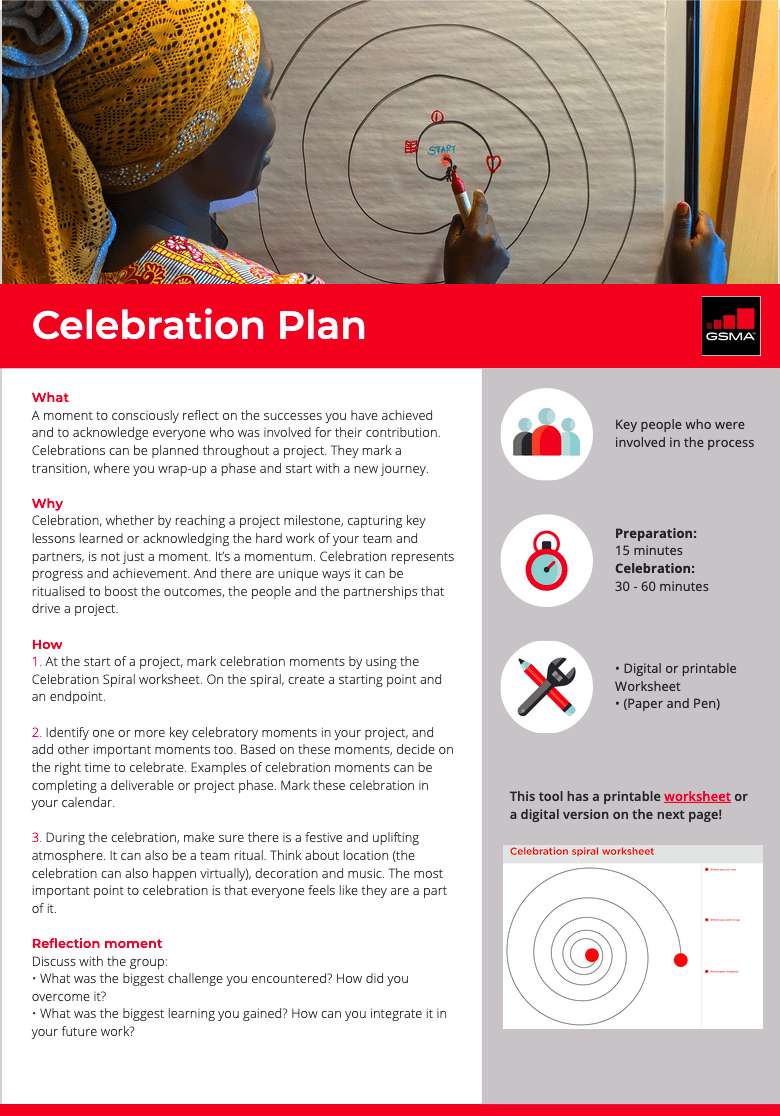
Plan celebration milestones

Phase 3: Ideation

Artificial Intelligence icon

Visualise your idea as a concrete concept

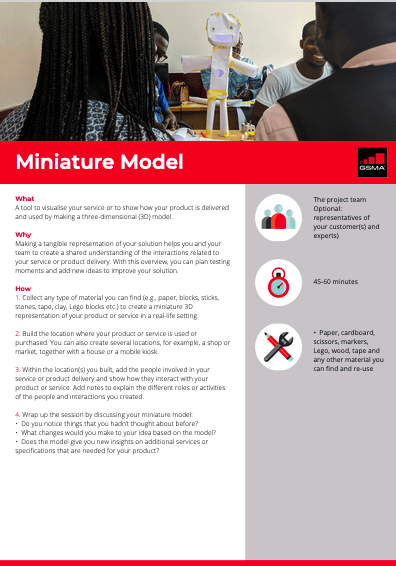
Make your thoughts and ideas more tangible and practical by creating a physical model. This is a simple version of your concept that can be made with paper, drawings and Lego (or other type of construction material). As you make your ideas concrete, your mind will be triggered to test different types and come up with new and creative solutions.

Practical tip

Describe your idea in detail by adding the location, objects, stakeholders and their interactions.

Discuss icon

Clarify the process

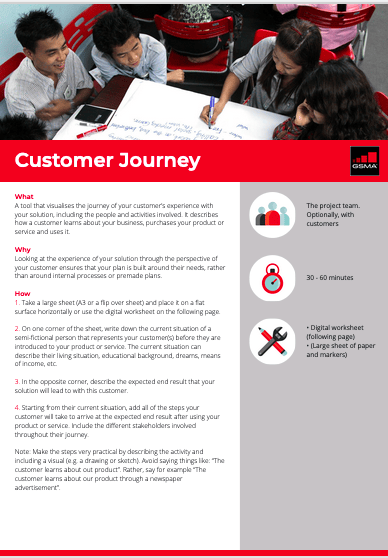
Now that you have your ideas and concept defined, describe how the customer will experience your solution from beginning to end. This is known as a user journey. A user journey visualises the life cycle of a solution through the eyes of the target group. User journeys ensure that your plan is built around the needs of your customers, not internal processes or predetermined activities and plans.

Make the customer the hero of your story.

Health icon

Identify pressing challenges

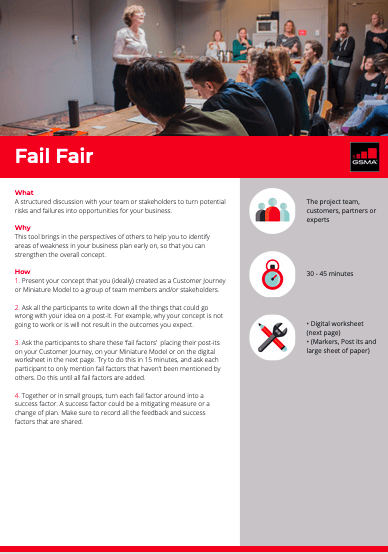
Identify weaker aspects of your idea so that you can strengthen the overall concept. This is a structured discussion with your team or external stakeholders to identify possible risks and failures that you may not have noticed on your own. The ‘failures’ that are identified are an opportunity for you to create new and better solutions.

Phase 4: Create and test

Application icon

Testing plan

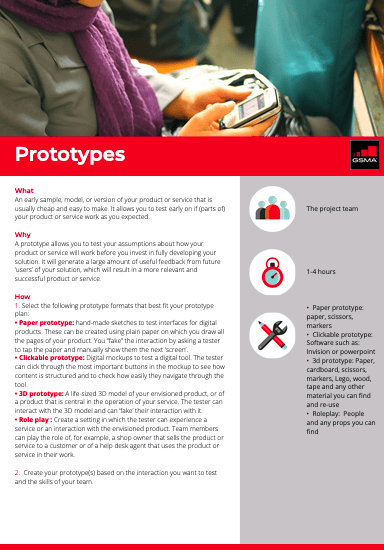
Prototyping is a quick and easy method to test how the future users of your solution will experience it. A prototype is an early sample, model or version of your product or service that is usually cheap and developed quickly. The prototype is a sample of your final product that allows you to test certain assumptions.

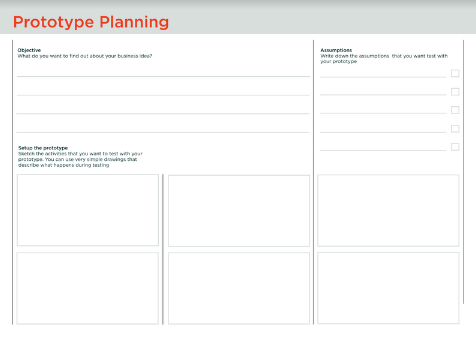
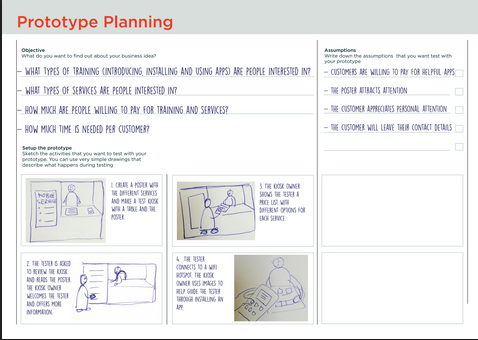
It is important to think about what you need to test. Your prototype doesn’t have to have all the functionalities of your final product or service. Instead, use the planning tool to identify the most important elements to test.

Guidelines icon

Let’s build

Now that you have a plan for what you want to test, it’s time to make your prototype. There are many different styles of prototypes, and often a combination is used. There are four different formats to choose from:

1. Paper prototype;
2. Clickable prototype;
3. 3D prototype; and
4. Role play.

Practical tip

Choose the format best suited to your concept idea. If your concept relates to a digital platform or environment, you might want to choose a paper or clickable prototype. If your concept relates to a service, you might want to choose a storyboard or role play prototype. If your concept relates to a product, you might want to choose a paper or 3D prototype.

Conversation icon

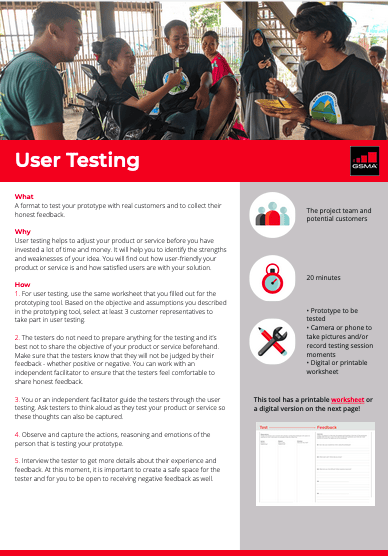
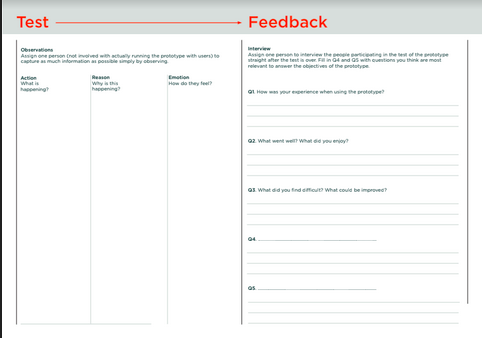
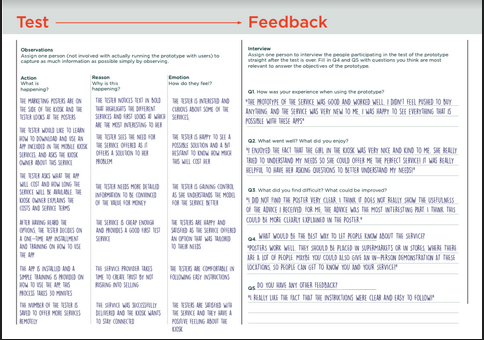
Test your prototype with customers

Evaluate your concept by testing it with real customers and find out how they experience your solution. A user test will allow you to get input on your prototype. Use this input to adjust your project plan before you have invested a lot of time and money. User testing is necessary to assess the strengths and weaknesses of your idea. You will find out how user friendly your product is and what can be improved.

Analytics icon

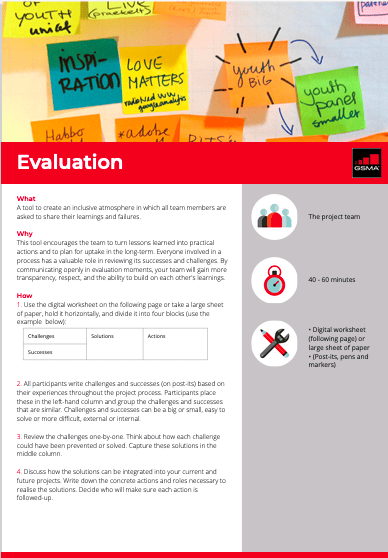
Analyse the results

Take a critical look at the design and development process for your product or service. Ask yourself, “Were the outcomes what I had planned for?” and “What are actionable next steps?” The evaluation is an important moment to learn from your mistakes and successes in an organised and helpful way. By using this tool, you can create solutions and identify actions to integrate these solutions in your product or service.

A person who never made a mistake never tried anything new.

Startup icon

Celebrate becoming a Design Thinker

Celebrate the completion of this journey with everyone involved: your team and your customers. Show your gratitude to the customers that took the time to test your prototype and share their insights. Show them how valuable their involvement was and ensure you have them on board for future user testing. The more you test your ideas with your customers, the more likely you are to develop a product or service that will succeed in the market.

Practical tip

Reflect on the process and note the main lessons from your user testing. These could be how to improve your user testing process in the future or how to analyse the results. Keep this list close to you and use it as a checklist as you move through the development phases of your solution.

Let’s plan

The last step is to plan when and how you will integrate these tools in your work plan. To do this, download and use the template below.

Next

Track 3: How to understand and leverage the ecosystem around your business

This initiative is currently funded by the UK Foreign, Commonwealth & Development Office (FCDO) and supported by the GSMA and its members.

The views expressed do not necessarily reflect the UK Government's official policies.