Design Thinking - Track 3.4 EN | Mobile for Development
Back
Track 3:

Step by step learning journey

Let’s apply our knowledge

You will now go through a series of steps that will help you apply design thinking to system mapping. To get the most out of the exercises, you will be asked to step outside your comfort zone. With that in mind, we propose that you start by planning small celebrations to mark the end of each phase of your project. All the steps, including practical tools and examples, are listed below.
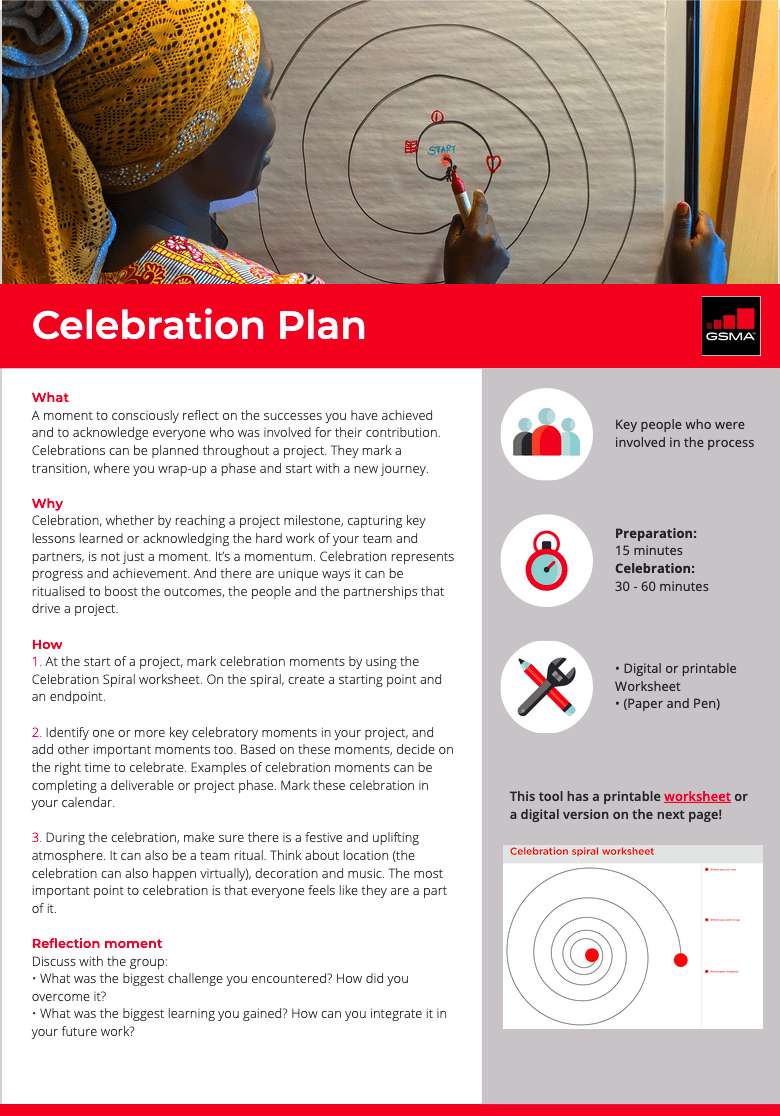
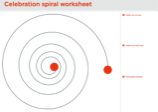
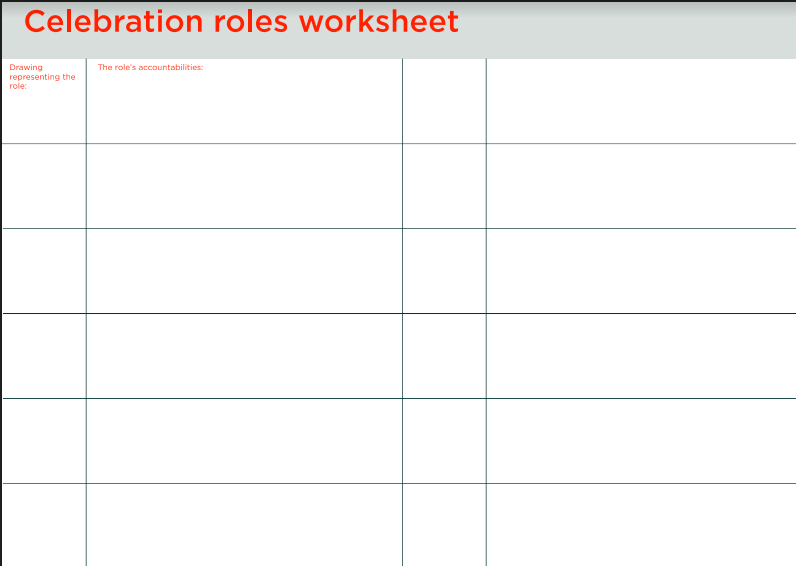
Plan celebration milestones

Phase 1: Setting the scene

Search icon

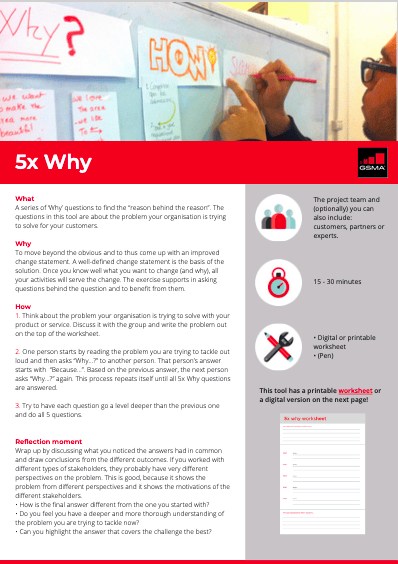
Get to the core of your problem

This exercise will help you get to the core of the problem you want to tackle. Discover why you and your team wanted to tackle this problem in the first place. This will help you arrive at a clear problem statement that can be addressed in the design research phase.

Eye icon

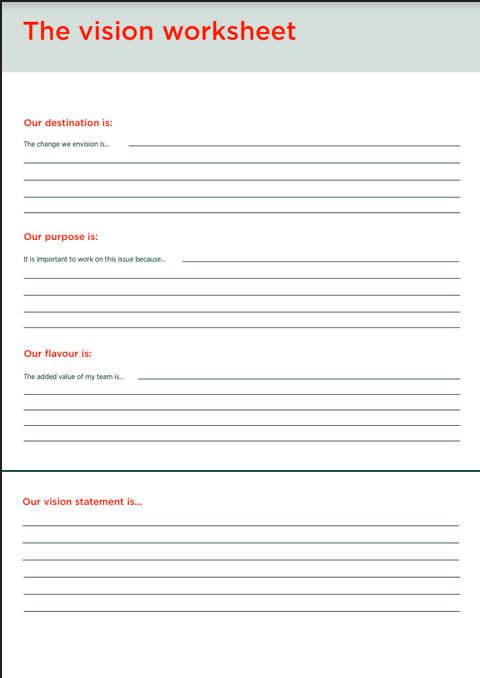
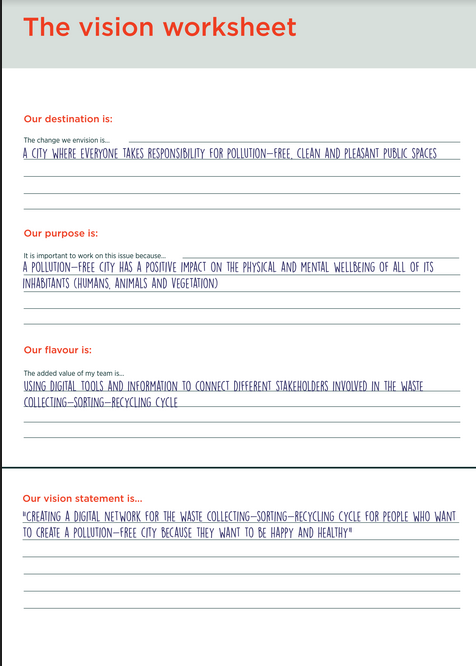
Envision the change you want to see

It can be difficult to create your vision if a social issue is complex and multi-layered with many stakeholders involved. This exercise will guide your team in drafting a vision statement in a structured manner.

Your long-term vision will affect the present.

Checkup icon

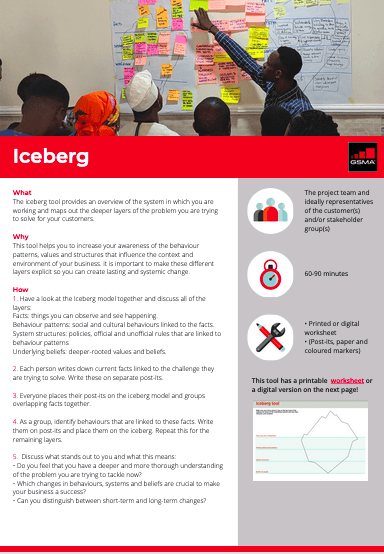
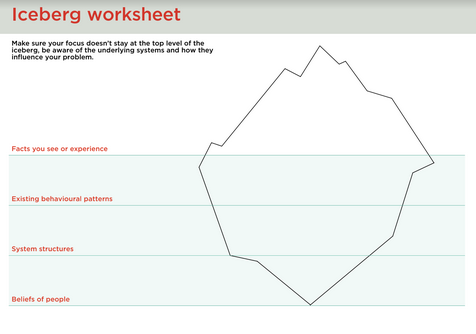
Understand the deeper layers of your problem

The iceberg tool will guide you through a process of uncovering the many layers of your problem. First, you will list all the facts you see or experience. These are placed in the top level of the iceberg. Then, dive deeper into the bottom layers of the iceberg. Here, you will reflect on existing behaviour patterns, systems and beliefs lying beneath the social issue. Make sure your focus doesn’t stay at the top of the iceberg – be aware of underlying systems and how they influence your problem.

What we see is usually only a fractional part of what it really is.

Phase 2: Research

Connections icon

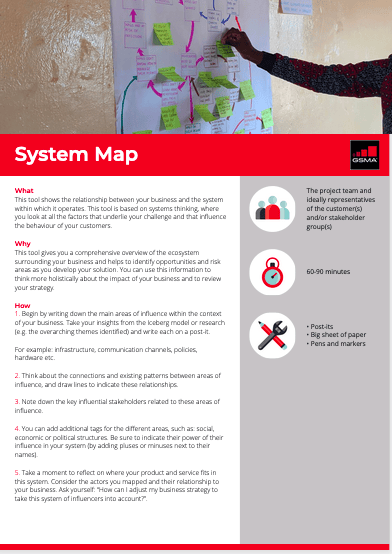
Mapping your system

Map the insights from the iceberg exercise on a systems map. Think about the key stakeholders involved, their connections and relationships, and any behaviour patterns they share. Include the social, economic and political structures and their influence in your system. Finally, map out the overarching beliefs and values that guide how people think and act in your system.

Practical tip

When mapping your context and key actors, where do you place your start-up and service? Take a moment to think about where your product and service fit in the system, which actors you want to connect with and your relationship to them. The system influences your start-up, and your start-up influences the system. Use this information to review your start-up’s strategy and vision. Understanding the external factors that might affect your vision will be key to your success.

Maps icon

Research the problem

Go on a journey to observe the problem in depth. Choose one of the two tools below to help you:

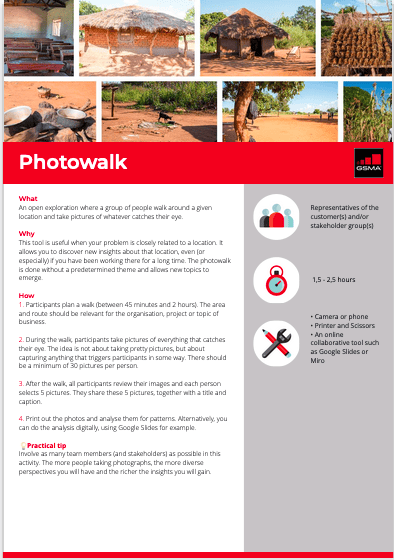
1. The photowalk is an exercise that is used when your problem is closely related to a location. If possible, go to the place where your problem exists and take pictures of everything that grabs your attention. After you are done, print out the pictures and analyse them for patterns.

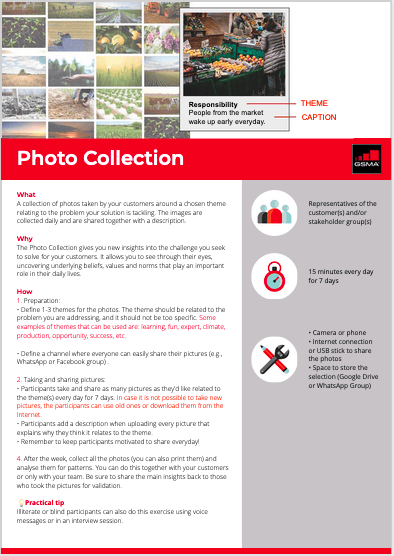
2. The photo collection is an exercise used to explore the topic of your problem. Over a one-week period, take pictures of everything you see in your context that relates to or reminds you of that topic. These can be positive or negative representations. When you are done, print out the pictures and analyse them for patterns.

Practical tip

Involve as many team members as possible in this activity. You can also invite other stakeholders to join. The more people taking pictures, the more perspectives you will have and the richer your insights will be.

Analytics icon

Find behaviour patterns

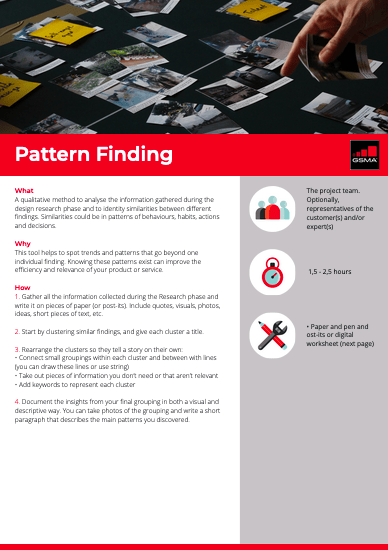
Pattern finding is a method for showing connections between your findings and creating an overview of the information you gathered during the design research phase. This tool will help you to spot broad trends and patterns. It is a form of qualitative analysis that looks for similarities between multiple findings. For example, there could be similarities in patterns of behaviour, habits, actions and decisions. Knowing these patterns exist can help make your product or service more efficient and relevant.

Phase 3: Ideation

Trainer icon

Get inspired and spark your creativity

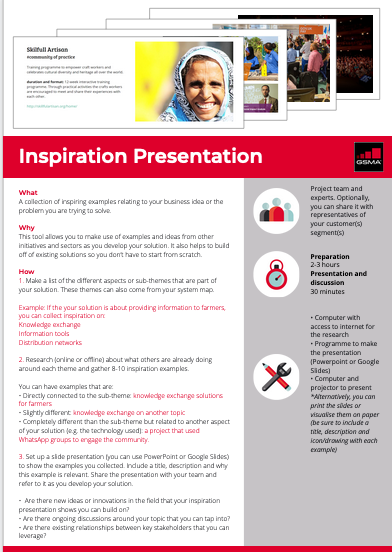
Now that you have the ecosystem around your business mapped out, look for inspiration on how to integrate the key stakeholders in your solution. Start by doing research (online or offline) into what others are already doing to tackle the problem your business seeks to solve. Are there new ideas or innovations in the field that you can build on? Are there on-going discussions on this topic that you can tap into? Are there existing relationships between key stakeholders that you can leverage?

Organise your insights into an inspiration presentation that you can share with your team and refer to as you develop your solution.

Startup icon

Celebrate becoming a design thinker

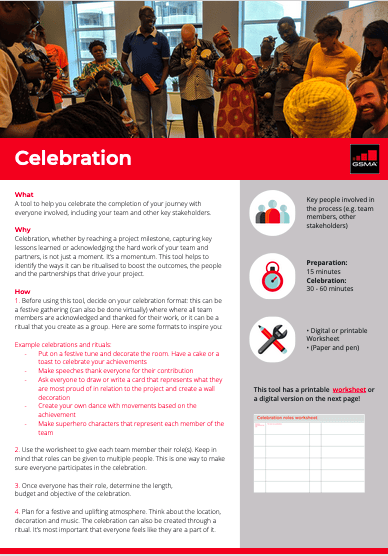
Celebrate the completion of this journey with everyone involved, including your team and other key stakeholders. Show your appreciation for the different perspectives shared and for the time others have put into the work. Adding a human touch to your business will show your team and your partners that they are valued and will motivate them to continue their great work.

Practical tip

Reflect on the process and note key lessons and insights from your system map. Keep this list close to you and use it as a checklist in future phases of your project.

Let’s plan

The final step is to plan when and how you will integrate these tools in your work plan. To do this, download and use the template below.

Next

Track 4: How to improve your internal processes and build an open, creative and connected team

This initiative is currently funded by the UK Foreign, Commonwealth & Development Office (FCDO) and supported by the GSMA and its members.

The views expressed do not necessarily reflect the UK Government's official policies.