


Building resilience in humanitarian settings
As climate change, conflicts and severe natural hazards escalate, humanitarian needs continue to grow. In 2025, more than 400 million people were in need of humanitarian assistance and protection, with 120 million of those forcibly displaced from their homes. Connectivity and digital technology continue to change the way people in crisis access life-saving information, connect with loved ones and receive vital humanitarian assistance. New types of humanitarian action have also been unlocked, from digital cash programming at scale to widespread distribution of early warning messages.
For more than 10 years, the GSMA has catalysed, invested in, promoted and advocated for digital humanitarian innovation and partnerships between the humanitarian sector and mobile industry. Throughout 2024 and 2025, the evidence generated and the impacts delivered by our work have sparked interest in digital solutions and public-private partnerships that are addressing the growing humanitarian challenge. This was achieved by building a learning and research agenda to inform the future of digital humanitarian response; catalysing partnerships and innovation for new digital humanitarian services; and advocating for enabling policy environments.
Three themes guide our work:
- Anticipating and responding to disasters
- Understanding and providing connectivity in crisis
- Putting inclusion at the centre of our approach

The GSMA Mobile for Humanitarian Innovation programme, or M4H, brings together mobile and humanitarian agencies to promote principles and best practices for preparing for, responding to and recovering from sudden-onset emergencies. Through innovation funding, the convening of partnerships, research and policy engagement, the M4H programme supports impactful and innovative digital solutions that address pressing humanitarian needs. We track our impact through changes in user preparedness for sudden-onset crises, the reach and effectiveness of early warning systems (EWS) and life-saving messaging and earlier, more effective crisis response for affected communities.
Over the past two years, we have prioritised expanding access to early warning systems and leveraging mobile technology to deliver timely, actionable information to disaster-prone populations. We have moved the dial on mobile-enabled EWS through our influence – the GSMA Director General serves as a champion on the UN Early Warnings for All initiative advisory panel – our thought leadership in designing effective EWS and our country-level technical assistance in Africa, Asia and the Pacific. We also focus on improving connectivity in crisis settings, which we measure by the reduction in coverage gaps and the humanitarian consequences of limited access.
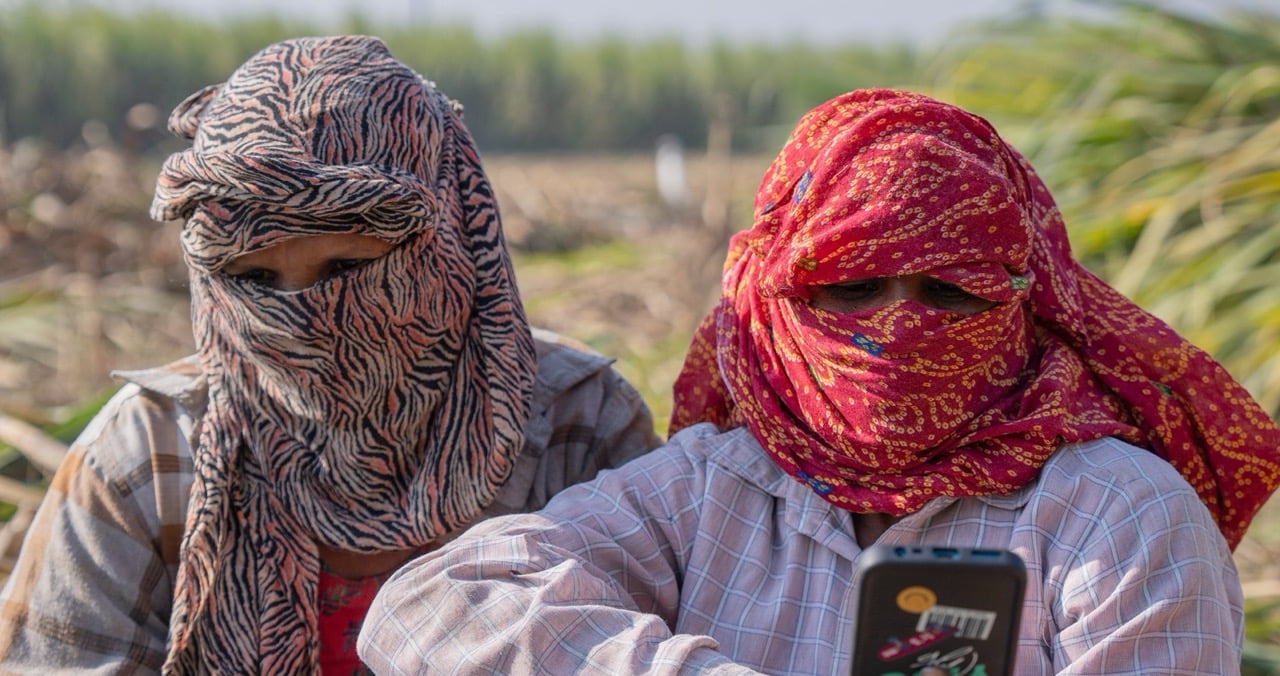
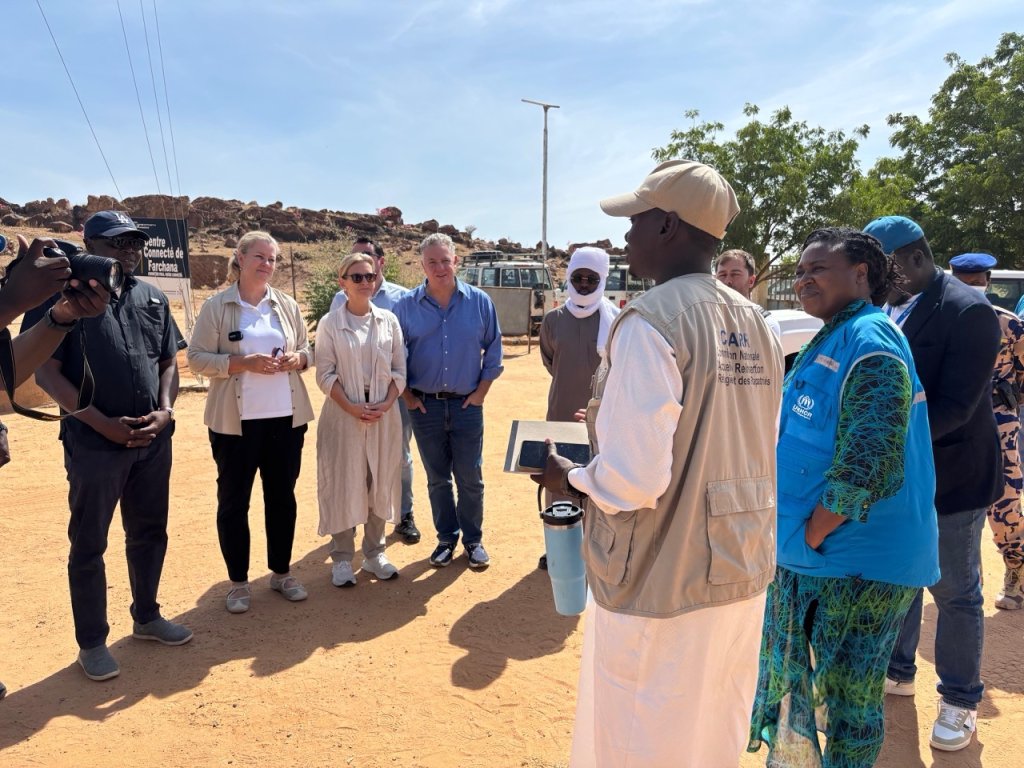
We advance digital and financial inclusion for refugees and host communities by tackling barriers to digital literacy, financial services and mobile-enabled risk communications. The Connectivity for Refugees initiative has seen demonstrable progress in countries such as Ethiopia and Chad, where barriers to connectivity for displaced people are being identified and overcome. It has also leveraged global advocacy opportunities to raise the profile of digital inclusion for the displaced as an important issue. To date, we have reached more than 18 million people with improved access to and use of life-enhancing mobile-enabled services during humanitarian preparedness, response and recovery.
Our priority initiatives over the past two years – Early Warning Systems and Connectivity for Refugees – have seen tangible progress, showcasing how mobile technology can be applied to improve crisis response and digital inclusion for affected communities.
Early Warning Systems
The GSMA plays a leadership role in the global Early Warnings for All (EW4All) initiative, mobilising MNOs, innovators, humanitarian organisations and governments. By fostering public-private alliances, the GSMA helps build robust, end-to-end EWS solutions that deliver timely, life-saving information to vulnerable populations.
Connectivity for Refugees
The GSMA is co-leading a global initiative to close the digital divide for forcibly displaced people and their host communities. The Connectivity for Refugees initiative aims to provide affordable, reliable digital access to 20 million people by 2030. The initiative tackles key barriers such as unreliable electricity, unstable internet, unaffordable devices and restrictive policies that limit refugees’ access to mobile services. Its comprehensive approach combines local insights, innovative business models and strong partnerships across governments, MNOs, humanitarian agencies and communities.
Our impact, 2023-2025
The GSMA has collaborated with diverse humanitarian partners and
76
MNOs in more than
30
Countries to improve the delivery and impact of digital humanitarian assistance.
4.3m
People were reached by these partnerships
~1.3m
people were reached by grantee projects under the GSMA Innovation Fund for Anticipatory Humanitarian Action.
5.5m
additional people reached by GSMA (48% women) with improved access to mobile services in humanitarian settings, year ending June 2025.
The M4H programme generates actionable evidence and practical guidance that equip the humanitarian sector to leverage mobile technology during crises. Our research and evidence inform policy, strategy and programme design for humanitarian actors operating in complex settings. Insights are gathered through our strategic partnerships: the Humanitarian Connectivity Charter (HCC), Early Warnings for All (EW4All) and Connectivity for Refugees. Since 2023, we have conducted demand-driven research to close evidence gaps in countries across the humanitarian sector, in locations such as South Sudan, Ethiopia and Nigeria.
Drawing on these partnerships and our evidence-driven approach, our research has directly enabled countries to strengthen disaster preparedness, expand connectivity for refugees and deliver targeted tools for digital inclusion in humanitarian settings.
Some highlights from the past two years:
Our research supported countries to prepare for disasters. In 2023, we published Cell Broadcast for Early Warning Systems: A review of the technology and how to implement it, to help stakeholders understand the importance of cell broadcast (CB) and its role in anticipatory action. The report has led to new partnerships, including with the Communications Regulators’ Association of Southern Africa (CRASA), which we worked with to assess CB readiness in the 14 countries of the region using a GSMA tool previously piloted in Tanzania.
We produced thought leadership publications on the status and opportunity of connectivity for displaced persons in South Sudan, Ethiopia and Rwanda. This joint research under the Connectivity for Refugees initiative generated country-level insights on the connectivity status of refugees and possible engagement opportunities. To generate deeper country-level insights, we developed the Humanitarian Connectivity, Needs and Usage Assessments (CoNUA) toolkit in collaboration with UNHCR. This resource measures mobile access, usage and preferences among people affected by humanitarian crises, enabling users to identify new engagement opportunities.During this period, we worked with UNHCR to gather and evaluate data on digital ecosystems, specifically on technology access, usage, preferences and skills among local communities. This information is enabling UNHCR to design appropriate and effective ICT services that can best meet community needs – for example, in Ethiopia, where we supported the launch of a refugee digital inclusion working group in 2025.
We drive transformative humanitarian outcomes by fostering strategic partnerships and advocating for enabling environments that support digital innovation in crisis contexts. Our approach centres on building a resilient and adaptive digital ecosystem that is responsive to the needs of crisis-affected communities. Through our partnerships, we align efforts, promote knowledge sharing and accelerate the development and scaling of digital tools critical for humanitarian preparedness, response and recovery. Key partnership platforms include the Humanitarian Connectivity Charter and the EW4All initiative.
The Humanitarian Connectivity Charter (HCC) is a GSMA initiative that enhances the capacity of MNOs to mitigate, prepare for and respond to disasters through mobile technology. Signatories to the Charter commit to a set of shared principles and work collaboratively to respond effectively to disasters, supported by GSMA-led research, capacity building and thought leadership. More than 150 MNOs have signed the Charter since it was launched in 2015.
The HCC:
- Supports MNOs so that they can be equipped and prepared to respond to a disaster effectively and efficiently.
- Supports MNOs to prepare for each stage of an emergency.
- Provides guidance on building collaborative relationships with key stakeholders involved in disaster preparedness and response.
Most recently, in February 2025, our involvement in high-level policy discussions resulted in AXIAN Telecom (a pan-African MNO) signing the HCC, another example of commitment to disaster resilience in the mobile industry.
HCC partnerships and technical assistance in Asia
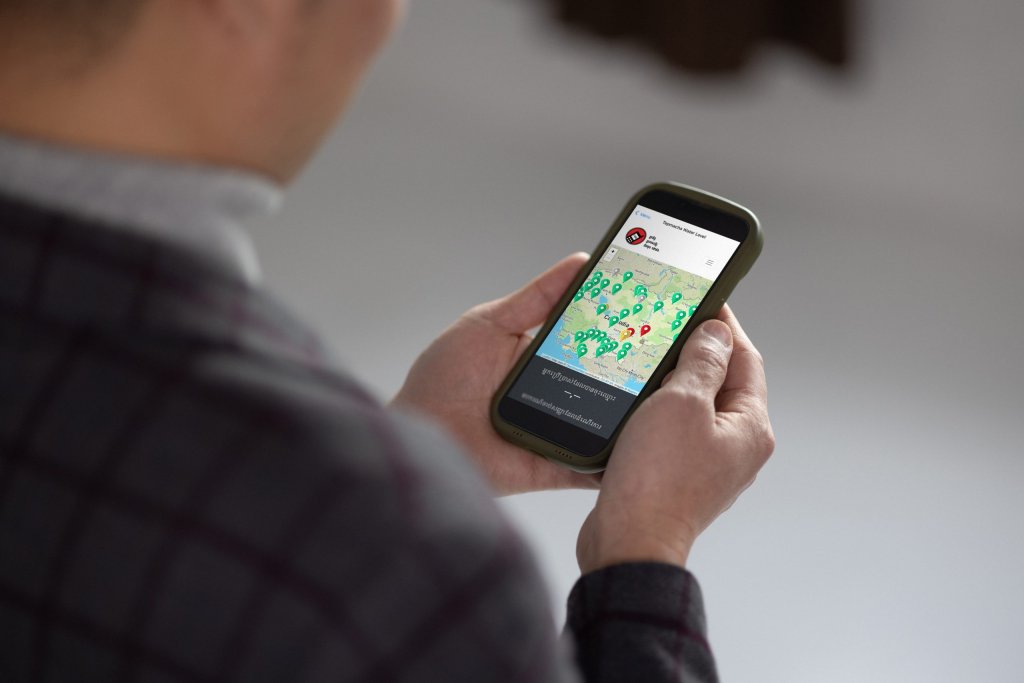
In December 2024, M4H convened a national workshop on the principles of the HCC in Pakistan, bringing together MNOs and humanitarian and government stakeholders to discuss emergency telecommunications and the role of digital technology in emergency preparedness. A key gap identified was the lack of standard operating procedures (SOPs) for emergency alerting. In response, M4H is leading the development of an automated EWS messaging tool in Pakistan in collaboration with MNOs and other partners. M4H has signed a partnership agreement with Jazz Pakistan to facilitate the adoption and implementation of a mobile-enabled EWS compliant with the Common Alerting Protocol (CAP).
The HCC also served as a platform for Tanzania to develop a blueprint for CB messaging. Through collaboration with key stakeholders, we assessed the infrastructure readiness of Tanzanian MNOs to support an EWS and identified regulatory frameworks that would ensure it was implemented effectively. This marked the first step towards building a national EWS, resulting in the formation of a MNO steering committee dedicated to advancing a unified, people-centred system.
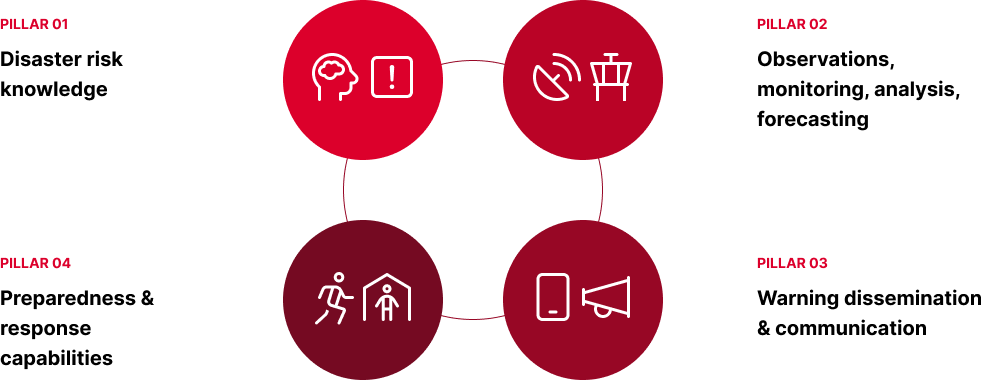
Through the HCC, we are working with partners to help countries design and implement inclusive disaster responses. For example, we are collaborating with AXIAN Telecom, through Yas in Madagascar, to develop an EWS that will enhance disaster preparedness and response at the national and community level. Built on four pillars, the system collects data, conducts risk assessments, monitors hazards and provides timely warnings. In the past year, both AXIAN Telecom and Hormuud Telecom became the newest signatories to the HCC, joining after attending our capacity building workshops to strengthen disaster preparedness.
A core part of the HCC is bringing together diverse sets of stakeholders to design and implement response solutions. In August 2024, we hosted the first national-level humanitarian positioning workshop in Nepal, which brought together government, donors, MNOs, fintech partners, humanitarian agencies and other innovators to map out opportunities for digital humanitarian solutions. This led to a new partnership with eSewa, a GSMA Innovation Fund grantee that delivers mobile-enabled cash voucher assistance (CVA). Together with the World Food Programme (WFP), CARE and the Nepal Red Cross Society, we developed financial literacy and disaster preparedness training programmes for eSewa – which has trained more than 23,000 agents – reaching more than 116,000 people in areas prone to climate-related sudden-onset crises, such as floods and landslides.
Early Warnings for All Initiative
Early warning systems are essential when disaster strikes, providing crucial alerts that help communities prepare for, and respond to, extreme weather events and environmental hazards. As disasters become more frequent and severe, the role of EWS and effective risk communication is critical. These systems offer a proactive approach to disaster risk reduction, enabling timely actions that can significantly reduce loss of life and economic damage.
Launched by the UN Secretary-General António Guterres in 2022, the Early Warnings for All (EW4All) Initiative aims to ensure that everyone in the world is protected by an EWS. The GSMA is a leading partner and voice for the industry-wide commitment to the EW4All Initiative. We work to convene and provide technical support to the mobile industry to develop and implement EWS and invest in innovative digital solutions for EWS through the Mobile for Humanitarian Innovation Fund.
EW4All: The four pillars
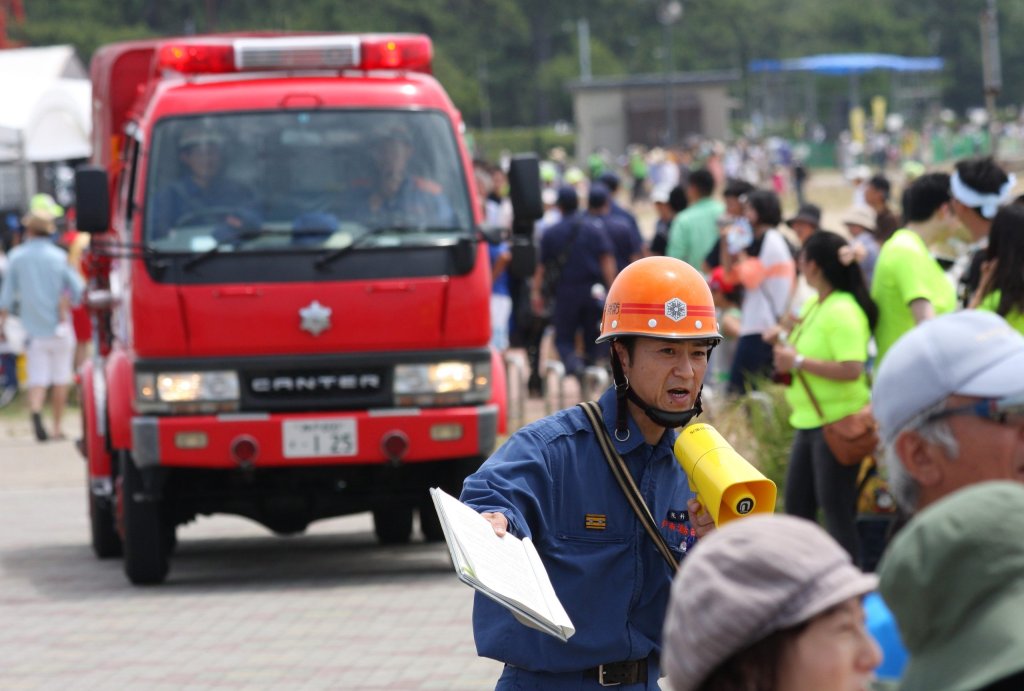
Through the EW4All initiative, we convene the mobile industry and facilitate partnerships across sectors to develop and implement EWS. For example, we have coordinated 20 group-level MNOs to agree to and sign an industry pledge on the powerful role of mobile networks in EWS. The pledge, launched with the International Telecommunication Union (ITU) at COP28, saw MNO partners commit to supporting the life-saving role of mobile and the development of EWS using CB and location-based SMS, technologies that that can provide targeted, effective and accessible information to communities during crisis.
Industry pledge
With 95% of the world’s population covered by a mobile network and 5.4 billion unique mobile subscribers globally, mobile plays a life-saving role in the dissemination of early warning alerts. The mobile industry has longstanding experience in the development and implementation of early warning systems, and we are committed to the ambition of the EW4All Initiative for everyone to be protected by 2027.
We know first-hand that cell-broadcast, location-based SMS, and digital technologies provide targeted and accessible information to communities. Through cross-sector stakeholder collaboration and sharing of expertise and best practice, we can ensure everyone is protected. We welcome our mobile industry colleagues in joining us to deploy these technologies and partnering to harness the power of mobile networks for early warnings.







The EW4All humanitarian partnership framework has, to date, enabled more than 60 humanitarian partnerships across Burundi, Kenya, Somaliland and Uganda. These partnerships have led to the co-creation and scaling of more than 30 innovative, mobile-enabled humanitarian projects, improving the availability, effectiveness and coverage of digital humanitarian services.
Since 2018, we have worked to build a mobile-based EWS in Haiti, the Disaster and Emergency Warning Network (DEWN), by partnering with key stakeholders, including the National Telecommunication Council (CONATEL), the Directorate for Civil Protection (DPC) and the Emergency Telecommunications Cluster (ETC). Drawing on lessons from the successful deployment of Sri Lanka’s EWS, we maintained coordination and support over seven years, despite political and security challenges, collaborating with Digicel Haiti and other MNOs and the DPC. As a result, the DEWN system sent its first test message through the Digicel SMS centre in August 2024. The system is now live for the DPC to alert communities of an impending crisis. This initiative has so far reached 2.8 million people in Haiti.
Over the past year, new partnerships in Madagascar are catalysing MNO-led initiatives for EWS. In March 2025, we convened a landmark roundtable that brought together government officials, MNOs, international organisations and humanitarian actors to collaborate on expanding the role of mobile in EWS. For many MNOs, this was their first direct engagement with the national disaster management office (BNGRC) – a critical step in building trust and collaboration. Building on this momentum, we have launched two key research initiatives: one assessing CB readiness, which could reduce the delivery of life-saving alerts from hours to seconds, and another evaluating the reach and effectiveness of SMS-based EWS. Together, these efforts are creating a roadmap for stronger, faster and more inclusive disaster communication systems in Madagascar.
Expanding humanitarian reach through mobile partnerships
In Uganda, displaced and vulnerable communities often face serious barriers to accessing reliable connectivity and humanitarian services. Airtel Uganda, working in collaboration with the GSMA M4H programme and humanitarian actors, has demonstrated how partnerships can break through these barriers to have a meaningful impact.
Airtel Uganda partnered with humanitarian agencies to expand network coverage in underserved refugee-hosting regions. By co-investing in mobile infrastructure and tailoring services to humanitarian needs, the initiative improved connectivity for both refugees and host communities, ensuring access to life-saving information and essential services. Facilitation by M4H was critical in aligning regulatory frameworks, strengthening technical capacity and building trust between the MNO and humanitarian stakeholders.
The results reflect the successes of other MNOs and highlight serval lessons, including that effective partnerships between MNOs and humanitarian actors significantly enhance the reach and quality of digital humanitarian services. Connectivity remains a vital lifeline for displaced communities, yet it is too often constrained by financial, operational and policy barriers. Collaborative innovations such as digital cash transfers and inclusive communication tools show potential to improve user engagement and resilience. Adoption of shared principles, such as the Humanitarian Connectivity Charter (see previous section), reinforces coordination and accountability. Ultimately, sustainable impact depends on building interoperable ecosystems underpinned by supportive policies and multi-stakeholder collaboration.
As part of the GSMA Innovation Fund, M4H has invested in 41 innovative and scalable humanitarian mobile and digital solutions since 2018.1
Themes of the GSMA Mobile for Humanitarian Innovation Fund:
Round 1
Disaster response
Round 2
Complex emergencies and forced displacement
Round 2
Anticipatory humanitarian action
Round 4
Humanitarian challenges
Round 5
Long-term sustainability and scalability
To learn more about the Innovation Fund, see the “De-risking Innovation” section of the Impact Report.
Impact stats:

41
Grantees

25
Countries

£40m
In follow-on funding
Over the past two years, we have supported 20 innovators through the GSMA Innovation Fund for Anticipatory Humanitarian Action, the GSMA Innovation Fund for Humanitarian Challenges and the GSMA Innovation Fund for Humanitarian Replication and Scale. This support is accelerating the implementation and scale of a diverse set of impactful humanitarian innovations and life-saving digital tools, including early warning technologies, that are boosting climate resilience and disaster preparedness for vulnerable communities. These innovations have underlying digital technology such as:
- Automated weather monitoring systems and IoT-connected sensors that enable real-time tracking of environmental hazards such as floods and droughts (Buraq, People in Need, ActionAid).
- Artificial intelligence (AI) leveraged to provide advanced weather analytics, generate timely alerts and offer accessible communication solutions, including sign language interpretation and generative AI (GenAI) voice-based assistance (Connect Hear, Viamo).
- Mobile-based platforms facilitate anticipatory actions by enabling pre-disaster cash and voucher distribution, while Software as a Service (SaaS) solutions and open-source communication platforms support efficient dissemination of early warnings (Raagsan, Rumsan, Tearfund, Komunidad, NAXA, TAHMO, Somleng).
- Satellite imagery is incorporated in farm management platforms to deliver up-to-date information on crop health and weather patterns (Synnefa).
Each of these solutions empowers communities by providing timely information and tools that enable them to better prepare for and respond to climate-related hazards, strengthening their resilience and saving lives.
The GSMA champions policy and regulation that enable effective mobile-enabled humanitarian interventions. We work closely with governments, regulators and international partners such as the ITU to promote inclusive policies that tackle critical barriers to digital and financial inclusion for refugees, such as know your customer (KYC) identity requirements, and to advance national emergency telecommunications plans.
We have shaped digital humanitarian policy environments by convening and amplifying global and regional dialogues and participating in key initiatives and forums that set the agenda for inclusive digital response. In 2024 and 2025, we brought together governments, regulators, MNOs, humanitarian organisations and partners at events across the Pacific Islands, Asia Pacific, the Caribbean and Africa. These events showcased how mobile players are leading EWS, disaster preparedness and response efforts, and collaborating to improve policies and regulatory environments.
This year our advocacy work has included technical assistance, simulations and policy frameworks that help governments such as Rwanda, Malawi and the Dominican Republic operationalise National Emergency Telecommunication Plans (NETPs) to ensure communications networks are resilient during times of crisis. By facilitating stakeholder engagement, driving regulatory reform and delivering capacity building partnerships, M4H is creating an enabling environment for scalable, mobile-driven humanitarian interventions and demonstrating how policy innovation and technological progress build stronger preparedness and response systems. In 2025, our research into the role of MNOs in EWS in Chile, France and Japan provided examples of good practice and the elements of strong policy and regulatory frameworks for effective EWS.
Recognition of refugee IDs for SIM registration in Kenya
Without access to digital finance, refugees are more vulnerable and dependent on humanitarian aid. In a transformative step for refugee rights and digital inclusion, Kenya has enacted new legislation recognising refugee IDs as valid for mobile money registration. This milestone paves the way for more than 600,000 refugees to formally access critical financial services like M-PESA, empowering them to safely store money, receive remittances and participate in the digital economy.
To achieve this, the M4H programme brought together MNOs, government departments and international organisations such as UNHCR in a multi-stakeholder dialogue that bridged technical, policy and humanitarian perspectives. The GSMA provided a consolidated industry voice, shared global best practices and ensured the technical solutions were robust and scalable.
Kenya sets a powerful example, demonstrating how inclusive policy reform can drive real change for marginalised communities. The legislative model, previously seen in Uganda, is now gaining momentum as a blueprint for other nations seeking to extend digital financial access to refugees.
For Kenya’s refugee communities, this change is more than a legal adjustment – it is a lifeline. Access to mobile money enhances dignity, supports livelihoods and offers pathways to greater integration and self-reliance.
Next year, the M4H programme will continue to build mobile-enabled EWS in climate-vulnerable countries and regions affected by disasters. We will gather data on the connectivity needs and usage of communities in South Sudan to enable UNHCR to deliver digital humanitarian programming, and work with governments, MNOs and humanitarian partners to build enabling policy environments for digital humanitarian services.
- Read more about the GSMA Innovation Fund in Report 3, De-risking Innovation ↩︎
