The company
Crop2X uses IoT sensors and satellite imagery to provide farmers with real-time data and actionable insights.
The problem
In Pakistan, agriculture dominates water use, consuming more than 90% of the country’s water resources, while ‘water is already scarce. Climate change could worsen this situation. The misuse of fertilisers adversely affects soil health, leading to issues like altered pH levels, increased pest activity, soil acidification and crust formation, alongside diminishing soil organic carbon, beneficial organisms, plant growth and yield, while also boosting greenhouse gas emissions. Many Pakistani farmers stick to traditional farming methods, which limits yield potential and, without data-driven insights, results in the overuse of resources.
GSMA project
In March 2024, Crop2X received a GSMA grant to provide farmers with real-time information on crop conditions, water levels, nutrient levels, fertiliser needs, yield predictions and crop classification through mobile and web-based applications. This empowers farmers to make informed, data-driven decisions and implement precise farming practices tailored to their soil and crop requirements. This helps to increase productivity and create a more sustainable agricultural system.
Outcomes
Crop2X launched an AI-powered crop classification and yield prediction solution and partnered with Telenor Pakistan in October 2024 to integrate its solution on the My Telenor App (MTA) and mAgri Platform.
Traction
Crop2X onboarded 268 farmers to its platform by March 2025, who use the soil probe and satellite-based GIS imagery service.
Founder
Dr. Muhammad Khurram – Founder

A message from the founder
“This project envisions a future where agriculture is not just productive, but also sustainable, fostering increased crop resilience to climate change. As technology integrates seamlessly into mainstream practices, we anticipate economic growth in agriculture, empowering local farmer communities with knowledge and tools. This initiative is a step towards a future marked by improved food security, reduced greenhouse gas emissions, and significant contributions to scientific research advancements in the agricultural sector.”
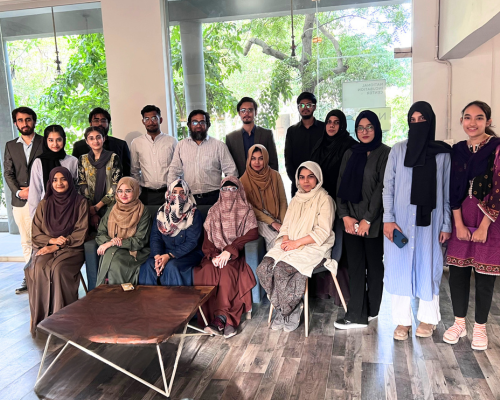
Team | 11 - 50 employees
Videos
Donor(s)

SDGs impacted