


Jazz Pakistan

As part of the GSMA’s Connected Women Commitment Initiative, Jazz has committed to increase the proportion of women by 3 percentage points in its mobile internet customer base by 2028.
Jazz World also made commitments to increase the proportion of women in their other products:
- Increase the proportion of women using FikrFree by 5 percentage points
FikrFree by Jazz is an AI-powered digital insurance and healthcare marketplace, designed to provide accessible, personalised, and affordable protection. - Increase the proportion of women using Tamasha by 5 percentage points
Tamasha is Pakistan’s largest homegrown OTT video streaming and entertainment platform where you can watch movies, dramas, live sports including cricket tournaments, news,and educational content on-the-go with convenience anywhere anytime. - Increase the proportion of women using SIMOSA by 5 percentage points
SIMOSA is an all-in-one app, offering everything from mobile self-care to a variety of lifestyle services. Whether it’s managing accounts, enjoying entertainment,or accessing essential services, this app is designed to meet the diverse needs of every user. - Increase the proportion of women using Apna Clinic by 5 percentage points
ApnaClinic is a healthcare aggregator app that brings a wide range of healthcare services together in one convenient platform from doctor consultations to medicine delivery. - Increase the proportion of women using Zarr by 5 percentage points
ZARR is a fashion and lifestyle website.
To meet these commitments, Jazz has introduced and continues to roll out a range of targeted interventions, including:
Jazz Mera Goan Live (My Village is Digitally Enabled) campaign
In Pakistan, women are significantly less likely than men to use mobile internet, facing barriers such as handset affordability, low digital skills, and restrictive social norms that limit their access and use. In 2023, Jazz launched its Mera Goan Live (‘My Village is Digitally Enabled’) campaign to raise awareness of the benefits of mobile internet through in-person education sessions for rural communities. The campaign engages men and women in deep-rural villages through community gatherings that feature entertaining skits, the GSMA’s Mobile Internet Skills Training Toolkit (MISTT) videos, and local male and female digital champions offering one-on-one support. This approach recognises the often-restrictive social norms for women in these areas. For example, Jazz tailored session timings—offering training for men in the morning and for women in the afternoon—so men could experience the content first and feel more comfortable with their wives and sisters participating later. Messaging emphasised that the internet is for everyone, regardless of gender, and can contribute to a family’s financial resilience. To further encourage women’s participation, Jazz conducted pre-event door-to-door outreach to sensitise women and their families. Value-added services, such as free medical consultations, were also provided to enhance the relevance and appeal of the events for women. By the end of 2024, the campaign had reached 97 villages, educating over 23,000 men and 17,000 women. Jazz reported that this campaign also improved local brand perception and drove a notable increase in mobile data use and activations in rural areas.
Blog Post: Jazz Pakistan educates rural women and men about the transformational benefits and uses of mobile
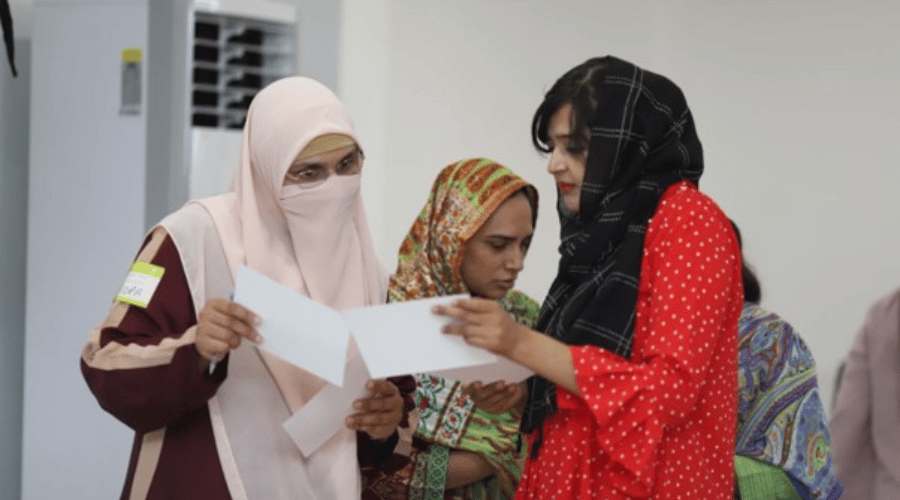
Jazz’s Women’s Initiative in Social Entrepreneurship
Jazz, in partnership with the United Nations Development Programme (UNDP) Pakistan, launched the Women’s Initiative in Social Entrepreneurship (WISE) to strengthen digital and business skills among women social entrepreneurs and extend their impact into rural communities. The programme integrates the GSMA’s Mobile Internet Skills Training Toolkit (MISTT) into ongoing training to empower women microentrepreneurs not only to grow their own enterprises but also to act as local educators and drivers of community development. MISTT resources were translated into Urdu to ensure accessibility for female participants with varying literacy levels. Through this pilot phase, approximately 400 women entrepreneurs received in person digital skills and business training, including instruction on how to train others in their communities, effectively equipping them as local trainers. More than 200 of these trained women have gone on to actively use MISTT to educate and empower other women in rural areas, amplifying the initiative’s reach and impact.
From Seamstress to Online Entrepreneur: Sadia’s Life Story
Interview with Aamir Ibrahim, CEO, Jazz

“Digital access is an essential need in today’s world. The digital gender gap is wide but there is a consensus that this digital emergency needs to be addressed immediately. Digital inclusion has the potential to bridge many of the inequalities we see today as it provides access to health, financial, and other life-enhancing services which in turn can improve lives and livelihood.
For women to lead Pakistan into the future, empowering them digitally is a fundamental requirement and this is exactly what Jazz holds as a core philosophy when designing products, services, employee programs, and sustainability initiatives.”
– Aamir Ibrahim, CEO, Jazz
Like what you read? Share.
